Israel's Defense Minister draws a red line in Lebanon, Syria and Gaza, and the US-Iran ceasefire is the reason
Israel's defence minister has publicly committed to holding positions in Lebanon, Syria and Gaza regardless of the US-Iran memorandum now in effect, and Tehran is calling that posture a violation of Washington's obligations.
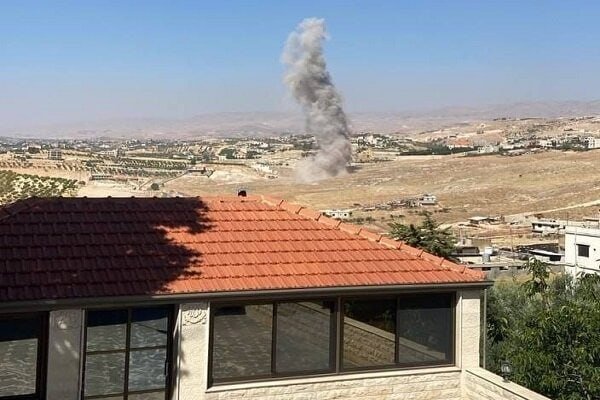
Israel's defence minister walked to the podium on 15 June 2026 and drew three lines on one map: Lebanon, Syria, Gaza. The country's troops, he said, would hold their positions in all three theatres regardless of what was being negotiated in the next room. The map was the message. What was being negotiated was the United States' memorandum of understanding with Iran, signed remotely the same day and now in effect, under which the Strait of Hormuz begins to reopen and Iran's frozen funds become accessible. By the evening of 17 June, the contradiction was public: Iran's foreign ministry was calling continued Israeli operations in Lebanon a "violation of America's obligations," and Al Jazeera was reporting that Donald Trump had privately urged Benjamin Netanyahu to use a "softer touch" on the Lebanese file.
The arrangement the Israeli defence minister was refusing to accept is not a peace deal in any conventional sense. It is a memorandum, brokered in part by Pakistani Prime Minister Shehbaz Sharif and announced from Islamabad as the "Islamabad Memorandum of Understanding," signed electronically by Presidents Pezeshkian and Trump and confirmed by Iranian foreign ministry spokesman Esmail Baghaei. According to reporting summarised by OSINTdefender citing senior US officials, the document commits Washington to removing obstacles to Iran's access to frozen funds, opens a 60-day implementation clock, and pairs the sanctions relief with a full reopening of the Strait of Hormuz. Iran's parliament speaker Mohammad Bagher Ghalibaf framed the outcome at home as a vindication: he could negotiate, he said, from a position of strength only because of Iran's armed forces and nightly street rallies. In Tehran, the first night of Muharram doubled as a public display of the regime's claim to have won something without conceding it.
What the Israeli red line actually defends
Strip the rhetoric away and the Israeli position is geographic. The minister's commitment covers the southern Lebanese frontier, the buffer zone inside Syria that has anchored Israeli operations since the post-2024 deployments, and the Gaza envelope. These are not interchangeable fronts. The South Lebanon theatre runs along the border where the historical model, the 1985 to 2000 South Lebanon conflict, was fought: an Israeli occupation, a Hezbollah-led resistance, an Israeli withdrawal under domestic pressure, and a frontier that never quite stabilised after. Mount Hermon, which overlooks the Golan and the Damascus road, sits in the same operational picture, with the Israeli side of the summit serving as an early-warning position against any Syrian-Iranian axis that the memorandum would, in theory, soften. Holding these three points means holding the forward edge of a warning system, not a conquest. The minister's red line is essentially a refusal to trade that edge for someone else's diplomacy.
Why the ceasefire makes the map more contested, not less
A ceasefire, in this context, is not a return to the pre-war line. It is a renegotiation of who is allowed to be where. Iran's foreign ministry made the connection explicit within hours of the memorandum taking effect: Baghaei stated that continued Israeli operations in Lebanon would constitute a violation of the other side's commitments under the memorandum, and that the file could not be separated from the United Nations track on Lebanon. The phrasing is deliberate. It binds the Lebanese, Syrian and Gaza fronts into the Iran deal as a single obligation owed by Washington, not by Jerusalem. By that logic, every Israeli sortie over southern Lebanon is now a US compliance question, and every Iranian comment about it is a US compliance complaint. The friction this produces inside the Israeli cabinet is the friction the memorandum was always going to surface: a government in Jerusalem that has been operating on three fronts is being told, in effect, that one of those fronts belongs to someone else's table.
Middle East Eye framed the political shape of the problem for Netanyahu in starker terms: the terms of the deal with Iran leave him under pressure not only from the Islamic Republic but from inside his own political base. The Tel Aviv reading is that the United States has, for the first time in this cycle, accepted a regional architecture in which Iran's external position is reconstructed on terms negotiated with Washington, not extracted from Israel. The Israeli defence minister's three-line map is a counter-architecture: a public declaration that whatever is signed in Islamabad will be implemented, in the field, only up to the line he drew. It is a domestic signal and a strategic one at the same time. Israeli soldiers in Lebanon, Israeli positions on the Syrian axis, and Israeli operations in Gaza are framed as non-negotiable facts on the ground that no memorandum can rearrange.
The Pakistan channel and the Strait question
The Pakistani role deserves more attention than it is getting in the Western press. Sharif's announcement of the memorandum, the choice of Islamabad as the venue, and the framing of the document as a "historic" regional settlement insert a third capital into a process that until now has run between Washington, Tehran and the Gulf. That matters because the Strait of Hormuz is the physical chokepoint the memorandum reopens, and Pakistan sits opposite its eastern approach. An Iran deal that has an explicit Pakistani co-signer is an Iran deal whose enforcement geography extends well beyond the Gulf. For Israel, this widens the diplomatic perimeter that has been narrowed to a bilateral argument with Washington. The defence minister's red line is, in this reading, a bid to keep the regional perimeter narrow: three fronts, one border, Israeli decision-making.
What to watch in the next ten days
The 60-day implementation period for the memorandum, which began on 17 June according to Baghaei, is now the clock both sides are running against. Two security incidents involving Israeli soldiers in southern Lebanon were reported by Israeli sources on the evening the memorandum took effect, with no further details released. The disconnect between the diplomatic language out of Tehran and the operational tempo in the field is the place to watch. If the Iranian foreign ministry's framing holds, the next Israeli operation in Lebanon will be answered not by an Iranian proxy but by an Iranian summons to Washington. If the Israeli defence minister's framing holds, it will be answered by a deliberate expansion of Israeli activity across all three fronts before the 60 days are up. The red line drawn on 15 June was not a negotiating position. It was an early marker of which side of that argument Israel intends to be on when the clock runs out.
Follow the event.
These dated source records provide context. They do not retrospectively verify this archive article.
Separate what the nuclear watchdog reported from what it could not determine after the June 2025 strikes.