Israel holds the lever on Lebanon while Washington and Tehran try to talk past the war
Three signals in 24 hours — an Israeli reservation on a Lebanon clause, a reported understanding that quiet holds, and a US president publicly calling his Israeli counterpart 'very difficult' — point to a fragile, asymmetric arrangement rather than a settlement.
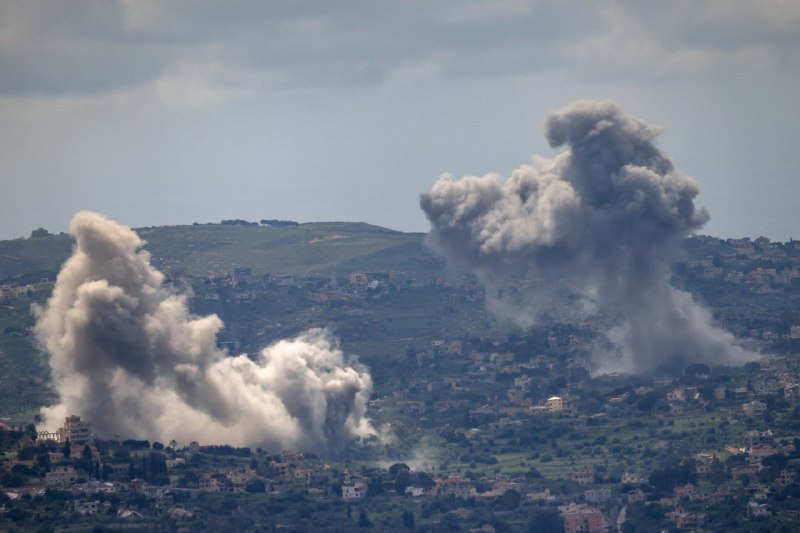
At 05:11 UTC on 15 June 2026, an X account affiliated with the US market-data outlet Unusual Whales reported that Prime Minister Benjamin Netanyahu had informed President Donald Trump that Israel was not bound by the Lebanon clause in the agreement. The claim, attributed to Israeli media, was a single sentence. By 08:27 UTC the same morning, the Telegram channel of The Jerusalem Post had softened the picture: Israel would not withdraw from Lebanon, the channel reported, but it would refrain from striking if the ceasefire held. Three hours later, a Polymarket-curated wire item, timestamped 00:31 UTC, recorded Trump publicly describing Netanyahu as a "very difficult guy" after Israel was reportedly left out of US-Iran negotiations. Three signals in roughly twenty-four hours. Each, taken alone, looks like atmospherics. Taken together, they describe a diplomatic architecture in which Washington is negotiating with Tehran, Jerusalem is reserving the right to act unilaterally in Beirut, and the public commentary is, for once, unusually candid about the friction.
What is unfolding is not a settlement. It is an arrangement held together by overlapping reservations, where each side publicly signals what it will not accept and privately preserves the latitude to act. The pattern matters because the US-Iran track and the Israel-Lebanon track have been treated in much of the Western commentary as one continuous story. The reporting on 15 June suggests they are increasingly decoupled — and that Israel, by reserving the Lebanon clause, has made that decoupling explicit.
The reservation, and what it actually means
The operative phrase, as relayed by the Unusual Whales wire, is that Israel is "not bound by the Lebanon clause in the agreement." That formulation is narrower than it sounds, and broader than it needs to be. Narrower, because a formal reservation in a multilateral text is a recognised diplomatic instrument: it signals non-acquiescence on a specific provision while leaving the rest of the document intact. Broader, because the reporting does not specify which agreement, which clause, or which negotiating track. The Jerusalem Post Telegram item refers to a "US-Iran deal" and a separate "issue of Lebanon" — implying the Lebanon provision sits in a US-Iran instrument, not in an Israel-Lebanon bilateral.
That reading aligns with the public choreography. The Trump-Netanyahu call reportedly took place around the moment US and Iranian negotiators were exchanging terms; the Polymarket wire places the US president's "very difficult guy" remark in the same news cycle in which Israel was reportedly left out of the US-Iran track. If the Lebanon clause is an Iranian request — that the US extract a quiet understanding from Israel on the northern front in exchange for Iranian restraint elsewhere — then Netanyahu's reservation is a refusal to be traded. It preserves Israel's freedom of action in Lebanon while leaving Washington free to claim, in its dealings with Tehran, that it has done what it can.
The Jerusalem Post framing, by contrast, is more conservative. It reports that Israel "will not leave Lebanon" — implying forces are present, or at least the question of withdrawal is live — and that the condition for restraint is continued quiet. That is not a reservation against a clause; it is a conditional posture. Two different accounts of the same day, both traceable to Israeli sources, both credible, and not easily reconciled on the available evidence.
The asymmetric ceasefire
For a ceasefire to function, the parties that matter most have to believe that the cost of resuming fighting exceeds the cost of restraint. On 15 June, the evidence suggests Israel is the party reserving optionality, not the party seeking cover. The Jerusalem Post framing — restraint conditional on quiet — is closer to deterrence posture than to a peace process. It says, in effect: the guns are quiet; the guns will stay quiet as long as the other side does not give us a reason; the moment it does, we act.
That is not an unusual Israeli position historically, but it sits in tension with a US negotiating track that requires predictability from regional partners. Washington cannot sell Tehran a regional de-escalation if the principal US partner in the region is publicly reserving the right to strike on its own schedule. The Trump "very difficult guy" remark is, on this reading, a presidential acknowledgement of the constraint: the president is naming the problem he is managing. It is also, not incidentally, a signal to Tehran that the United States and Israel are not identical actors in this round — a point Iran has made privately and publicly for years.
The harder question is what holds the asymmetric arrangement together if it is tested. Israeli security concerns are not manufactured; the northern front has been an active theatre, and Israeli decision-makers have consistently framed unilateral action as a legitimate response to specific provocations. The 15 June reporting, however, suggests that the trigger conditions are not being defined in writing. They are being held in the prime minister's office. That concentrates risk in a single node of decision-making and makes the durability of the quiet a function of Israeli domestic politics and intelligence assessments that the public record does not currently disclose.
What the US-Iran track is actually buying
The Polymarket wire on Trump's remarks dates to 00:31 UTC on 15 June, which places it in the early hours of the US morning. The reporting is that Israel was "left out" of US-Iran negotiations. "Left out" is a loaded verb. It can mean excluded from the table, briefed late, or simply not consulted on the specific concessions under discussion. The available wire does not distinguish. What it does establish is that the US negotiating position is being constructed in a forum from which the most militarily capable regional partner is, at minimum, not a full participant.
This is the structural feature worth naming plainly. The United States is the convener and the security guarantor. Iran is the principal counter-party. Israel is the regional actor with the operational capacity and the political incentive to act independently. A deal negotiated between Washington and Tehran, even one that includes Lebanese language, cannot extinguish the underlying capability asymmetry. It can only price it. If the price Iran is willing to pay for Israeli restraint in Lebanon is lower than the price Israel is willing to pay for freedom of action, the clause becomes advisory.
That is the most likely reason for the reservation. A public reservation is also a domestic signal: it tells the Israeli public, and actors inside the security cabinet, that the prime minister has not traded the northern front for a US-Iran accommodation. It also tells Washington, without saying so directly, that the United States cannot deliver Israeli compliance as a free good in any future deal.
The cost of the public quarrel
Presidents do not usually call allied prime ministers "very difficult" in quotable form. When they do, the cost is paid on both sides of the relationship. For Trump, the remark signals to a domestic audience that he is not being rolled by a foreign counterpart — a useful posture with an electorate that rewards toughness. For Netanyahu, it raises the cost of any subsequent climb-down, because a climb-down is now visibly a climb-down from a position publicly named as difficult. The diplomatic effect is to compress the space in which the two governments can quietly adjust.
This kind of public friction is not unique to this administration or this prime minister. The structural pattern — a US president negotiating with an adversary while managing a more capable ally that objects to the terms — recurs across the post-1945 order. What is distinctive on 15 June 2026 is the speed of disclosure. Twenty-four hours produced a reservation, a public explanation of restraint, and a presidential aside. The information environment is no longer a leash on the principals; it is a stage on which they perform their disagreements in near real time.
What remains uncertain
The sources do not specify which agreement or clause Netanyahu is reserving against. They do not specify whether Israeli forces are presently deployed in Lebanon in a manner that would require a withdrawal undertaking, or whether the question is hypothetical. They do not disclose what, if anything, the United States has offered Israel in compensation for restraint, or what Iran has offered the United States in exchange for extracting Israeli restraint. The Unusual Whales wire attributes the reservation reporting to "Israel media" without naming an outlet; the Jerusalem Post Telegram item refers to sources without identifying them; the Polymarket wire on Trump's remarks is a curated headline rather than a transcript. The day, in other words, is well-documented at the level of mood and posture, and under-documented at the level of text.
The plausible alternative reading is also on the table: that the reservation is a routine diplomatic marker, the Trump remark is a routine presidential aside, and the asymmetry is being inflated by a financial-data account and a prediction-market aggregator whose business is to surface signal. The dominant framing — that Israel is decoupling from the US-Iran track on the Lebanon question while preserving the public alliance — holds because the three independent signals point in the same direction. They could all, however, be downstream of a single Israeli communication operation. Until the underlying text appears, or the principal actors speak on the record beyond the fragments captured on 15 June, that possibility cannot be ruled out.
What the day does establish, with reasonable confidence, is that the ceasefire being held together is not the same as a settlement being negotiated. It is a posture of conditional restraint underwritten by Israeli capability and US convening power, with the Lebanese clause as the first place the arrangement will be tested if testing begins.
Desk note: Wire coverage on 15 June treated the Israel reservation and the Trump-Netanyahu friction as parallel stories. Monexus reads them as a single architecture: Washington negotiates with Tehran, Jerusalem reserves the northern front, and the public quarrel is the price of preserving both tracks at once.
Wire provenance
This editorial synthesis draws on the following public wire/social posts:
- https://t.me/s/The_Jerusalem_Post
- https://en.wikipedia.org/wiki/Israel%E2%80%93Lebanon_relations
- https://en.wikipedia.org/wiki/2025%E2%80%932026_Iran%E2%80%93United_States_negotiations
- https://en.wikipedia.org/wiki/2024_Israeli_invasion_of_Lebanon
- https://en.wikipedia.org/wiki/Trump_administration_disclosures_on_Iran
Follow the event.
These dated source records provide context. They do not retrospectively verify this archive article.
Separate what the nuclear watchdog reported from what it could not determine after the June 2025 strikes.
- https://t.me/s/The_Jerusalem_Post
- https://en.wikipedia.org/wiki/Israel%E2%80%93Lebanon_relations
- https://en.wikipedia.org/wiki/2025%E2%80%932026_Iran%E2%80%93United_States_negotiations
- https://en.wikipedia.org/wiki/2024_Israeli_invasion_of_Lebanon
- https://en.wikipedia.org/wiki/Trump_administration_disclosures_on_Iran