Israel Holds the Line: A US-Iran Deal and the Lebanon Caveat
A US-brokered ceasefire with Iran leaves Israel's northern front exposed, prompting ministers in Jerusalem to publicly repudiate the arrangement while displaced Lebanese weigh whether to head home.
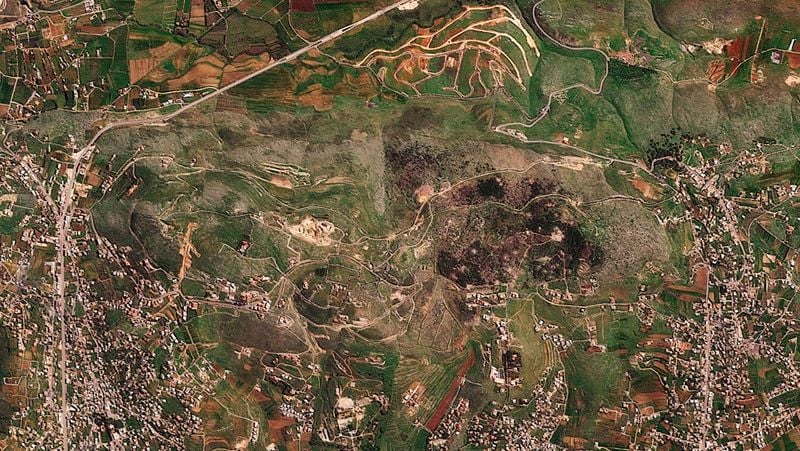
At first light on 15 June 2026, the diplomatic stage in the Middle East tilted on a single, uncomfortable axis. The United States and Iran had moved, in a matter of weeks, from open confrontation to the public architecture of a ceasefire, and in doing so had pulled a third country — Lebanon — into the deal's frame while leaving the most exposed actor in the region, Israel, formally outside it. By 08:25 UTC, Reuters was reporting that authorities in southern Lebanon were warning displaced residents against rushing home, even as Israel publicly stated that the arrangement did not bind it. By 08:40 UTC, Israeli National Security Minister Itamar Ben-Gvir, in remarks carried by Iranian state outlet Press TV, was rejecting any agreement between Donald Trump and Iran and demanding the dismantling of what he called the broader threat. By 08:57 UTC, the Jerusalem Post was leading with an Israeli political reaction: "We are not partners to this agreement that does not ensure our security, and it does not bind us in any way." Three messages, three sources, one fault line: a great-power understanding that has not convinced the country whose northern border is the war.
What this publication is watching is not a single deal but a sequencing problem. A US-Iran understanding can end the escalatory cycle that brought the two countries to the brink, but it cannot by itself retire the Hezbollah front in southern Lebanon, where three months of fighting have uprooted civilian populations and where, in the hours after the announcement, the institutions of the Lebanese state were telling people not to come back. The structural pattern is familiar: a regional settlement is negotiated between the powers at the outer rim and then leaves the smaller state to absorb the consequences in real time. The deal's architecture is in Washington and Tehran. Its consequences are on the Litani.
The deal, and what it does not cover
The text of the US-Iran arrangement has not been published in full, but its outline is clear from official readouts carried by Iranian and Western outlets. It brings a halt to the direct exchange of fire that defined the spring of 2026 — Iranian missile volleys, Israeli strikes on Iranian-linked assets, and the naval and proxy skirmishes around the Strait of Hormuz — and it commits both sides to a verification track that runs through Omani and Qatari intermediaries. It does not, on the public read, adjudicate the Lebanon theatre. That is the gap, and it is the gap that is now driving Israeli politics.
Israeli ministers, led by Ben-Gvir, have framed the omission as deliberate. The Jerusalem Post's 08:57 UTC bulletin quoted the National Security Minister in language that the paper said was echoed by other members of the far-right Otzma Yehudit faction: Israel is "not a partner" to the agreement, the arrangement does not bind it, and the broader Iranian-aligned axis on Israel's border cannot be left in place as a residual threat. Press TV's 08:40 UTC summary, while translated through Iranian state media's own framing, captured the same demand: the complete dismantling of what the minister described as the threat array facing Israel. Two outlets with very different editorial lines arrived at the same substantive point, which is itself a signal that the Israeli objection is being made loudly and across the political spectrum, not whispered in cabinet.
This is the first-order question for any reader trying to understand 15 June 2026: a US-Iran ceasefire is in place, and Israel is publicly reserving the right to keep fighting in Lebanon. The deal does not bind Israel because Israel did not sign it, and the Israeli political class — or at least the loudest part of it — is signalling that it does not intend to be bound by it.
The southern Lebanon warning
Reuters' reporting from 08:25 UTC, as carried on the wire, is the piece of the day that grounds the abstract diplomacy in human geography. Authorities in southern Lebanon were warning people displaced by three months of war between Israel and Hezbollah against rushing home. The reasoning, implicit in the wire copy, is straightforward: a great-power ceasefire between Washington and Tehran is not the same as a ceasefire on the ground between the IDF and Hezbollah, and the Lebanese state's own institutions were telling their citizens that the second condition had not been met.
The Litani River, the conventional dividing line for Hezbollah's area of operations in the south, has been the practical boundary of Israeli air and ground operations through the spring. Three months is a long time in a populated border district. The displacement that Reuters references is not a footnote; it is the social fact that gives the diplomatic news its weight. Towns in the Tyre and Bint Jbeil districts have been emptied in phases, the displaced moving north and east into the Bekaa, into Beirut's southern suburbs, and into informal shelter arrangements in schools and unfinished buildings. Telling them to stay where they are, on the morning of a deal that is being celebrated in Washington and Tehran, is to acknowledge that the deal has not actually ended the war they are living through.
It is also worth reading the warning for what it says about the Lebanese state's relationship to its own territory. Lebanon, for the duration of the conflict, has been a battlefield on which other people's wars have been fought, and its official communications have largely tracked the political space allowed to it by Hezbollah on one side and the diplomatic space allowed to it by the US and Iran on the other. The Reuters report is one of the few moments in the public record where the Lebanese state itself is the actor, issuing a directive to its own people about their own safety, and that directive is: do not come home yet.
The political map inside Israel
The Ben-Gvir quotation, as carried in both the Jerusalem Post and the Press TV readouts, is the kind of line that travels — "not a banana republic," the minister said — and it is worth pausing on because it tells you where the Israeli debate sits. The objection is not, on its face, to diplomacy as such. It is to a diplomatic architecture that the minister and his faction believe trades Israeli security for a great-power convenience.
The structural read is that Israel's far-right has, over the past 18 months, moved toward an open-ended framing of the Hezbollah threat — one that treats the ceasefire question as a continuation of conflict by other means, and that pushes the political mainstream toward either accepting that framing or publicly contesting it. The Jerusalem Post's report, by giving the quote prominent play in its 08:57 UTC bulletin, suggests that the contestation is real. Other Israeli outlets, including the more critical Haaretz, have over the spring run a parallel line that the Netanyahu government's willingness to entertain any US-Iran deal is itself a sign that the northern front is being traded away in quiet. That is a different critique, but it runs into the same conclusion: the deal is contested inside Israel, and the contest is now public.
The reader should note what the wire does not say. It does not say that the IDF has been ordered to stand down on the northern front. It does not say that the political leadership has disowned Ben-Gvir's framing. The Israeli cabinet, as of 15 June 2026, is on the record as not being a party to the agreement, and that is the operating posture of the day.
The structural frame: deals at the rim, wars at the core
What is being exposed, beneath the day's news cycle, is a pattern that has governed Middle Eastern diplomacy for at least a generation. A regional escalation is managed by a deal between the two largest external actors — in this case the US and Iran — and the smaller state on the ground, which has absorbed the cost of the escalation, is told to wait for the deal's terms to filter down. Lebanon has been the textbook case of this dynamic since at least 2006, and arguably since 1982. The Israeli objection, on this reading, is not unreasonable on its own terms: a deal that stops Iranian missile fire at Tel Aviv does not necessarily stop rocket and drone fire at the Galilee.
The deeper problem is that the verification architecture of a US-Iran deal — the Omani channel, the Qatari channel, the IAEA track, the sanctions sequencing — is built around the kind of state-to-state commitments that the Islamic Republic can make and observe, but that say nothing about a non-state armed actor embedded in a sovereign country's politics. Hezbollah is not a signatory. Lebanon is not a signatory. The deal's text, in so far as it has been read out, treats the Israel-Lebanon front as a downstream operational matter to be managed, not as a co-equal front to be settled. That is the gap, and it is the gap Ben-Gvir is pointing at, in language designed to make sure it cannot be ignored.
A second structural point is worth making, because it is the kind of detail that gets lost in the headline. The Israeli objection, as expressed in the Jerusalem Post, is a domestic political objection first and a strategic one second. The minister's "banana republic" line is aimed at an Israeli audience and at a coalition that has been under pressure from hostage families, from the families of soldiers killed in the northern campaign, and from a security establishment that has spent three months fighting a war that the rest of the region would like to call concluded. The strategic content of the objection — that Israel reserves the right to keep fighting — is real, but the political pressure that produced the public statement is the immediate driver.
Stakes and the week ahead
The next seven days will tell the reader which of the day's two readings is correct. If the IDF de-escalates in the south, displaces the troops from the forward positions, and begins the bureaucratic process of handing the Litani line back to UNIFIL and the Lebanese Armed Forces, then the Ben-Gvir statement will read, in retrospect, as political theatre on the way to acceptance. If the IDF holds its positions, conducts additional strikes against Hezbollah infrastructure in the south, and the political leadership continues to publicly distance itself from the US-Iran architecture, then the warning the Lebanese state issued to its displaced citizens will be the operative line of the week, and the US-Iran deal will have to be understood as a half-architecture — a deal that ended one war and left another running.
The risks run in both directions. A continued Israeli campaign in the south, with US-Iranian diplomacy still in its early verification phase, would put the verification process under immediate strain and would hand critics in Washington and Tehran the argument that the other side cannot be trusted to manage the periphery. A unilateral Israeli pullback, on the other hand, would be politically intolerable inside the Netanyahu coalition and would harden the line inside the far-right that the prime minister is trading northern residents' safety for a quiet word with the Americans. The week ahead is the test.
What the sources disagree about, in the honest accounting, is the size of the gap between the US-Iran deal and the Israeli position. The Western wire line, in Reuters' 08:25 UTC bulletin, treats the deal as the news and the Israeli objection as a complication. The Israeli line, in the Jerusalem Post, treats the Israeli objection as the news and the deal as a complication. The Iranian state line, in Press TV, treats the deal as a partial victory and the Israeli objection as evidence that the threat remains and must be dismantled. None of the three frames is wrong, and that is the point: the day is overdetermined, and the reader is being asked to hold three readings at once and to wait for the ground truth in the south to resolve them.
The Lebanon variable, and what the wires are not yet saying
A note on what is missing. The wire items for 15 June 2026 do not give a casualty figure, a displacement count, or a verified list of the southern Lebanese districts that remain in Israeli operational terms. They do not specify the IDF's order of battle on the Litani line, and they do not report the Lebanese government's official position on the US-Iran deal. The Reuters report tells the reader that the Lebanese state warned its citizens to stay away, and the other two items tell the reader that the Israeli and Iranian readings of the deal diverge sharply. What neither the wires nor the Telegram channels cited here have done, in the morning of 15 June 2026, is to put a number on the human cost of the three months of war in the south, and that number — when it comes — will be the most important single fact of the week, and the one that will determine whether the political map in Jerusalem can absorb a deal the security establishment does not want.
The honest summary, then, is the one the Reuters bulletin gave in passing: the deal is real, the war in the south is real, and the two are not yet the same event. The day is a hinge. The hinge has not yet turned.
This piece was filed in Monexus's long-reads desk from the wire items of 15 June 2026. The desk note: the Israeli objection is reported here at the same weight as the Western wire's account of the deal, on the editorial judgment that a US-Iran ceasefire which leaves the Israel-Lebanon front active is two different stories at once, and that the smaller, more local story will determine whether the larger one holds.
Wire provenance
This editorial synthesis draws on the following public wire/social posts:
- https://t.me/The_Jerusalem_Post
- https://t.me/presstv
Follow the event.
These dated source records provide context. They do not retrospectively verify this archive article.
Separate what the nuclear watchdog reported from what it could not determine after the June 2025 strikes.