Israeli Lebanon withdrawal off the table as US-Iran MOU heads toward public release
A senior US official has told reporters that Israel will not be required to pull back from southern Lebanon under the emerging Iran deal — and that the text of the memorandum could be public within 48 hours.
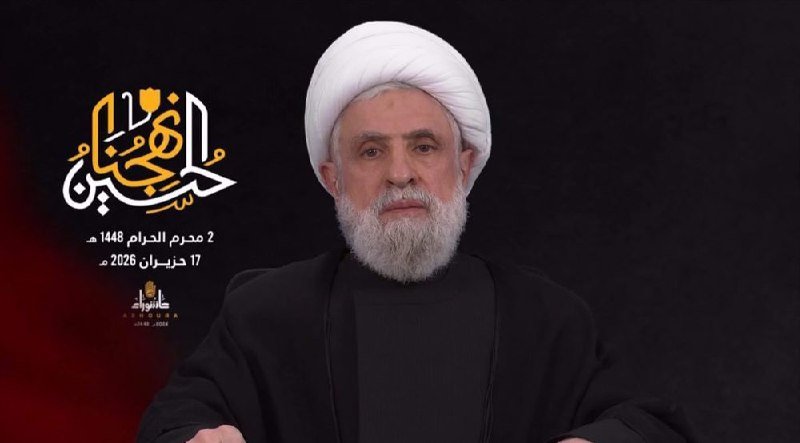
A senior US official said on 2026-06-15 that Israel will not be required to withdraw its forces from southern Lebanon as a condition of the emerging agreement with Iran, in comments relayed by Israeli diplomatic correspondent Amit Segal and separately by the open-source channel Open Source Intel. The same official indicated that the text of the US-Iran memorandum of understanding could be released publicly within forty-eight hours.
The framing matters. Washington is signalling, before the ink is on paper, that its closest regional partner retains an open-ended right of action against Hezbollah on the border — a structural carve-out that gives Israel a continuing military role in Lebanon long after the broader Iran file is closed. The arrangement, as described, is less a regional settlement than a layered one: a diplomatic track with Tehran, and a separate security track in the north, both running in parallel.
What the US actually said
Reporting from Axios, carried in summary by the channels Open Source Intel and GeoPolitical Watch, attributes two distinct claims to a single senior US official. First, that "Israeli withdrawal from southern Lebanon is not a condition of the agreement." Second, that "if Hezbollah attacks, Israel has the right to self-defense." Segal's Hebrew-language feed, which often carries the most precise wording from Israeli and American principals, put the formulation bluntly: Israel keeps the right to strike back if Hezbollah attacks.
The wording is deliberate. "Self-defence" is the legal vocabulary that states use when they want to preserve freedom of action outside a formal ceasefire architecture. It is also the vocabulary that lets Washington present the deal to a sceptical Israeli audience as one that does not strand the Jewish state on its northern frontier. The senior official's dual-track framing — no withdrawal required, right of action preserved — is the diplomatic equivalent of an insurance policy, written into the public record before the deal itself is.
The second claim is procedural but politically loaded. A US-Iran MOU is typically a non-binding instrument, sitting one notch below a formal agreement. If the text is released within forty-eight hours, as the official suggested, it will be subject to granular reading by Israeli, Gulf, and Congressional audiences almost immediately. The Open Source Intel channel added a parenthetical hope that disclosure would come "earlier" — a useful tell that even well-connected observers expect the public version to be heavily negotiated.
The Israeli security argument
From Jerusalem's vantage point, the announcement answers a question that has dogged the talks since they became public: whether a US-Iran understanding would, by design or by omission, force Israel into a posture it had not chosen. The official line from Prime Minister Benjamin Netanyahu's office across multiple rounds of negotiation has been that Israel will not accept any arrangement that constrains its operational freedom against Hezbollah, an Iranian-proxy force that fired rockets, drones, and anti-tank missiles at northern Israeli communities from 8 October 2023 onward and forced the displacement of roughly 60,000 residents of the Galilee panhandle.
Hezbollah's formal military capabilities have been degraded since the September 2024 operations, but the organisation retains a residual rocket and missile inventory, a reconstruction programme financed principally by Iran, and a continuing presence in the Bekaa Valley and in the southern suburbs of Beirut. Israeli officials have long argued that a US-Iran deal that does not address the northern front simply moves the confrontation, not the threat. The senior US official's comments amount to a public, on-record endorsement of that position.
The reading from Beirut and the Lebanese state
The Lebanese government of President Joseph Aoun and Prime Minister Nawaf Salam has its own equities, which the official's comments do not address. Beirut wants a clear timeline for Israeli withdrawal from the five points Israel has held inside southern Lebanese territory, in line with the November 2024 cessation-of-hostilities understanding, and it wants the mechanism — not just the right of self-defence — for pushing Hezbollah north of the Litani.
The US official's formulation leaves the territorial question ambiguous. "Not a condition of the agreement" reads in Washington as a sensible carve-out. It reads in Beirut as confirmation that Washington has decided the timetable for southern Lebanon is an Israeli prerogative, not a Lebanese one. The structural dynamic is familiar: a regional deal is struck between two external powers, and the smaller state that hosts the relevant border absorbs the consequences.
What remains unresolved
Several pieces of the puzzle are still moving. The text of the MOU has not been released. The senior official's comments were attributed, not on-the-record with a name, and the channel that carried them is the same one that has previously carried optimistic timing on Iran-related disclosures. The Hezbollah response is not yet on the public record. The Iranian side has not, as of 2026-06-15T16:15Z, confirmed the Lebanese carve-out in its own readouts. And the practical question — what counts as "Hezbollah attacks" sufficient to trigger the right of self-defence, and over what geographic scope — is the kind of definition that gets written into the next crisis, not the next press conference.
The honest read is that the United States is constructing an architecture in which the Iran file can be declared "managed" without the Lebanon file being declared "resolved." Whether that is a sustainable arrangement, or a deferred one, depends on whether Hezbollah chooses to test the line that has just been drawn around it.
This article draws on Telegram-channel wire summaries rather than direct on-the-record statements; readers seeking the primary documents should watch for the MOU text release flagged for the next forty-eight hours.
Wire provenance
This editorial synthesis draws on the following public wire/social posts:
- https://t.me/amitsegal/
- https://t.me/osintlive/
- https://t.me/osintlive/
- https://t.me/GeoPWatch/
- https://en.wikipedia.org/wiki/Israel%E2%80%93Hezbollah_conflict_(2023%E2%80%93present)
- https://en.wikipedia.org/wiki/November_2024_Israel%E2%80%93Lebanon_ceasefire
Follow the event.
These dated source records provide context. They do not retrospectively verify this archive article.
Separate what the nuclear watchdog reported from what it could not determine after the June 2025 strikes.