Israeli artillery strikes hit south Lebanon as cross-border tempo rises
Two Telegram channels aligned with the Lebanese and Russian-aligned information sphere reported Israeli artillery fire on villages in the Nabatieh district on the morning of 15 June 2026, the latest in a pattern of near-daily exchanges that has worn down the post-2024 arrangement.
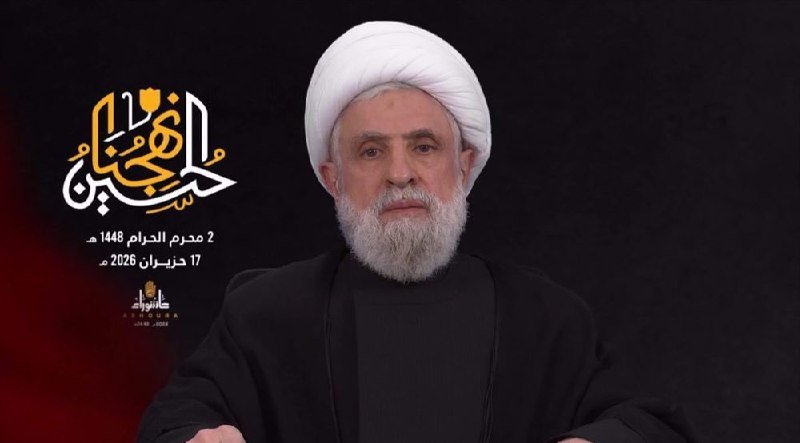
At 09:14 UTC on 15 June 2026, the Beirut-based outlet The Cradle Media reported on its official Telegram channel that Israeli artillery fire had struck Ali al-Taher Hill, in the Nabatieh district of south Lebanon. Twelve minutes earlier, the Russia-aligned war-channel Intel Slava carried an overlapping report, placing shells on the adjacent localities of Nabatieh al-Fawqa and Kfar Tebnit. The two notices, posted within the same operational window, point to a single tactical action: an IDF artillery barrage against a cluster of high-ground and built-up positions roughly six kilometres from the Blue Line.
The morning strike is the latest in a sequence of near-daily exchanges along the Israel–Lebanon frontier that has, for most of 2026, made a mockery of the cessation-of-hostilities understanding reached in late 2024. What the architecture of that arrangement was meant to prevent — direct, attributable fire on named villages — is now being reported by Telegram channels at a tempo that, in the spring of 2025, would have made the international wire services pause. Instead, two Telegram notices and a brief Israeli follow-up have become the day's news cycle.
What the two reports say — and what they don't
The Cradle's alert is geographically specific. Ali al-Taher Hill sits on the ridgeline that separates the Litani's upper tributaries from the Israeli town of Metula; it is the same ground Israeli forces cleared in the autumn 2024 ground operation. Intel Slava's report, by contrast, places fire on Nabatieh al-Fawqa — the historic upper town of the Nabatieh municipality — and on Kfar Tebnit, a Christian village eight kilometres north. The two channels do not contradict each other so much as triangulate: one emphasises the high ground, the other the populated valley.
Neither outlet cites an Israeli military source. The Cradle, founded in 2024 as an English-language successor to outlets banned on Western platforms, has documented its reporting from south Lebanon through a combination of local stringers and on-the-ground correspondents; its framing tends to treat Israeli operations as the default frame, with Hezbollah posture inferred from the response rather than the cause. Intel Slava, by contrast, is part of a wider Russian-language reporting ecosystem that has foregrounded the Israel–Lebanon frontier since the autumn 2024 escalation; its sourcing is often thin on attribution but consistent in geography. The convergence of the two, at 09:02 and 09:14 UTC, is the strongest cross-channel confirmation an analyst can expect outside an IDF briefing.
The IDF's own channel did not, as of midday UTC on 15 June, post a confirming release. The absence is itself a signal: targeted artillery actions on previously cleared ground have, in the Israeli military's standard practice, been described in brief Hebrew-language notices rather than elevated to English-language spokesperson statements. Western wires, for their part, have largely stopped leading with single-village strikes in south Lebanon since the early weeks of the present tempo, treating them as background rather than news.
A pattern, not a punchline
What the two Telegram reports capture is not an incident so much as a steady state. South Lebanon in 2026 has settled into an asymmetric tempo: Israeli artillery and occasional airstrikes on positions associated with Hezbollah's residual south-Lebanon infrastructure; rocket, anti-tank and drone fire from Lebanese territory in the opposite direction at a lower but persistent cadence; and a diplomatic layer in Beirut, Doha and Paris that formally maintains the November 2024 framework while functionally conceding that the framework's verification and de-escalation mechanisms are operating at minimum capacity.
The structural problem is not the absence of an arrangement but the arrangement's loss of content. The November 2024 understanding, brokered under heavy United States and French pressure, traded an Israeli ground withdrawal from the Litani belt for Hezbollah's commitment to remove heavy weapons and accredited fighters north of the Litani. The withdrawal happened. The transfer of capability has, by every available account, been partial. The result is a zone in which both sides retain the wherewithal to strike and the diplomatic cover to deny responsibility for the resulting damage.
For villages in the Nabatieh district — Nabatieh al-Fawqa, Kfar Tebnit, Aitaroun, the ridge above Aita al-Shaab — the practical question is no longer whether the next round will come, but how much of it will arrive in the form of conventional artillery, and how much in the form of guided munitions that the wider public will never see named on a wire ticker.
The information layer, and why Telegram carries the lead
The geometry of the day's coverage is itself a story. The two earliest, most specific public reports of the morning strike did not come from the wire desks in Jerusalem, Beirut or Washington. They came from Telegram channels with explicit editorial alignments — The Cradle in the axis-of-resistance information space, Intel Slava in the Russian-language analytical space. Reuters, the BBC, the Guardian and Al Jazeera have, across 2026, treated individual village-level strikes in south Lebanon as background unless they produce mass-casualty events or air-defence engagements visible on the relevant open-source feeds.
That hierarchy of attention is doing real political work. The Western wire lag gives the Telegram channels the framing of the day's events; the wires, when they do pick the story up, tend to follow the Telegram framings already in circulation. The result is a slow but measurable migration of the narrative centre of gravity away from Tel Aviv and the Pentagon and toward Beirut- and Moscow-adjacent information nodes. Whether that migration reflects a deeper shift in operational access — more Lebanese stringers, more drone footage, less Israeli press embed availability — or simply the cost calculus of a Western wire industry that has trimmed its Lebanon desks, is a question the public record does not yet resolve.
Stakes, and what remains unclear
The short-term stakes are local and severe. Ali al-Taher Hill and the surrounding Nabatieh villages sit in a zone where civilian return has been partial, where agricultural recovery is measured in hectares of olive grove, and where the cost of a single artillery hit is borne by households that have already absorbed several. The medium-term stakes are regional: a frontier in which the 2024 framework is honoured in name and violated in practice is a frontier on which the next escalation will be a question of calendar, not of choice.
What the available record does not yet establish is the specific operational target of the morning's barrage — whether it was a weapons depot, a launch position, a command node, or a pre-emptive action based on early-warning intelligence. The IDF's English-language channel has been silent on the specific incident. The two Telegram reports do not, by their own description, include that level of detail. Confirmation from the Israeli military, from UNIFIL, or from the Lebanese Armed Forces, would move the picture from "two Telegram channels reported fire" to a corroborated event with an attributable objective. Until that confirmation arrives — and the public record is not promising it will — the morning's strike remains exactly what the two channels say it is: a fact of the border, narrated at the speed of the platform that saw it first.
—Monexus framed this against the two-channel Telegram reporting layer rather than the wire tier, on the assumption that the wire tier is, at present, structurally slower than the channels that carry the original alert. Where the IDF's own English-language channel is silent, this publication treats silence as a fact rather than a denial.
Wire provenance
This editorial synthesis draws on the following public wire/social posts:
- https://t.me/thecradlemedia
- https://t.me/TheCradleMedia
- https://t.me/intelslava