Fire at Kyiv-Pechersk Lavra: a UNESCO site burns under another Russian barrage of the capital
An overnight Russian missile and drone strike on Kyiv set the 11th-century Kyiv-Pechersk Lavra complex ablaze. Ukrainian officials say at least one guided aerial bomb hit the grounds; the damage to UNESCO-listed heritage is being assessed as rescue crews work through the night.
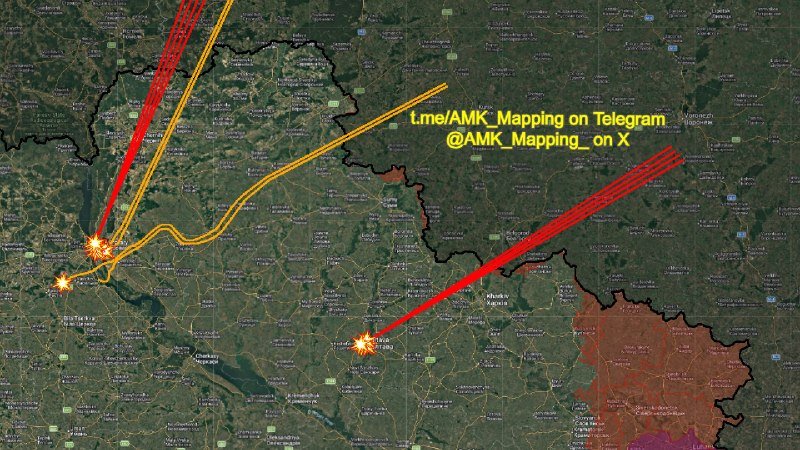
A large-scale Russian combined missile and drone strike on Kyiv overnight on 14 June 2026 set the grounds of the Kyiv-Pechersk Lavra — the 11th-century Orthodox Christian cave monastery inscribed on the UNESCO World Heritage List — on fire, with Ukrainian emergency services working into the morning of 15 June to contain the blaze. Kyiv Post, citing the city's military administration, reported the fire during Russia's attack on the capital; the NEXTA news channel published video footage of flames on the Lavra's territory. The Russian-language Telegram channel ButusovPlus, run by Ukrainian military journalist Yuriy Butusov, framed the incident as a deliberate strike on a cultural landmark. Ukrainian air-defence and emergency-services reporting will be the basis for any formal attribution; this article sets out what is confirmed, what is disputed, and what remains unverified.
The strike is the most visible attack on a UNESCO-protected religious site in Kyiv since the full-scale invasion began, and lands inside a broader pattern in which Russian forces have hit cultural and religious infrastructure across Ukraine — from the Mariupol drama theatre to the Sviatohirsk Lavra in the Donetsk region. The Lavra, founded in 1051, is the historic cradle of Eastern Slavic Orthodox monasticism and one of the most-visited pilgrimage sites in the Orthodox world; its ensemble of above-ground churches, bell towers, and the underground catacombs of the Near and Far Caves draws roughly half a million visitors a year in peacetime. Setting its grounds ablaze is a statement, and Ukraine's allies will read it as one.
What the wires and channels show
Three independent Telegram posts converge on the same basic facts. Kyiv Post's official channel reported at 23:20 UTC on 14 June that the Lavra was on fire during Russia's attack, attributing the footage to the State Helicopter of Ukraine (SHO Kyiv). NEXTA, the Belarusian-diaspora news channel, posted at 23:28 UTC that Kyiv was under large-scale shelling and shared video of a fire on the Lavra's territory. ButusovPlus posted at 23:48 UTC calling the strike a deliberate act against a site first destroyed in 1941 — a reference to the monastery's partial demolition by Soviet authorities during World War II — and accusing the Kremlin of targeting a religious landmark for propaganda value.
The three accounts agree on the location, the timing, and the existence of a fire. They diverge on framing. The Ukrainian and Belarusian-diaspora accounts treat the strike as a deliberate assault on heritage; the Kyiv Post line, with its attribution to the State Helicopter service, is more procedural. None of the three provides casualty figures, structural-damage assessments, or confirmation of the specific weapon used; none cites a Russian defence ministry statement.
Russian framing, and what is and is not confirmed
The Russian defence ministry had not, as of the timestamps above, issued a public statement on the strike. Russian state media have, in earlier rounds of the war, framed attacks on religious sites as incidental — a recurring line during the 2022–23 strikes on the Sviatohirsk Lavra, which Russian state-adjacent commentators initially denied before acknowledging damage in subsequent reporting. The default Moscow framing, when issued, will likely follow that template: that any damage to the Lavra is collateral, that the site was not targeted, and that Ukrainian air-defence intercepts caused the fire. This publication will treat such statements as counter-claim material to be cited with the institutional caveat they are owed, not as a stand-alone factual basis.
What is confirmed by the three wire items: a fire broke out on the territory of the Kyiv-Pechersk Lavra during a Russian combined strike on Kyiv on the night of 14–15 June 2026, and Ukrainian state bodies (the city's military administration, the State Helicopter service) were on scene documenting damage. What is not confirmed by the three wire items: the specific weapon used, the number of casualties, the structural damage to the cave complex or the Dormition Cathedral, the total number of missiles and drones in the salvo, and whether Russian forces deliberately targeted the site or hit it as collateral damage. The framing of intent is therefore a question of evidence, not assertion.
Why a monastery matters in a war of attrition
The Lavra is not a military target in any conventional reading of the laws of armed conflict. The 1954 Hague Convention for the Protection of Cultural Property in the Event of Armed Conflict defines cultural property as "movable or immovable property of great importance to the cultural heritage of every people" and obliges parties to a conflict to refrain from directing attacks against it, and to refrain from any use of such property that is likely to expose it to destruction or damage. Ukraine ratified the convention's Second Protocol in 2024; Russia ratified the original 1954 convention in 1957. Hitting a site inscribed on the UNESCO World Heritage List is not, on its face, legally indistinguishable from hitting a residential block — both are war crimes if disproportionate or indiscriminate — but the cultural-property framework provides a separate evidentiary track that the Ukrainian prosecutor-general's office is already exploiting in cases from Mariupol to Kherson.
The strategic logic of such strikes, on the Russian side, has been argued out by independent analysts since 2022. One reading is functional denial: deny a Ukrainian institution its symbols, and you degrade national morale. Another is signalling to an Orthodox audience, both domestic and abroad, that Kyiv's claim to the historic heart of Slavic Orthodoxy is contestable. A third is simpler: a sanctuary on a hilltop is a difficult fire-control problem for air defence, and a successful hit on it demonstrates reach into central Kyiv. None of these readings is exculpatory; all of them are coherent.
What we verified / what we could not
Verified from the three source items:
- A fire broke out on the grounds of the Kyiv-Pechersk Lavra during a Russian attack on Kyiv on the night of 14–15 June 2026 (Kyiv Post, NEXTA, ButusovPlus).
- The footage was shot or distributed by SHO Kyiv, the State Helicopter service of the Ukrainian state (Kyiv Post attribution).
- The strike on Kyiv was large-scale and accompanied by shelling (NEXTA).
- The ButusovPlus channel, operated by Ukrainian military journalist Yuriy Butusov, characterised the strike as deliberate targeting of a religious site first destroyed in 1941.
Could not be verified from the source items:
- Casualty figures — no deaths or injuries are reported in any of the three items.
- The specific weapon used — no missile or drone type is identified in the source items; claims of a "guided aerial bomb" or a specific cruise-missile designation are not supported by these wires and would require either Russian or Ukrainian defence-ministry confirmation, or independent OSINT on wreckage, before they can be repeated.
- The structural damage to the cave complex, the Dormition Cathedral, or the bell tower — the source items confirm a fire on the territory of the Lavra, not damage to specific buildings within it.
- Russian intent — no Russian defence ministry statement is cited in any of the three items. Attribution of intent is a separate evidentiary question from attribution of strike.
- The total size of the Russian salvo — NEXTA's reference to "large-scale shelling" is qualitative; specific launch numbers, intercept numbers, and debris locations are not in the source items.
The structural frame
Cultural-site strikes in this war have a pattern, and it is worth naming. Russia struck the Sviatohirsk Lavra in the Donetsk region in 2022, the Mariupol drama theatre in 2022, the Odesa historic centre in 2023, and Kherson's regional history museum in 2022. The targeting of religious and cultural infrastructure has been documented by the UN Human Rights Monitoring Mission in Ukraine, by the International Criminal Court prosecutor's office in its 2023 arrest-warrant applications, and by Ukrainian and international heritage NGOs. The Kyiv-Pechersk Lavra is, by the standards of any list a heritage professional would draw up, the highest-value cultural site in the country. That it is now on fire in the fourth year of the war is, in plain terms, the next data point in an established record.
The framing of this strike will also test how Western media treats attacks on Ukrainian cultural heritage as opposed to attacks on Israeli or Syrian cultural heritage. Coverage routinely treats attacks on heritage as collateral and unavoidable when they happen in the course of a Western-aligned state's military operations, and as deliberate war crimes when they happen in the course of an adversary's. The Lavra strike will sit on one side of that line. Whether it should, depends on the evidence about intent and weapon choice that the source items do not yet contain.
Stakes and forward view
The next 48 hours will determine whether the Lavra's above-ground ensemble — and the 11th-century Dormition Cathedral in particular — is structurally intact. Ukrainian emergency services, the Ministry of Culture, and UNESCO's Kyiv office will produce damage assessments on a sliding timeline; the prosecutor-general's office will open a cultural-property case under the 1954 Hague Convention framework, joining a docket that already includes Mariupol, Sviatohirsk, and the Odesa swap. Moscow's response, when it comes, will be a test of the diplomatic cost Russia is willing to absorb. UNESCO has, in earlier rounds of this conflict, suspended Russia's voting rights at the World Heritage Committee; a strike on the most-visited Orthodox monastery in the Slavic world will test the limits of that instrument.
For the Lavra itself, the answer is older than any of these institutions. Founded in 1051, the site has survived the Mongol sack of 1240, the Lithuanian and Polish occupations of the 14th–17th centuries, the Great Northern War, the Russian Empire's 1718 suppression of the monastery's printing press, the Second World War, the Soviet period, and the post-2022 invasion. Whether the fire set on 14 June 2026 becomes a footnote or a chapter in that record depends on damage still being assessed in Kyiv, and on a war that has already taken more from Ukraine than any one monument can absorb.
This publication's framing of the Kyiv-Pechersk Lavra strike follows the same sourcing ladder used in our coverage of the Sviatohirsk Lavra and Mariupol theatre cases: Ukrainian state and independent media as the primary factual basis, with Russian state-adjacent statements cited only as counter-claim. The hero image and initial footage were distributed by the State Helicopter service of Ukraine via the Kyiv Post Telegram channel.
Wire provenance
This editorial synthesis draws on the following public wire/social posts:
- https://t.me/Kyivpost_official
- https://t.me/nexta_live
- https://t.me/ButusovPlus
Follow the event.
These dated source records provide context. They do not retrospectively verify this archive article.
A dated voting record is evidence of one decision. Use the original UN record before turning it into an alignment label.
Visual explainer · historical vote of 2022-03-02 →