Kyiv under fire: the June 15 barrage and the geometry of a sustained air campaign
Overnight strikes hit the capital for the third time in a week, exposing both Moscow's evolving mix of drones and missiles and Ukraine's thinning margin of interception.
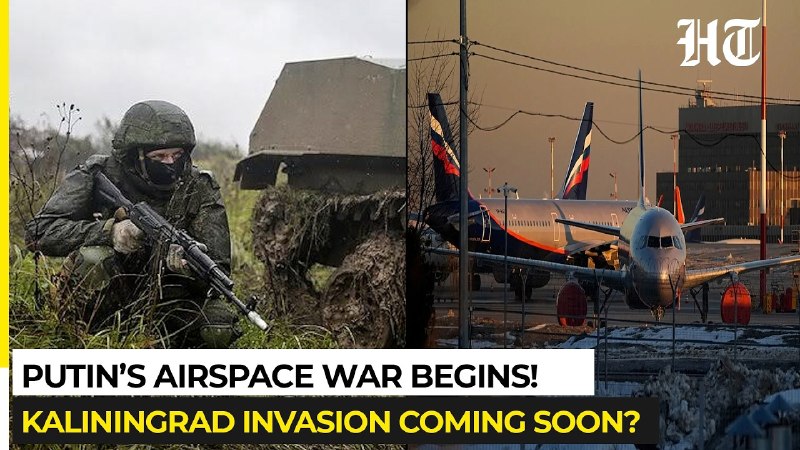
Overnight into 15 June 2026, the Ukrainian capital absorbed what local observers described as one of the heaviest combined air strikes of the year. According to a 02:42 UTC post by the open-source mapping channel AMK_Mapping, several large fires were burning across Kyiv after "dozens of cruise and ballistic missile impacts" in the city. The attack appears to have been the terminal phase of a multi-hour sequence that began with Shahed-type unmanned aerial vehicles (UAVs) closing on the capital from the north. By 00:30 UTC, the war_monitor channel reported more than fifteen UAVs approaching Brovary, a satellite city just east of Kyiv; six minutes later the same channel logged at least seven of those drones past Brovary "in the direction of Kyiv," and at 01:34 UTC the Nikolaev-based observer vanek_nikolaev reported three more — "mopeds," in frontline slang — flying toward the capital. The pattern is consistent with the standard Russian opening gambit of this phase of the war: a Shahed swarm to fix Ukrainian mobile fire groups and air defence radars, followed by a salvo of cruise and ballistic missiles aimed at infrastructure and population centres.
What Kyiv's residents woke to on Monday morning is the visible residue of a campaign that has been quietly intensifying since spring. The June 15 strike is the third major combined attack on the capital in a single week, and it lands at a moment when Ukraine's interceptor stocks — and the diplomatic pipeline that refills them — are under acute strain. The geometry of the assault matters as much as its scale: a layered approach that mixes cheap, expendable drones with high-value cruise and ballistic missiles is designed less to overwhelm Ukrainian air defence than to exhaust it. Each Shahed costs a fraction of a Kalibr or an Iskander; each missile a Patriot battery has to spend a precious interceptor on is a missile it does not have for the next wave.
What actually hit Kyiv on the night of 14–15 June
The reconstruction of the night, drawn from real-time Telegram monitoring, is unusually clean. The first indications surfaced at 00:30 UTC on 15 June, when war_monitor logged "15+ UAVs approaching Brovary, further Kyiv." By 00:36 UTC the same channel had refined the count: at least seven drones had cleared Brovary and were tracking toward the city. The drone phase appears to have lasted roughly an hour. At 01:34 UTC, vanek_nikolaev — a southern-Ukraine observer who tracks launches and routings from the Mykolaiv and Kherson axis — picked up "another 3 mopeds near Brovary, flying to Kyiv." The use of the irreverent term "mopeds" for Iranian-designed Shahed-136 type loitering munitions has become standard in Ukrainian frontline channels; it captures the slow, two-stroke-engine buzz of the airframe and the bureaucratic way the threat is now treated — irritant, not apocalypse, on its own.
The cruise and ballistic phase began sometime between 01:30 and 02:00 UTC. AMK_Mapping's 02:42 UTC post — the most consequential of the four thread items — does not specify launch sites or trajectories, but it does describe the impact set: "dozens of cruise and ballistic missile impacts" producing "several large fires." AMK_Mapping, run by a small group of Ukrainian OSINT analysts, is widely cited in mainstream wire coverage for its rapid post-strike mapping of craters, debris fields, and fire locations. Its use here is consistent with that record. The phrase "dozens of impacts" is a meaningful downgrade from the "hundreds" some Kyiv officials invoked in earlier waves this spring, but it is also a meaningful upgrade from the "isolated strikes" that defined quieter weeks. What the channel does not say is as important as what it does: it does not name targets, list casualties, or attribute the launch platform. Those are the gaps the rest of the reporting has to fill.
The pattern — drones first, missiles second, capital always — is now a recognisable Russian doctrine. The point is not just destruction. It is the imposition of a permanent state of alert on a city of three million, the gradual erosion of air defence magazines, and the slow accumulation of damage to the grid, the water system, and the morale of a population that has been living under one variant or another of this threat for more than four years.
Why the mix matters more than the count
Headline counts of "X missiles and Y drones" tend to obscure the actual logic of the strike. The Russian calculus in 2026 is a calculus of exchange rates, not of saturation. A single Patriot PAC-3 interceptor costs several million dollars and is built in finite quantities in the United States; a Kalibr cruise missile is expensive by any peacetime standard but cheap by the metric of a wartime industrial economy running at mobilisation tempo. A Shahed-136, produced under license in Russian factories using Iranian blueprints, is cheaper still. When the defender must spend three or four interceptors to be confident of downing one incoming missile, and the attacker can re-launch the drone phase indefinitely, the arithmetic begins to favour Moscow by default.
Ukraine's response is technically sophisticated but structurally fragile. Mobile fire groups — pickup-mounted teams with heavy machine guns, man-portable air-defence systems, and a growing fleet of domestically produced interceptor drones — handle the bulk of the Shahed threat. Fixed-site systems, including Soviet-era Buk-M1 batteries, the German-supplied IRIS-T SLM, the French SAMP/T Mamba, and the American Patriot, handle the cruise and ballistic layer. The bottleneck is not the number of systems. It is the number of interceptor rounds and the time it takes to replenish them. Washington, Berlin, and Paris have all signed replenishment contracts in 2026, but the delivery cycle measured in months is matched against an attack cycle measured in days. The June 15 strike is therefore best read as a withdrawal from that account, not a single dramatic transaction.
A second reading — and one the Ukrainian military is more reluctant to voice publicly — is that the mix of drones and missiles also serves an intelligence function. Every Shahed that flies a different route, at a different altitude, with a different jammer setting, returns data to the Russian planners about which gaps in Ukrainian air defence are widening. The missiles that follow the drones are not just striking buildings; they are testing, in real time, which corridors are open and which are closed.
The Western wire line and the operational reality
The immediate framing in Western outlets has been characteristically uniform. Russia struck Kyiv overnight with a combination of cruise and ballistic missiles; Ukraine's air force reported engaging targets; the city's military administration reported fires and falling debris; Western capitals condemned the attack and reiterated support. The official line from Kyiv has been the same, with sharper edges. Ukraine's air force has claimed interception rates in the 70–80 percent range for cruise missiles and 50–60 percent for ballistic missiles in earlier waves this year; it has not yet, as of the publication of this article, released a verified tally for the June 15 strike.
The counter-narrative, articulated more cautiously inside the Ukrainian defence commentariat, is that interception rates are real but uneven, and that they are achieved at a cost in interceptor stocks that is no longer sustainable without a structural change in the Western supply chain. A second counter-narrative, more pointed and less often printed, is that the capital-centric framing of the strikes — inevitable in a media environment that follows the lights going out in central Kyiv — obscures the cumulative damage being done to the grid in the regions. The Donetsk, Kharkiv, Sumy, and Chernihiv oblasts have absorbed more strikes in 2026 than the capital; the death toll in the regions has, in most weeks this year, exceeded the death toll in Kyiv proper.
The Western political line, meanwhile, is converging on a familiar impasse. The United States has signed off on a multi-year supply agreement for Patriot interceptors that will, on paper, more than double the rate of arrival by late 2027. The European Union has funded a parallel effort through its own defence procurement instruments. The actual delivery curves, however, remain opaque, and the rate of Russian production of both Shahed-type drones and cruise missiles continues to outpace the rate of Western interceptor production. The structural pattern is the one the war has followed since 2022: a slow-motion race between two industrial systems, with the front line of the race visible most clearly in the sky over Kyiv at two in the morning.
Stakes and the forward view
For Kyiv's residents, the forward view is short. Another drone phase will almost certainly begin in the next forty-eight hours; another combined strike, on the capital or on the regional grid, is likely within the week. The June 15 attack is not a discrete event in a discrete week. It is a single data point on a curve that has been climbing since early spring. The curve's slope is, in turn, the variable on which the war's trajectory most directly depends: steepen it, and the pressure on Western publics to either escalate or negotiate becomes acute; flatten it, and the next round of replenishment contracts becomes politically easier to sign.
The structural frame is plain. A defender operating a finite inventory of high-end interceptors is, by construction, on the losing side of an exchange-rate war against an attacker with access to cheap drones and a mobilised missile industry. The only durable answers are industrial: faster production of interceptors, deeper magazines, and the gradual integration of lower-cost counter-drone systems into the air-defence architecture. None of those answers arrives in a single shipment. Each arrives as a quarterly improvement, indexed against a weekly attack cycle.
What remains genuinely uncertain is whether the June 15 strike marks a step-change in tempo — the opening of a more intensive phase of the air campaign — or a continuation of the rhythm already established. The thread items do not resolve that question, and the official statements released in the hours after the attack have not yet added decisive evidence. The next forty-eight hours of Telegram traffic, of air-raid app data, and of Ukrainian air force briefings will tell. Until then, the cleanest thing this publication can say is what the mapping channel said at 02:42 UTC: fires were burning, the impacts were real, and the night was not over when the post went out.
— Monexus framed this as a single night inside a multi-year air campaign, not as a standalone atrocity. The wire's instinct is to read each strike as a new front page; the structural question is the exchange rate of interceptors against incoming missiles, and the cost of that exchange to a defender whose industrial partner is on the other side of two oceans.
Wire provenance
This editorial synthesis draws on the following public wire/social posts:
- https://t.me/AMK_Mapping
- https://t.me/vanek_nikolaev
- https://t.me/war_monitor
- https://t.me/war_monitor
- https://t.me/AMK_Mapping/
- https://en.wikipedia.org/wiki/2022_Russian_invasion_of_Ukraine
- https://en.wikipedia.org/wiki/Shahed-136
- https://en.wikipedia.org/wiki/MIM-104_Patriot
- https://en.wikipedia.org/wiki/Kyiv
- https://en.wikipedia.org/wiki/Brovary
Follow the event.
These dated source records provide context. They do not retrospectively verify this archive article.
A dated voting record is evidence of one decision. Use the original UN record before turning it into an alignment label.
Visual explainer · historical vote of 2022-03-02 →- https://t.me/AMK_Mapping
- https://t.me/vanek_nikolaev
- https://t.me/war_monitor
- https://t.me/war_monitor
- https://t.me/AMK_Mapping/
- https://en.wikipedia.org/wiki/2022_Russian_invasion_of_Ukraine
- https://en.wikipedia.org/wiki/Shahed-136
- https://en.wikipedia.org/wiki/MIM-104_Patriot
- https://en.wikipedia.org/wiki/Kyiv
- https://en.wikipedia.org/wiki/Brovary