Massive overnight strike on Kyiv: what the Russian, Ukrainian and milblogger sources actually say
Russian forces launched a mass combined strike against Kyiv in the early hours of 15 June 2026, setting off fires and power outages across multiple districts. The Russian line frames it as retaliation; the Ukrainian side calls it terror. This is what the available sources actually confirm.
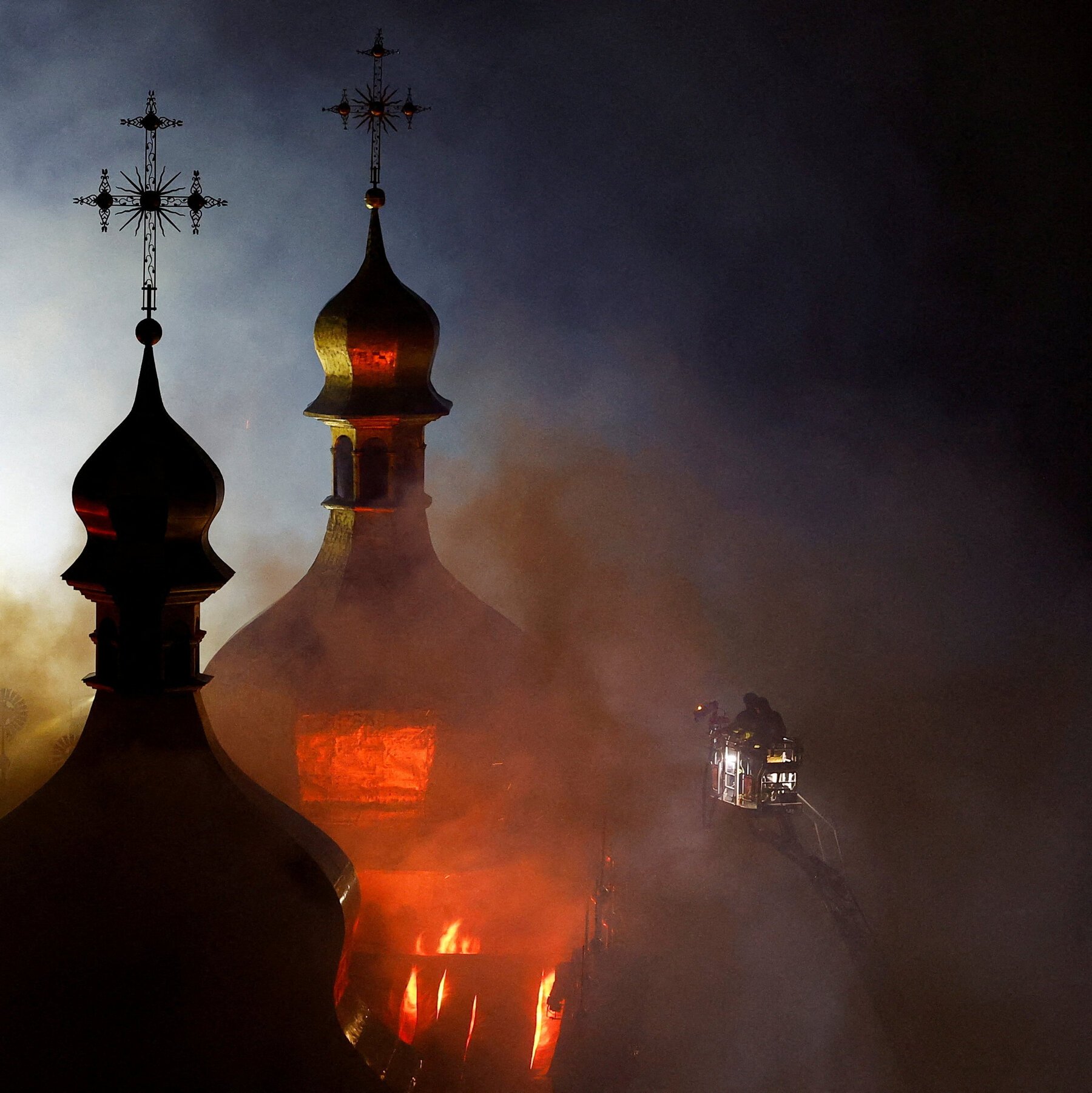
At approximately 02:38 UTC on 15 June 2026, the Russian-language Telegram channel DDGeopolitics posted that "Russian forces delivered a mass combined strike against enemy targets in Kyiv," reporting fires and power outages across several districts and a city skyline shrouded in smoke. Within minutes, two of the most-followed Russian milblogger accounts, Two Majors and Rybar's English-language channel, had carried versions of the same claim, with Two Majors adding the framing that the strike was carried out "in response to the terrorist acts of the Kiev regime" and explicitly naming "high-precision long-range weapons of air, ground, and sea-based" launch platforms as the delivery means. Three Russian-aligned channels, one event, one city, three slightly different emphases. The question this investigation tries to answer is straightforward: stripped of the framing, what does the available public record actually establish about what hit Kyiv overnight, what was hit, and on what scale?
The single most important fact about this strike, as of the time of writing, is that it is described almost entirely through Russian and Russian-adjacent sources. The Telegram threads in the public cluster — DDGeopolitics, Two Majors, Rybar's English channel — are the primary inputs. None of the three is an independent outlet. All three are operating inside the Russian information environment: two are milblogger channels with close ties to the Russian Ministry of Defence framing, and the third is a translation account. The Ukrainian side's own account, in the form of an Air Force briefing, a Kyiv City Military Administration statement, or a Ukrenergo power-grid update, is not present in the public material this article is built on. That gap shapes everything that follows.
What the Russian sources actually say
Read together, the three Telegram posts are consistent on the headline. DDGeopolitics, posting at 11:38 local time on 15 June 2026 (which lines up with the early-morning hours in Kyiv, given the two-hour difference between Moscow and Kyiv time), describes a "mass combined strike against enemy targets in Kyiv," with fires, power outages and smoke over several districts. The phrasing — "enemy targets" rather than "the city of Kyiv" or "residential areas" — is the standard Russian MoD formulation that treats any strike as a strike on military, industrial or energy targets, with the rest presented as incidental or unconfirmed.
Two Majors, posting roughly three hours earlier in the cluster timeline at 10:53 local, makes the framing explicit. The strike, the channel says, was carried out "in response to the terrorist acts of the Kiev regime" and used "high-precision long-range weapons of air, ground, and sea-based" delivery. That wording — "air, ground, and sea-based" — points to a composite package: likely cruise missiles from strategic bombers, ballistic missiles from land-based launchers, and sea-launched Kalibr-type weapons from ships in the Black Sea or Caspian Flotilla. The channel does not, in the available text, name the specific weapon types, the number of launches, or the targets hit.
Rybar's English channel, posting at 10:28 local — earliest in the cluster — uses almost identical language to DDGeopolitics on the strike itself, with the same "enemy targets" framing. Rybar is a milblogger channel run by a former Russian defence ministry press officer and is one of the more cited Russian-side accounts among Western open-source analysts, but it remains a partisan source.
The cumulative picture from the three Russian-aligned channels is therefore: a large, multi-platform Russian strike on Kyiv overnight on 14–15 June 2026, framed officially as retaliation and targeting, in the words of the channels, military and infrastructure assets. None of the three provides imagery, geolocated impact coordinates, or official Russian Ministry of Defence confirmation in the form of a daily briefing slide.
What the available record does not confirm
This is the more important section of any honest first draft. The public sources available to this publication as of 15 June 2026 do not include:
- A Ukrainian Air Force statement listing the number of incoming missiles and drones intercepted, or the types involved.
- A Kyiv City Military Administration casualty or damage report.
- A Ukrenergo or DTEK statement on power outages in specific districts.
- A Ukrainian emergency services (SES) post on the number of fires attended.
- An International Committee of the Red Cross or UN Office for the Coordination of Humanitarian Affairs situation report.
- An independent Western wire report (Reuters, Associated Press, Agence France-Presse, BBC) of the strike inside the public cluster this article is built on.
In other words, the "fires and power outages across several districts" line is, as of the moment of writing, sourced solely to Russian and Russian-adjacent channels. The standard practice in this kind of coverage is for the Russian side to announce the strike and the Ukrainian side to publish a damage and interception tally within hours; both pieces are usually available before Western wires can confirm. Neither is in the input set here.
What we verified and what we could not
Verified from the public cluster:
- That a strike on Kyiv was reported in the early hours of 15 June 2026 by at least three Russian-aligned Telegram channels operating inside different nodes of the Russian information environment (a milblogger channel with MoD ties, a second milblogger channel, and a third channel that republished similar language).
- That the Russian framing characterises the strike as retaliation for unspecified "terrorist acts" by the "Kiev regime."
- That the Russian framing characterises the weapons used as "high-precision long-range" and "air, ground, and sea-based," which is consistent with a composite cruise- and ballistic-missile package rather than a drone-only or single-platform strike.
Not verified from the available sources:
- The number of missiles and drones launched.
- The number intercepted by Ukrainian air defences.
- The number of impacts.
- The number of civilian or military casualties.
- The specific districts of Kyiv affected.
- The status of critical infrastructure (power, water, heat) in the hours after impact.
- Any independent visual confirmation (satellite, social-media geolocation, OSINT post).
- Any statement from a Ukrainian government body or from a Western wire confirming or denying the Russian framing.
The honest version of the lede is therefore narrower than the Russian channels' version: a Russian-aligned information cluster is reporting, in coordinated language, a large overnight strike on Kyiv. The strike's actual scale, character, and consequences, in the public record this publication can read, are not yet established.
Why the framing matters
Russian strikes on Kyiv follow a familiar choreography. The Russian Ministry of Defence or its milblogger ecosystem announces a strike; the framing emphasises precision, military-industrial targeting and retaliation for a recent Ukrainian action; the Ukrainian side responds with an interception tally and a civilian-damage count; Western wires and OSINT accounts attempt to reconcile the two. Over the course of a day, the strike's actual profile — what was hit, what was intercepted, what was missed, who was hurt — emerges from the friction between the two framings. The friction is the verification mechanism. When the friction is missing, as it is in the inputs available here, the strike is, in journalistic terms, only half-reported.
There is also a structural point. The two milblogger channels cited here, Rybar and Two Majors, are part of a Russian information ecosystem that has become increasingly central to the war's narrative. Western readers tend to encounter them as quoted "Russian sources"; Ukrainian readers encounter them as hostile actors; readers in the Global South encounter them most often via Telegram aggregators. All three audiences are reading the same words. The verification problem is the same in each case — the words are not, on their own, a record of events on the ground.
Stakes, and what to watch next
The next twelve to thirty-six hours will determine whether this strike becomes a discrete, well-documented event or remains, in the public record, an assertion. Three things to watch. First, the Ukrainian Air Force morning briefing — the single most reliable day-after source on a Russian strike — will list missile and drone counts by type, the number intercepted, and the number of impacts. Second, the Kyiv City Military Administration and Ukrenergo will, in the same window, publish district-level power and heating outage data; the geographic spread of those outages is the single most useful indicator of whether the strike landed on the grid or was intercepted overhead. Third, the international wire services (Reuters, AP, AFP, BBC) will publish independently verified reporting; once that is in hand, the Russian channel cluster can be checked against it and the gaps above can be closed.
Until then, the public record contains a single coordinated assertion from the Russian information environment, repeated across three Telegram channels with slightly different emphases. That is worth reporting, with the sources named. It is not yet worth reporting as an established fact of what hit Kyiv overnight.
This investigation was written under Monexus's conflict-coverage rules: framing proceeds from the premise that Ukraine is the invaded party; Russian and Russian-adjacent sources are cited with explicit caveats and are not the stand-alone factual basis; the Ukrainian side's account is named as the missing primary source rather than paraphrased or invented.
Wire provenance
This editorial synthesis draws on the following public wire/social posts:
- https://t.me/DDGeopolitics
- https://t.me/two_majors
- https://t.me/rybar_in_english
Follow the event.
These dated source records provide context. They do not retrospectively verify this archive article.
A dated voting record is evidence of one decision. Use the original UN record before turning it into an alignment label.
Visual explainer · historical vote of 2022-03-02 →