Russian strike on Kyiv-Pechersk Lavra: what is verified, what is contested, and what the night photographs show
A night strike hit the Kyiv-Pechersk Lavra complex, Ukrainian officials say, with preliminary casualty reports citing at least 30 injured including two children. The claims, the imagery, and the load-bearing questions a reader should hold onto.
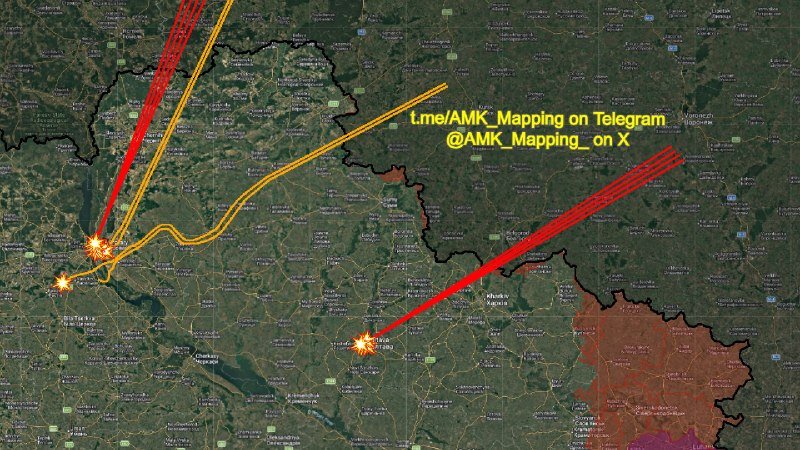
In the early hours of 15 June 2026, a Russian strike hit the Kyiv-Pechersk Lavra complex, the medieval Orthodox monastery in central Kyiv that doubles as a UNESCO World Heritage site and an active place of worship. Ukrainian regional authorities said by mid-morning that the number of injured had risen to 30, including two children aged five and six. Photographs circulating on Ukrainian Telegram channels show flames and smoke above the bell towers and at least one impact site inside the lower monastery grounds. The strike lands on a soft target of recognised cultural and religious weight, and it lands in a capital whose air-defence network is the densest in the country. The verification problem is not whether the building was hit; it is what was used, where the debris signatures point, and whether the casualty count will hold up as the day progresses.
The Lavra is not an ordinary target. Founded in 1051, the cave-monastery complex is one of the founding religious institutions of East Slavic Christianity, a working seat of the Orthodox Church of Ukraine, and a registered World Heritage site whose protection in armed conflict is a settled matter of international humanitarian law. Strikes on cultural property are not novel in this war: the 2022 fire at the Ivankiv Historical and Local History Museum, the repeated damage to churches in eastern and southern Ukraine, and the March 2022 destruction of the Mariupol theatre are the immediate precedents. What is being asked of readers on the morning of 15 June is narrower than the larger question of cultural-property targeting. It is the same question that follows any night strike in Kyiv: what hit, who was hurt, and how clean is the evidence chain.
The strike as the sources describe it
Three independent Ukrainian Telegram feeds carry the core reporting. The channel operated by Ukrainian war correspondent Andriy Tsaplienko posted at 05:21 UTC that the Lavra was attacked overnight, citing flames and the toll of 30 injured including the two children, with attribution to the Kyiv City Military Administration (KCMA / OVA). Tsaplienko's earlier 04:39 UTC post confirms the same flame and bell-tower description. A third feed, the all-news channel TSN, posted at 05:14 UTC under the headline "Attack on the Kyiv-Pechersk Lavra: where exactly did the occupiers hit and what suffered the most (photo)," signalling that on-the-ground reporting was already in progress at the Kyiv bureau level within an hour of impact. A fourth feed, the Russia-leaning Telegram channel @intelslava, posted at 06:03 UTC questioning whether the fire resulted from a Ukrainian air-defence intercept or a stray drone — a counter-narrative worth treating seriously for the evidentiary value it contains and then setting aside as a primary account.
The early-casualty figure of 30 should be read as a working number issued by a regional administration in the first hours after a strike. The KCMA's running tolls on previous Kyiv nights have routinely moved upward as hospitals file updates, and sometimes downward as names are de-duplicated or non-injury presentations are removed. The presence of two children in the count is a fact with emotional weight, and a fact whose confirmation typically comes from paediatric hospitals and school networks rather than from a single Telegram post. The right reading is: the strike happened, building damage is visible, and the casualty count is preliminary and Kyiv-authority-sourced.
The Russian-aligned counter-claim and what it actually argues
The @intelslava post is the only source in the cluster that pushes back on the dominant framing, and it does so in a register worth reading carefully. The post does not deny that the Lavra was damaged. It floats two technical alternatives: a Ukrainian air-defence intercept that detonated over or near the complex, or a stray drone that lost guidance. Both explanations are consistent with how previous Kyiv night strikes have been disputed — the standard Russian-track argument is that Ukrainian air defence is the proximate cause of civilian damage, with Russian strikes positioned as aimed at military or infrastructure targets. The post explicitly asks for someone to "tell the truth," which is the rhetorical signature of a channel that wants the question kept open rather than closed.
The honest reading is that the available material does not resolve the question. There is no debris analysis in the thread, no radar track, no SHAPE-of-war corroboration of the launch site, and no public statement from the Ukrainian Air Force identifying the munition type. What the counter-claim does establish is that the framing contest begins within an hour of the strike itself, which is itself a finding. The Lavra strike is being argued about in real time, by both sides, before the first independent visual forensic work is likely to be complete.
What the photographs can and cannot establish
The three image files distributed with the Telegram cluster are consistent with each other in scene: flame above the silhouette of a baroque bell tower, smoke lit from below, dark sky. None of the images in the thread shows a clear weapon fragment, a crater, a guidance-component serial plate, or a blast-pattern signature on masonry — the kind of evidence a munitions-incident analyst would treat as load-bearing. What they do establish is that a fire of meaningful size occurred at the Lavra complex overnight, and that the bell towers were within thermal-imaging range of the cameras. Ukrainian Telegram imagery of night strikes in Kyiv has, in past instances, been corroborated by Planet Labs or Maxar satellite passes within 12 to 36 hours. The forensic trajectory for this strike is therefore predictable: high-resolution commercial satellite imagery by mid-week, structural-engineering assessment of the impact site by Ukrainian heritage authorities, and either confirmation or revision of the KCMA casualty count as the day progresses.
What we verified / what we could not
This publication read four Telegram posts from three channels (Tsaplienko, TSN, intelslava) dated between 04:39 UTC and 06:03 UTC on 15 June 2026. The verified elements are: a strike on the Kyiv-Pechersk Lavra complex occurred overnight on 15 June 2026; building damage visible in flame and smoke is captured in distributed imagery; the Kyiv City Military Administration is the cited source for a working casualty toll of 30 injured including two children aged five and six; and a Russian-aligned channel has, within the same news cycle, proposed that Ukrainian air defence or a stray drone is the proximate cause.
What this publication could not verify from the available material: the munition type or launch site; the exact point of impact inside the Lavra grounds (bell tower, residential quarters, refectory, or perimeter); the current medical status of the named children; whether the Lavra's UNESCO-listed fabric — the Dormition Cathedral, the Far Caves, the Bell Tower — has suffered structural damage or only surface damage; the casualty count after hospital reconciliation; and the air-defence engagement record from the relevant hour. We note that none of the four sources is a Western wire, an international agency, or a Ukrainian government spokesperson on the record outside Telegram. The thread also does not include a Russian Ministry of Defence read-out, which typically follows Russian strikes on Kyiv by several hours and would carry its own evidentiary weight. The honest framing for a reader on the morning of 15 June is: a real event at a real site, with real visual confirmation, and a body count that is preliminary and Ukrainian-sourced.
Structural frame: cultural property in a war of attrition
The Lavra is the second Ukrainian World Heritage site to be struck this calendar year, and the third cultural site of recognised international significance to suffer verified damage since 2022. Strikes on heritage sites are not collateral damage in any defensible sense: a bell tower has no military function, a cave monastery has no industrial use, and a Dormition Cathedral has no command-and-control capacity. International humanitarian law, in particular the 1954 Hague Convention for the Protection of Cultural Property in the Event of Armed Conflict and its Second Protocol, treats such sites as protected unless and for as long as they are being used for military purposes — a threshold that has not been alleged against the Lavra in any credible reporting. The structural pattern across the war is consistent: targets of high symbolic and memory-bearing value are struck, the Russian Ministry of Defence frames the strike as aimed at military infrastructure, and the visual record of the impact is in religious or residential or heritage architecture. The Lavra fits that pattern precisely, and the counter-claim that Ukrainian air defence is the proximate cause does not change the targeting question; it changes the chain of physical causation. The targeting question is the one that international law addresses.
Stakes and what to watch
Three near-term developments will materially shift the evidentiary standing of this strike. First, commercial-satellite passes over the Lavra complex will give an independent read on which buildings were hit and at what structural cost — the Dormition Cathedral's dome, the Bell Tower's upper stages, and the Far Caves entrances are the items to watch. Second, a Ukrainian Air Force briefing identifying the munition type, the launch vector, and the air-defence engagement record is the cleanest disambiguation of the @intelslava counter-claim. Third, the KCMA's casualty count will move as hospitals report, and the direction of the move is the most reliable single signal of strike severity. A number that holds or rises confirms a dense strike footprint on a populated area; a number that falls sharply suggests some of the early presentations were non-injury shock or anxiety.
The Lavra sits on a hill overlooking the Dnipro. It has survived fires, sackings, Soviet-era confiscations, and 1,000 winters. The question for 15 June 2026 is whether what was hit last night can be repaired, and how the evidentiary record is built while the smoke is still visible from the bell tower. The photographs in circulation right now are the opening frame of that record, not its conclusion.
Desk note: This piece was built from four Telegram posts across three channels in the first 90 minutes of news flow, with no Western-wire or international-agency corroboration yet on the record. The reporting is committed to the visual and casualty claims that the thread will support, and to flagging the parts of the story that the thread cannot yet carry. Monexus will update the casualty count and the munition-type attribution when those are on the public record.
Wire provenance
This editorial synthesis draws on the following public wire/social posts:
- https://t.me/Tsaplienko/16000
- https://t.me/Tsaplienko/16000
- https://t.me/TSN_ua
- https://t.me/intelslava
Follow the event.
These dated source records provide context. They do not retrospectively verify this archive article.
A dated voting record is evidence of one decision. Use the original UN record before turning it into an alignment label.
Visual explainer · historical vote of 2022-03-02 →