Yamal's first World Cup outing: what Spain's teenage prodigy faces in 2026
Lamine Yamal's first World Cup match arrives on 15 June 2026. Spain's teenage winger carries the weight of expectation that follows a Ballon d'Or at 18 — and a tournament that has so far refused to behave.
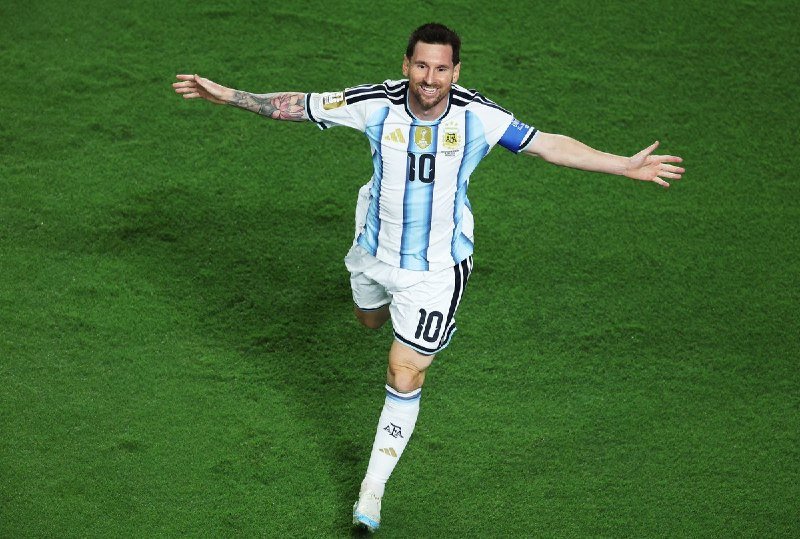
Lamine Yamal steps onto a World Cup pitch for the first time on 15 June 2026, four days after turning nineteen, and the question hanging over the tournament is the same one that has followed him since he broke into the Barcelona first team as a sixteen-year-old: how many goals today. The Spanish winger, capped more than twenty times and a Ballon d'Or winner at eighteen, has spent two seasons answering that question in the affirmative at club level — a record that the two Telegram wires monitoring the tournament on Monday morning, FIFA's official channel and The Athletic, both flagged in their pre-match copy.
The interest is not idle. Spain arrive in the United States for the 2026 World Cup as European champions and as one of three or four sides the bookmakers treat as outright favourites. Yamal is the player the marketing operation and the tactical conversation both orbit. Whether he delivers in the opener, against a less-fancied opponent, sets the temperature for the rest of the group stage.
The shape of the day
Spain open their campaign on 15 June 2026, with kick-off scheduled into the United States evening window to maximise European prime-time audiences. Both Telegram posts carried the same line — "Yamal's first World Cup match... how many goals today?" — underlining that the story for the wires is the teenager, not the group. The Athletic's sports desk has run parallel coverage all week, and the FIFA account's framing turns the match into a referendum on a single player rather than a starting eleven.
That focus is not accidental. Yamal is the most-followed active player on the Spanish national side by some distance, and the 2026 World Cup is the first at which he is eligible to be more than a curiosity. The expectation in Madrid and Barcelona is that he will not simply participate; he will be asked to decide a match.
The counterweight
The case against a Yamal-led Spanish run is straightforward, and it has been made by every Spanish manager since Luis de la Fuente took the job. The team is a possession side built to suffocate opponents before individual brilliance becomes necessary. When the system works, the goals are collective. When it does not — and Spain have lost competitive matches in the last twelve months in which Yamal was heavily marked and the supply lines broke down — the reliance on a teenager becomes a vulnerability rather than a strength.
De la Fuente's midfield, anchored by Rodri when fit, has been built explicitly to take that pressure off the wingers. The question of whether Spain can win a knockout round without Yamal scoring has not been answered, and the tournament will likely force the issue.
The structural read
What makes this World Cup different from any previous one is the marketing apparatus behind it. FIFA's broadcast deals for the 2026 tournament, expanded to forty-eight teams and hosted across the United States, Canada and Mexico, are structured around individual narratives as much as national ones. Yamal, with his social-media reach, his Champions League minutes and his Ballon d'Or, is the face the federation wants the tournament to find. The Telegram copy — pre-written, ready to deploy within minutes of any goal — is the visible edge of an operation that has been built around stars for at least a decade.
This is not, on its own, a critique. It is the structure the game has chosen. But it produces a particular kind of pressure on a player who turned nineteen a week ago, and the early group fixtures will be the first public test of how he carries it.
Stakes
If Spain go deep, Yamal's price tag — already a transfer-market reference point in any conversation about the next generation of wingers — rises further. If they do not, the same marketing operation that has built the story begins to ask why the system produced a star it could not protect. The tournament's wider architecture, and the broadcast contracts attached to it, depend on the leading players delivering. The first match is the first data point.
The thread items do not specify the opponent or the kick-off time, and the wider Spanish federation press operation has not, in the materials reviewed, confirmed squad availability beyond what is already public. What is known is that the boy everyone is asking about is, on Monday morning, finally playing.
How Monexus framed this: where the wires pushed a personality-driven hook, the analysis here separates the player-led narrative from the structural pressure the 2026 tournament's broadcast model places on its stars.
Wire provenance
This editorial synthesis draws on the following public wire/social posts:
- https://t.me/FIFAcom
- https://t.me/TheAthletic