Beirut's UN complaint and the Lebanon clause Trump says Israel isn't bound by: a ceasefire in slow unravel
A UN complaint over toxic chemicals, a presidential rebuke, and a Polymarket contract pricing an Israeli withdrawal at 5% suggest the November arrangement is fraying faster than the public diplomacy acknowledges.
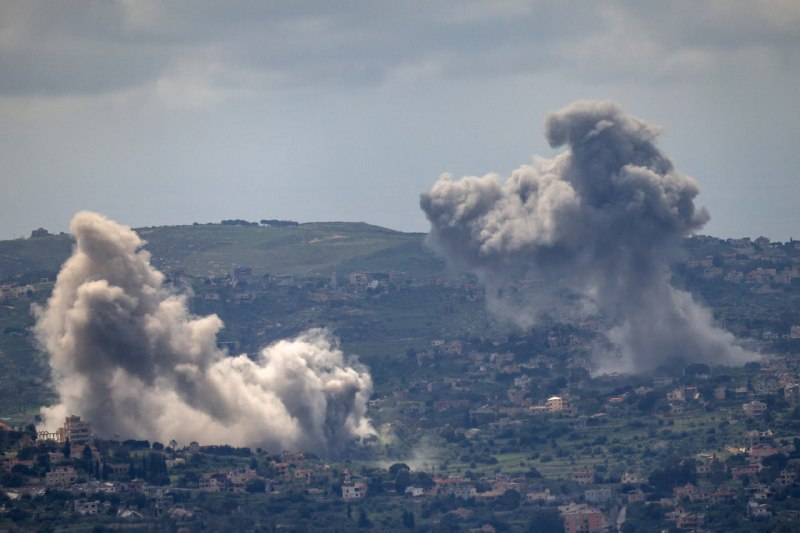
On 15 June 2026 at 16:37 UTC, Lebanon filed a complaint at the United Nations accusing Israel of waging a "scorched earth" campaign in the country's south using toxic chemicals, and of killing two Lebanese army officers and a soldier in a separate incident, according to the Beirut-based outlet The Cradle. The complaint, transmitted through the country's permanent mission in New York, adds a diplomatic-legal track to a military confrontation that the November 2024 arrangement was meant to have ended. The filing, if substantiated, would put Israeli tactical conduct on the agenda of the UN Secretary-General and reopen a file the United States has spent much of 2025 trying to keep closed.
The pattern is no longer ambiguous. The Lebanon clause of the US-brokered ceasefire is being honoured in letter and abandoned in practice. Israeli forces have conducted near-daily strikes inside Lebanese territory since the start of the year; Lebanon's army, supposed to be the sole armed presence in the south alongside UNIFIL, has been hit in operations Israel describes as targeting Hezbollah infrastructure. Beirut's UN complaint is the diplomatic corollary of a military reality the November deal was designed to suppress: that Israel has reserved the right to act unilaterally, and that the United States is unwilling — or unable — to compel it to stop.
The complaint, and what it alleges
The Lebanese complaint, summarised in the same 16:37 UTC Telegram post from The Cradle, runs on two distinct tracks. The first is a humanitarian-civilian track: the alleged deployment of toxic chemical agents in southern Lebanese villages during Israeli ground and aerial operations, framed by Beirut as a "scorched earth" campaign against civilian infrastructure and agricultural land. The second is a sovereign-military track: the killing of two officers and a soldier of the Lebanese Armed Forces in southern Lebanon, an act that, if confirmed, would represent a direct strike on a state institution that the ceasefire architecture explicitly protects.
Two structural points are worth flagging. First, Lebanon is not filing alone because it lacks a patron; it is filing because the bilateral channel with Washington has narrowed. The Trump administration has signalled, through public statements and through a notably hands-off posture on the ground, that it treats the Lebanon file as subordinate to the broader Iran track. Second, the toxic-chemical allegation is the kind of claim that, once entered into the UN record, follows a file for years. Whether or not it is independently verified in the next reporting cycle, it has now become part of the formal complaint ledger — and that, in itself, is a diplomatic instrument.
The sources cited in the thread do not provide independent laboratory confirmation of the chemical allegation, nor do they specify which agents are alleged to have been used. This publication notes the limit: the UN complaint is a state act with state consequences, and the underlying forensic record will take weeks to surface, if it surfaces at all.
Trump's Lebanon comments — and the timing
Roughly twenty-two minutes before Lebanon's complaint was filed, at 16:15 UTC, Al-Alam Arabic carried an urgent bulletin quoting US President Donald Trump: "We want to see how we can settle the conflict in Lebanon and we must talk to 'Israel' about this." The statement is striking less for what it says than for what it concedes. The president of the United States is publicly describing the Israeli government as an external party whose cooperation must be solicited, not commanded. In the vocabulary of alliance management, that is a downgrade.
Four hours earlier, at 12:31 UTC, Trump had already broken the diplomatic varnish in a different direction, telling reporters that Prime Minister Benjamin Netanyahu is "a very difficult guy" after Israel was reportedly left out of the most recent US-Iran negotiations. The remark, carried on Polymarket's X feed at 12:31 UTC, is the kind of presidential aside that, in a normal alliance, would prompt a phone call. The fact that it was aired in public, on the same day Beirut filed a chemical-weapons complaint, gives the line a second life it would not otherwise have had.
The structural reading is straightforward. The Trump administration is running two negotiations in parallel — a direct US-Iran channel that excludes Israel, and a Lebanon track that depends on Israeli compliance — and the seams are showing. The Iran channel is the administration's signature diplomatic project for the second half of 2026. The Lebanon channel is, in effect, the cost of doing business: a subsidiary file that the White House is willing to let drift as long as the headline track produces a deliverable.
The Lebanon clause, and what Netanyahu said about it
At 05:11 UTC on 15 June, the X account Unusual Whales reported, citing Israeli media, that Netanyahu had informed Trump that Israel does not consider itself bound by the Lebanon clause of the agreement. The claim, if accurate, is a public re-statement of a position Israeli officials have signalled in private for months. The ceasefire arrangement of November 2024 was structured as a sequenced withdrawal: Israeli forces pull back from southern Lebanese positions, the Lebanese Armed Forces deploy in their place, and Hezbollah's military infrastructure south of the Litani is dismantled under international supervision. Each step was supposed to be reciprocal. The complaint from Beirut, and the public rebuff from Jerusalem, suggest that the reciprocity has collapsed.
A prediction market is, at best, a thermometer, not a diagnosis. But the signal is hard to ignore. Polymarket's contract on whether Israel will withdraw from Lebanon by the end of June 2026 was trading at 5% at 15:06 UTC, per the platform's own X account. In other words, traders with money at risk are pricing the formal end of the Israel-Lebanon military operation as a near-certain non-event inside a ten-day window. The market is not making a claim about the underlying politics; it is registering that, on the present trajectory, withdrawal is implausible.
The counter-narrative, and why it does not fully hold
The Israeli position, as conveyed through the Unusual Whales summary, is that the Lebanon clause was always conditional on Hezbollah's disarmament in the south, and that the Lebanese Armed Forces have not — or cannot — fulfil that condition. Israeli security concerns are legitimate: Hezbollah's reconstitution in the months since the ceasefire, particularly its precision-missile programme and its reconstituted drone capabilities, has been documented in Israeli military briefings and in Western think-tank reporting over the past six months. From Jerusalem's vantage point, an unconditional withdrawal in June 2026 would amount to a unilateral concession while the threat matrix on its northern border is being rebuilt.
The Lebanese counter-position, embedded in the UN complaint, is that the same threat matrix is the product of continued Israeli operations, not their cause. Beirut's framing — that the killing of Lebanese army officers and the alleged chemical deployment constitute the breach — places the burden of compliance on Israel. Both readings are internally coherent. The dispute is over sequencing: who moves first, and what counts as sufficient movement.
The Trump administration's position, as expressed in the 16:15 UTC Al-Alam Arabic bulletin, sits awkwardly between the two. "We want to see how we can settle the conflict in Lebanon and we must talk to 'Israel' about this" is the language of mediation, not enforcement. The United States, which underwrote the November deal, is now publicly shopping for an off-ramp that does not require it to choose between an Israeli government that has just declared itself unbound and a Lebanese government that has just put the dispute on the UN record. The off-ramp does not yet exist.
What the pattern sits inside
The pattern is the slow, public unmaking of a ceasefire that was always structurally fragile. Three things have converged in the second quarter of 2026. First, the United States has reallocated diplomatic capital to a direct Iran channel that deliberately narrows Israel's role — a choice with a tactical logic in the short term and a predictable cost in the medium term. Second, Israel has reasserted its operational freedom of action in the north, on the grounds that the security conditions for withdrawal have not been met, and has done so with the quiet acquiescence of an administration that needs it politically. Third, Lebanon has run out of bilateral options and gone to the UN — a move that buys time and a record, but not, in itself, compliance.
Each of these moves is rational from the actor's own vantage point. The structure they collectively produce is the opposite of the structure the November deal was supposed to build. A ceasefire that depended on a single security guarantor, a single occupied territory, and a single sequencing logic has been pulled apart by three actors pursuing three different timelines. The complaint filed on 15 June is not a cause of that unravelling; it is a symptom.
Stakes, and what remains uncertain
The stakes are concrete and proximate. For Lebanon, the question is whether the November framework survives at all, or whether the country enters the autumn of 2026 with an open military file on its southern border and a UN complaint that produces paperwork but not protection. For Israel, the question is whether the strategic logic of the US-Iran channel is compatible with the strategic logic of a permanent northern-front operation — and whether the United States will, in the end, underwrite both. For the United States, the question is whether the Iran deliverable, if it comes, will be paid for in Israeli unilateralism that the White House will be asked to defend in front of a UN record it is no longer writing.
What remains genuinely uncertain is the most important variable of all: whether the November deal is being slowly abandoned, or whether the public friction of 15 June is the prelude to a renegotiated arrangement that gives Israel its operational latitude and Lebanon a quieter file. The sources available to this publication do not resolve that question. They do, however, register the surface: a 5% Polymarket contract, a UN complaint over toxic chemicals, a US president calling his Israeli counterpart "a very difficult guy," and a Lebanese government that has decided, finally, to file rather than to wait.
The two scenes are not contradictory. They are the same story, told at two different speeds.
Desk note: Monexus framed this around the diplomatic-legal record (the UN filing) and the alliance-management record (the Trump–Netanyahu exchange) rather than the military-incident record, because the source feed for 15 June is dominated by diplomatic-civilian and political-wire material. The chemical allegation is reported as alleged, in line with standard UN-complaint practice. The Polymarket figure is treated as a market signal, not a forecast.
Wire provenance
This editorial synthesis draws on the following public wire/social posts:
- https://t.me/thecradlemedia
- https://t.me/alalamarabic
- https://x.com/polymarket/status/
- https://x.com/unusual_whales/status/
- https://x.com/polymarket/status/