The Lebanon Question: What the US-Iran Deal Did and Didn't Settle
A ceasefire the White House is selling as a regional reset landed in Beirut as an unfinished transaction. The Lebanese file, suspended mid-paragraph, is shaping up to be the deal's first major stress test.
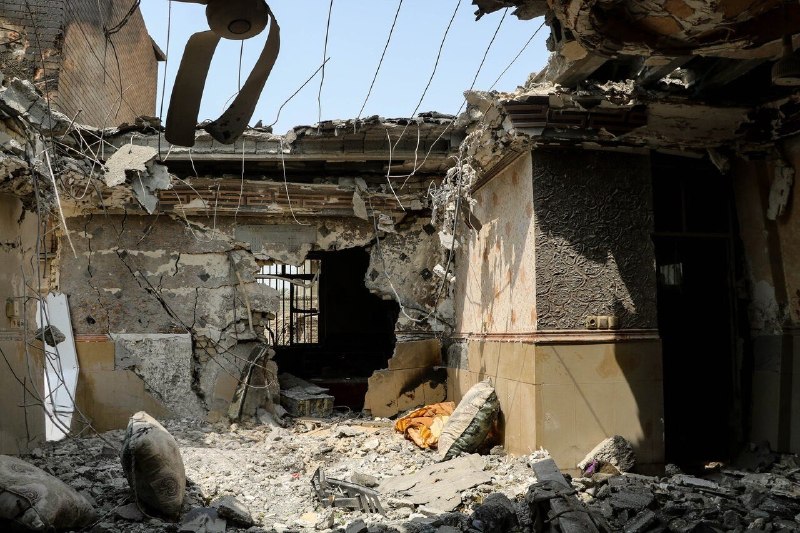
By 17:25 UTC on 15 June 2026, the diplomatic weather had shifted faster than the press pack covering it. Al Jazeera's breaking-news desk reported a "mass return to southern Lebanon" within hours of a US-Iran agreement, a movement that, if sustained, would be the largest reversal of internal displacement the country has seen since the 2006 war. The footage coming across Telegram from Middle East Spectator carried a more pointed message from Beirut: a senior figure, framing the deal in plain terms, declared that "nothing in this deal is more important than Lebanon" and that he did "not care about the money or sanctions relief if there's no peace in Lebanon." The same afternoon, i24NEWS quoted an Israeli official saying there was "serious doubt" Israel would have launched its operation against Iran if it had known the eventual shape of the agreement, even as the IDF framed the campaign as necessary. By 16:46 UTC, the WarMonitor account on the osintlive channel was already reporting that the ceasefire was "beginning to fray," with both sides making claims the other considered violations of core conditions.
What this publication is watching is not the deal as it was billed in Washington, but the deal as it lands. The headline agreement, announced after weeks of strikes and back-channel diplomacy, is being sold in some quarters as a regional reset, a single document that freezes multiple fronts at once. The early reporting from the ground suggests something more provisional: an arrangement in which the Iranian and American files have been substantially resolved, and the Lebanese file, the one that decides whether southerners actually go home, has been parked rather than settled.
The agreement, in the shape it is taking
The terms that have filtered into the open so far describe a sequenced de-escalation. Iran accepts constraints on its nuclear programme and on the flow of certain proxy capabilities, in exchange for sanctions relief and a freeze on the kinetic campaign that brought the Strait of Hormuz into routine disruption in late spring. Israeli strikes on Iranian nuclear and missile sites, the operation that triggered the broader crisis, are understood to have stopped under the deal's terms. A senior US official, briefing reporters on 15 June 2026, said both Washington and Tehran were already testing the limits of what the other side had signed up to, with disputes over inspections, over the definition of "proxy," and over the timeline for sanctions rollback emerging within hours of the announcement.
For Beirut, the relevant question is narrower and more painful. The Al Jazeera report of a mass return to southern Lebanon implies a de facto end to active hostilities on the Israel-Hezbollah front, at least for now, and a reopening of the corridor between the Litani River and the border that has been a closed military zone for most of the past year. It does not, on the evidence available, settle who governs the area, what security architecture replaces the war, or how the displaced are to be re-housed, compensated, or guaranteed against a second displacement.
The Lebanese file, suspended mid-paragraph
The Hezbollah-aligned political class in Beirut has framed the deal as incomplete on its merits, and the Middle East Spectator-circulated remarks are the most direct version of that position to reach the open Telegram ecosystem on 15 June. The argument is that any arrangement which leaves southern Lebanon's security, the recovery of border villages, and the status of Hezbollah's residual arsenal unresolved is structurally unstable. By that read, sanctions relief is an instrument, not an outcome, and the outcome is supposed to be the safe return of civilians to towns the Israeli military designated as a buffer zone.
The Israeli framing, as relayed through i24NEWS, runs in the opposite direction. The official quoted suggested that, knowing the shape of the eventual agreement, the costs of the Iran operation may not have been worth paying. The implication is that Israel entered the war in pursuit of objectives it now understands were either scaled back at the negotiating table or were never going to be deliverable through air power alone. That is a politically charged admission for a sitting government, particularly one that framed the campaign as existentially necessary, and it is being read in Beirut as a softening of the Israeli position on the terms of any follow-on arrangement for the south.
The two positions are not symmetric. The Lebanese complaint is procedural: the deal does not yet contain a southern clause that satisfies the displaced. The Israeli complaint is retrospective: the operation that was supposed to deliver strategic depth is now being judged against the diplomacy it produced. Both can be true. The deal can be simultaneously too thin on Lebanon and too generous on Iran, depending on which capital is grading it.
Why the Lebanon question is the deal's first stress test
Ceasefires in this region have a habit of holding longest where they are most specific. The 1974 Israel-Syria disengagement survived for decades because it named a buffer, drew a line, and gave the United Nations a mandate to police it. Arrangements that rely on good faith, or on a single great-power backchannel, tend to fray within weeks. The WarMonitor reporting on 15 June, that both sides were already lodging claims the other considered violations within hours of the announcement, is consistent with that history. It is also consistent with the structural fact that the US-Iran deal resolves a bilateral dispute between two states, whereas the Lebanon question involves a non-state armed actor, an occupying-or-defending army, an internally displaced civilian population, and a Lebanese state with limited coercive reach over its own south.
Three specific fault lines are visible in the first twenty-four hours of reporting. First, the definition of what counts as a Hezbollah presence south of the Litani, and the timeline for any verified withdrawal. Second, the air and ground rules for Israeli operations inside Lebanese airspace, including the overflights that have continued, by multiple accounts, even during the negotiation phase. Third, the reconstruction file, who pays, who builds, and under what political authority, which the Lebanese political class has signalled it intends to make a precondition for declaring the crisis over.
If those three questions are not answered in the weeks after 15 June 2026, the mass return reported by Al Jazeera risks being reversed. Civilians who cross back to towns without a security guarantee, without functioning municipal services, and without a credible answer to the question of whether the next round of fighting will reach them again, are not returning in a meaningful sense. They are re-entering a buffer.
What the two sides actually said, and what they did not
The Middle East Spectator quote is, on its face, a Lebanese political demand. It is also a test of whether the deal's drafters understood the regional package as a single document. The framing implies that any sanctions relief or financial arrangement is conditional, in the speaker's view, on a Lebanese settlement, and that the deal's value is not in the resources it unlocks but in the violence it ends. The Israeli statement, by contrast, is a question about opportunity cost, would the operation have been launched if its endgame were known, and the answer, in the official's view, is no. The two statements do not contradict each other; they describe a deal that is being judged as inadequate in Beirut and as oversold in Jerusalem.
The American position, as it has filtered through senior-official briefings on 15 June, is that the agreement is a starting frame, not a final one, and that follow-on negotiations, on Lebanon in particular, are expected in the weeks ahead. That posture is sustainable in Washington for a limited window. It is harder to sustain in Beirut, where the political cost of celebrating a deal that does not yet return the south is being calculated in real time, and harder still in northern Israel, where the displacement crisis triggered by Hezbollah rocket and drone fire has its own clock.
The stakes, and what remains genuinely uncertain
If the trajectory continues, the most likely outcome, on the early evidence, is a deal that holds in the Iran file, partially holds in the broader region, and is renegotiated under pressure in Lebanon. The actors who benefit in the first phase are the Iranian state, which secures sanctions relief and an end to the air campaign, and the United States, which can claim a framework that interrupted both the nuclear programme's acceleration and the Hormuz disruption. The actors bearing the most risk are the civilians of southern Lebanon, whose return is being treated as a metric of success before the conditions for sustainable return are in place, and the Israeli government, which has to defend an operation whose strategic dividend is now being questioned by officials in its own system.
The most contested unknown is whether the Lebanese file will be reopened in a serious negotiating track, or left as a sub-clause in a larger document. The Middle East Spectator-cited position is that the two are inseparable. The Israeli position suggests openness to a different settlement than the one it went to war to obtain. The American posture, as briefed, leaves the door open. What the sources on 15 June 2026 do not yet show is whether any of those positions will be backed by the kind of specific, on-the-ground mechanism that has historically been required to make a southern-Lebanon arrangement stick.
Desk note: Monexus framed the 15 June 2026 announcements around the Lebanese file, where the deal's first operational test is actually occurring, rather than around the Washington talking points of a regional reset. The wire consensus has been slower to treat the mass return as conditional; the Telegram ecosystem, by contrast, was already documenting the fraying within hours.
Wire provenance
This editorial synthesis draws on the following public wire/social posts:
- https://t.me/Middle_East_Spectator
- https://t.me/wfwitness
- https://t.me/osintlive
- https://t.me/ALJAZEERAEN
Follow the event.
These dated source records provide context. They do not retrospectively verify this archive article.
Separate what the nuclear watchdog reported from what it could not determine after the June 2025 strikes.