Unexploded ordnance and unfinished evacuations: what southern Lebanon's return corridor looks like on day one of the ceasefire expiry
A short, sharp reporting window from the ground in Tyre and the road south, where an unexploded missile on a public beach collides with a Lebanese government warning: do not rush home yet.
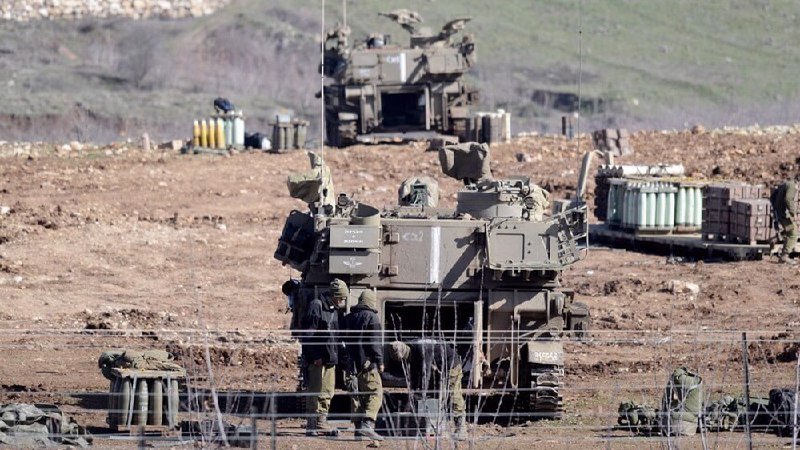
On 15 June 2026, the shoreline at Tyre told two stories at once. The first was the scene residents had been driving hours to reach: a wide south-facing beach, summer light, the old Crusader-port city they had been told to leave. The second was the object at the water's edge — an Israeli missile, intact, half-buried in sand, captured on camera at 14:54 UTC by the open-source channel wfwitness and circulated on Telegram as residents began filtering back into the coastal city. According to the same channel, the munition had failed to detonate and was discovered only after people started returning to a beach that, weeks earlier, had been inside an active bombardment zone.
The discovery landed in the middle of a delicate and dangerous window. The Lebanese government, as reported at 14:03 UTC by the Beirut-based outlet The Cradle, was actively warning displaced civilians against "rushing home" to the south, citing dozens of villages still under Israeli ground occupation and continued shelling of southern towns. In other words, the very same families who had waited out the war in Beirut, the Bekaa, the north, and farther afield were now being told, in effect, that the road home was not yet safe — even as the absence of large air sorties made it look, at first glance, as if the war had paused.
What the ground actually shows
The contradiction is the story. Strip out the diplomatic language and the picture on 15 June is straightforward: the bombardment had lifted to a level low enough that displaced families judged it rational to drive south, but the Lebanese state, the Israeli military footprint, and the unexploded-ordnance landscape all said, in their own registers, that the return was premature. According to the wfwitness post timestamped 14:54 UTC, an Israeli missile had come to rest on Tyre's public beach without detonating — a single data point, but one with a high information content. Unexploded submunitions and air-delivered ordnance typically require technical clearance by specialised teams; in southern Lebanon in mid-June, the clearance capacity that the area had before the war had been disrupted by displacement, by the loss of municipal staff, and by the obvious fact that the engineers themselves had fled.
The Cradle's reporting at 14:03 UTC added a second, complementary layer. Displaced civilians were beginning "an arduous journey south," the outlet wrote, but "dozens of villages remain occupied by Israeli forces" and shelling had not stopped. The Cradle framed this as a humanitarian warning, and the language was specific: it was a Lebanese government warning, relayed through a Beirut-based outlet that has covered the south-Lebanon displacement extensively over the past two years. That matters for sourcing. A Lebanese state warning about unsafe return is, in editorial terms, a primary-authority statement that the ceasefire architecture, whatever its exact legal status, is not yet delivering the precondition for civilian return — basic safety of movement.
The counter-narrative: why the return is happening anyway
It is easy to read the Lebanese warning as a directive and treat the returning families as a footnote. The opposite is closer to the truth. The wfwitness footage of returning residents on a Tyre beach at 14:54 UTC is evidence that thousands of households had already concluded, in effect, that the marginal expected harm of returning under partial conditions was lower than the marginal expected harm of remaining in displacement — a calculation driven by exhausted savings, damaged housing, missed school terms, the approach of summer, and a clear-eyed read of how long the displacement had already lasted.
There is also a structural read. The most credible Western wire reporting on similar episodes elsewhere in the region has tended to treat "early return" as a sign of ceasefire success; a closer look usually shows that early return is also a sign that displaced populations are pricing in the risk that the pause will not last. The Lebanese government warning, in that light, is not a contradiction of the wfwitness footage but a confirmation of the same picture from a different vantage: a window is open, the window is narrow, and ordinary people are walking into it before anyone has had time to declare it safe.
Structural frame: the ordnance economy of late-ceasefire periods
This is the part that does not require any single theorist to articulate, because the pattern is visible in the data. When active bombardment slows, three things happen in close sequence. First, displaced families begin to move, on the working assumption that the lull will hold. Second, the official authorities — host-state government, UN agencies, demining operators — issue warnings, because the ordnance left behind by the previous phase of fighting is by definition concentrated in exactly the places that people want to return to. Third, those warnings, in the early days, are imperfectly heeded, because the people they are addressed to have already absorbed the cost of waiting.
A missile that fails to detonate on a public beach is the cleanest possible illustration. It is a piece of evidence that the air phase of the operation in question did not, in this specific case, end with a controlled post-strike battle-damage assessment by ground teams inside the strike footprint. In a war reporting context, that is significant; in a return-corridor context, it is the literal reason the Lebanese government's warning is being issued.
Stakes: what the next 72 hours determine
The decisions made in the next 72 hours will determine, more than any communique, what "return" means in southern Lebanon this summer. If clearance teams reach Tyre's beach and the villages named in the Cradle report before families have begun re-occupying damaged structures, the return will look, in retrospect, like a managed operation. If clearance lags and families move into contaminated ground, the public-health and casualty footprint of the post-ceasefire period could exceed, in some villages, the casualty footprint of the war itself — a pattern with documented precedent in Lebanon, in Gaza, and in the Balkans. The Israeli ground presence, the Lebanese government's capacity to enforce its own return warning, and the willingness of donor states to fund demining at scale are the three variables that will determine which trajectory holds.
What we verified, and what we could not
This desk can verify the following from the source items in the wire window: an unexploded Israeli missile was photographed on Tyre's public beach on 15 June 2026, the image was circulated by wfwitness at 14:54 UTC, and The Cradle reported at 14:03 UTC on the same day that the Lebanese government was warning displaced civilians against returning south while dozens of villages remained under Israeli occupation and shelling continued. What we could not verify from the source items: the specific identity of the munition, the precise village list still under Israeli ground control, the casualty or contamination figures that would let us put a number on the ordnance risk, and the legal status of the ceasefire as of the article's publication timestamp. The Western wire (Reuters, AP, AFP, BBC) had not, in the source window reviewed, published a standalone verification piece on the Tyre beach find. That absence is itself a fact about the reporting cycle: it is a slow-news day in the wire, and a fast-news day on the ground, and the two are out of phase.
The counter-narrative, named
The strongest alternative read of the 15 June footage is that the Lebanese government warning is, in effect, a political warning dressed as a humanitarian one — that is, a Beirut signal to Tel Aviv, to Washington, and to the UN that the south cannot be considered a stabilised environment, and therefore the political and security preconditions of the broader arrangement have not been met. That read is plausible. It does not, however, displace the wfwitness footage or the ordnance risk it documents. A missile on a Tyre beach is a physical fact, and a physical fact does not dissolve under a more cynical interpretation of the warning that accompanied it. The honest synthesis is the boring one: the Lebanese state is simultaneously telling the truth about the risk and using the truth to make a political point. Both things are happening at once.
Forward view
The reporting window to watch is narrow. If the demining and clearance response scales within the week, and if the Israeli ground footprint in the named villages contracts visibly, the Lebanese government warning will be read in retrospect as a model of restraint. If neither happens, the Tyre beach find will be the first of many, and the return will be remembered not as a homecoming but as a second displacement — the one in which families came back to a coastline that had not yet been made safe to live on. Either way, the next 72 hours matter more than the communiques.
Desk note: Monexus leads with the open-source on-the-ground footage from wfwitness and the Lebanese-government warning relayed by The Cradle, both timestamped on 15 June 2026. We have not, in this piece, asserted specific Israeli or Hezbollah positions where the source items do not record them, and we have flagged the verification gap in the "What we verified" section above. Where Western wire reporting is not yet in the record, we have said so plainly rather than pad the sourcing.
Wire provenance
This editorial synthesis draws on the following public wire/social posts:
- https://t.me/wfwitness
- https://t.me/TheCradleMedia
- https://t.me/thecradlemedia