Israel's 'indefinite' occupation pledge: what Netanyahu's three-front declaration actually does
On 15 June 2026, the Israeli prime minister confirmed his army will stay in newly-occupied parts of Gaza, Lebanon and Syria for an open-ended period. The phrasing is the policy.
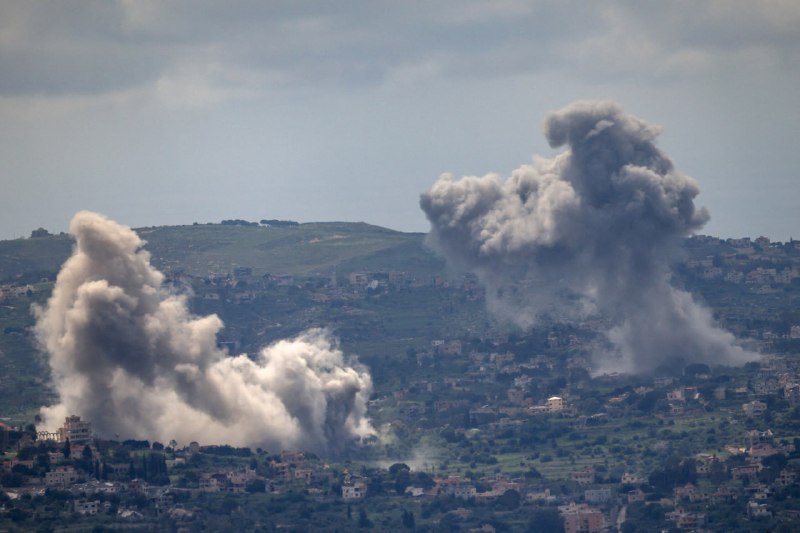
On the evening of 15 June 2026, the Israeli prime minister closed a year-long ambiguity about the war's endgame with a single, deliberate phrase. Israeli forces, Benjamin Netanyahu said, will remain in newly-occupied parts of Gaza, Lebanon and Syria "as long as necessary" — and his minister of military affairs, citing the same cabinet session, added the word that diplomats had spent twelve months trying to talk out of the script: "indefinitely." The combination is not rhetorical flourish. It is the policy, stated in plain language, by the man who controls it.
The declaration lands at a moment when the fighting on all three fronts is no longer being described by Israeli spokespeople in the language of "operations" or "phases." It is described, by those same spokespeople, in the language of residency. The army is no longer passing through. It is staying. That is the structural break this article is about — not the chronology of the war, which has been well-rehearsed, but the moment a temporary occupation was re-described, on the record, as a permanent arrangement.
What Netanyahu actually said, and what the minister added
The two statements are short enough to quote in full. From the transcript carried by Middle East Eye on 15 June 2026, 21:57 UTC, the prime minister told Israeli audiences: "We did it in Gaza, Lebanon, and Syria, where, by the way, we des[royed]" — the visible frame cut off mid-sentence — before continuing that the Israeli army would remain in those three theatres "as long as necessary." The "buffer zone" language, applied specifically to Lebanon, was carried separately the same day by the markets and policy account Unusual Whales, citing the prime minister directly: "We will remain in the 'buffer zone' as long as we need to."
The cabinet-level reinforcement came via PressTV, the Iranian state English-language outlet, which on 15 June 2026, 22:12 UTC, cited Israel's minister of military affairs as saying the regime plans to stay "indefinitely" in newly occupied parts of Lebanon, Syria and Gaza. PressTV is an interested party — it is the English voice of a state actively engaged against Israel on one of those three fronts — and its reporting should be read as a translation of a Hebrew-language statement, not as a neutral primary source. But the word "indefinitely" is the politically operative one. "As long as necessary" is what governments say when they want to leave themselves room. "Indefinitely" is what they say when they have stopped pretending the room exists.
The geography is the second half of the story. Israeli forces do not occupy Lebanon, Syria and Gaza in the same way. In southern Lebanon, Israel has maintained a strip of territory inside Lebanese borders since late 2024, formalised in a November 2024 ceasefire arrangement that was already fraying by spring 2025; the prime minister's "buffer zone" wording refers to that strip. In Syria, Israeli troops moved into positions on and around Mount Hermon and into the demilitarised zone in the south-west in the weeks following the Assad government's collapse in December 2024, an intervention no Syrian government has consented to and almost none has recognised. In Gaza, the Israeli Defence Forces have, since the collapse of the March 2025 ceasefire, progressively re-occupied the so-called "yellow line" corridor and pushed north of Netzarim, slicing the strip into zones that aid agencies now describe operationally as if they were separate territories.
The political economy of an open-ended stay
The phrase "as long as necessary" is not a forecast. It is a budgeting instruction. An indefinite occupation requires a different budget than a temporary one. It requires long-term base construction, local contractor relationships, judicial arrangements for detainees who are no longer prisoners-of-war in any Geneva sense, and — most consequentially — a domestic political constituency that is willing to keep paying for it. The Israeli right has, since 2023, built precisely that constituency. The settler movement's economy is now structurally tied to the presence of the IDF in Gaza's periphery, on the Golan axis and along the Litani.
The Lebanese frame is the most legible. The buffer zone inside Lebanon was sold to the Israeli public in late 2024 as a temporary security measure pending the disarmament of Hezbollah's residual rocket capability. By June 2026, Hezbollah's southern command has been reconstituted with Iranian and Iraqi Shia-militia logistical support — a recovery the Israeli security establishment itself documents in its threat briefings, even if those briefings are not always published in full. The prime minister's "as long as necessary" therefore refers, in the Lebanese case, to a security condition that has no defined end-state: a threat that will, by the Israeli analytical community's own account, persist for years. Translated into budget language, that is an open-ended deployment, with the cost of fortifying the buffer zone now built into the defence ministry's five-year plan.
In Syria, the calculus is different and more recent. The fall of the Assad government in December 2024 left a power vacuum in the south-west that the new Damascus authorities, dominated by HTS and its Turkish-backed allies, are still in the process of consolidating. Israeli forces moved into the demilitarised zone, established by the 1974 disengagement agreement, in the days after Assad fled, citing the need to prevent hostile forces from occupying the high ground overlooking the Jordan Valley. No Israeli government has formally annexed the territory, and the United States has not recognised the move. But an "indefinite" stay is, in practice, the only legal exit that the Israeli government has so far been willing to discuss publicly. The 1974 line, in other words, is being re-described as a historical arrangement rather than a binding one.
The Palestinian, Lebanese and Syrian counter-frames
The three occupied populations do not experience the same policy. The Palestinian reading, as expressed through West Bank and Gaza-based analysts writing in Arabic, English and increasingly on X, is that the Gaza redeployment has effectively ended any contiguous Palestinian statelike entity in the medium term. The yellow-line corridor, the Netzarim axis and the Philadelphi extension are not described in those analyses as "security zones" but as the physical infrastructure of an open-air prison. Aid-agency reporting from UN OCHA and from UNRWA, much of it circulated in the first half of 2026, has used the more clinical language of "fragmented humanitarian access" — but the substantive point is the same: a territory that cannot be governed as a unit cannot be a state, and a population that cannot move freely across its own land cannot have the prerequisites of self-determination.
The Lebanese counter-frame is the one the prime minister addressed most directly. Beirut, and the post-2024 Lebanese government that emerged from the presidential crisis, has insisted since the November 2024 ceasefire that the buffer zone is a violation of Lebanese sovereignty and of UN Security Council Resolution 1701, which governs the post-2006 arrangement. The Lebanese argument is structural rather than rhetorical: any territory held by a foreign army, for any length of time, inside a sovereign state's borders, is an occupation, regardless of how it is described in the occupying country's domestic political debate. The Israeli counter-argument, equally structural, is that 1701 is unenforceable so long as Hezbollah retains a re-arming capability south of the Litani — and that the buffer zone is therefore not an alternative to 1701 but a substitute for it.
In Syria, the counter-frame is the most recent and the least settled. The new Damascus government has been careful, in its public statements through 2025 and into 2026, not to escalate the Israeli presence into a casus belli — partly because it is in no position to fight, partly because it does not want to give the Israeli government a pretext to push further north. But Syrian analysts writing for outlets in the region have been blunt: the Israeli presence on Mount Hermon and in the Quneitra area is described as the de facto annexation of a slice of Syrian territory that was supposed to be returned under the 1974 framework. The Turkish-brokered rapprochement between Ankara and Damascus in late 2025 has put additional pressure on the file, but it has not changed the facts on the ground.
What the three-front language does to the regional balance
The most under-appreciated consequence of the prime minister's statement is what it does to the language of regional diplomacy. Until now, the three Israeli fronts have been handled by three different diplomatic tracks: the Gaza file through Egypt, Qatar and the United States; the Lebanon file through France, the United Nations and the United States; and the Syria file through the United States and, more recently, Turkey. The "indefinite stay" formulation collapses those three tracks into one — by signalling, to each of the intermediaries, that Israel intends to use the territory it holds as a permanent negotiating asset rather than a temporary one.
The structural read is that Israel is moving from a posture of war-fighting to a posture of war-administration. The two are not the same. War-fighting has a logic of decisive operations and clean exits, even when the exits are never clean. War-administration has a logic of permanent cost, local contractor capture, and the slow conversion of military control into civil authority. The settler movement's economy inside the West Bank is the closest existing model: a military presence that, over two generations, has been incrementally converted into a civilian authority, with the original ceasefire line now treated, in Israeli domestic political discourse, as a historical curiosity.
The risks of that conversion in Gaza, in the Lebanese buffer zone, and on the Syrian flank are different in kind. Gaza is the densest population of the three and the one in which the humanitarian arithmetic is most fragile. The Lebanese buffer zone is the easiest to hold and the easiest to lose — Hezbollah's projectile and drone capability is the principal constraint, and a single miscalculation could escalate into a wider war that the Israeli political system has not budgeted for. The Syrian flank is the most strategically significant — Mount Hermon is the high ground for the entire eastern Mediterranean — and the one in which the Israeli presence is least acknowledged in international forums. A future Syrian government, or a future Iranian government, or a future United States administration could pick the file up at any time.
The uncertainty that the phrase does not resolve
The sources for this article are unusually thin, and the editors flag that. The 15 June 2026 statements come from three channels: an X post by Middle East Eye carrying a video excerpt of the prime minister; an X post by Unusual Whales carrying a paraphrased translation; and a PressTV report citing the minister of military affairs. PressTV is the official English-language outlet of the Iranian state, and its reporting on Israeli cabinet language should be treated as a translation of a translation, with the editorial framing that implies. The Middle East Eye and Unusual Whales posts are contemporary but rely on video excerpts that have not yet been independently transcribed in full.
What the sources do not say is what the prime minister means by "as long as necessary." Necessary for what? Until a defined security condition is met — in which case "indefinite" is rhetorical and the condition can be named? Or until an undefined political condition is met — in which case "as long as necessary" is the most honest phrase in the statement, and the government has no intention of naming the end-state? The minister of military affairs' addition of "indefinitely" suggests the second reading. But the cabinet's own internal minutes, the IDF general staff's published posture statements, and the budget documents that would resolve the question are not in the public record as of this writing. The honest answer is that the policy has been declared but not yet costed, and that the costing is what will tell us whether the prime minister's phrase is a position or a posture.
For the moment, the language itself is the news. Three fronts, one formulation, no exit date. The next move belongs to the intermediaries — Cairo, Doha, Paris, Ankara, Washington — and to the publics on the other side of the lines, who are now being told, on the record, that the army they are paying for will be living in their territory for as long as the man who made the statement remains in office.
This publication framed the prime minister's statement as a policy declaration rather than as a campaign talking point, on the grounds that the "buffer zone" and "indefinite" language is now consistent across at least three Israeli cabinet-level voices and across three separate fronts, and that the diplomatic consequences of treating it as rhetoric are larger than the consequences of treating it as substance.
Wire provenance
This editorial synthesis draws on the following public wire/social posts:
- https://t.me/presstv/
- https://x.com/middleeasteye/status/2066640999359643648
- https://x.com/unusual_whales/status/