Netanyahu on the back foot as US-Iran deal lands in Geneva
Hours before a US-Iran memorandum was due to be signed in Geneva, Benjamin Netanyahu told reporters he had not seen the full text — and used the moment to declare he intends to fight the next Israeli election.
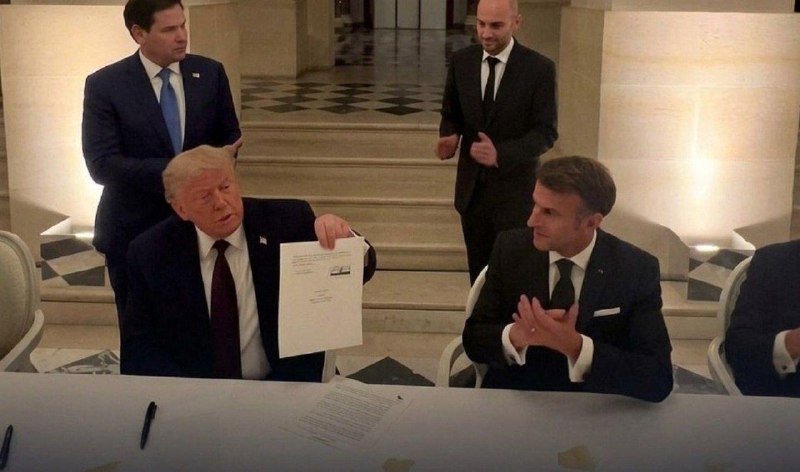
At 18:20 UTC on 15 June 2026, Israeli Prime Minister Benjamin Netanyahu stood before reporters in Jerusalem and conceded what his coalition partners had been signalling for two days: he had not been shown the full text of the memorandum of understanding that the United States and Iran were preparing to sign in Geneva. "At this stage, we still do not know the full details of the agreement," he said, according to a clip carried by the Open Source Intel account and amplified by Middle East Spectator. Minutes later he framed the relationship on his own terms: "Trump and I are partners. We often agree, and at times we disagree." And, in a line that travelled further than either, he added: "I plan on running in the next elections, and I plan on winning."
The juxtaposition tells the story. A regional accord of the kind Israeli officials have spent two decades warning against was hours from being initialled in Switzerland, and the prime minister chose the moment to campaign. The Middle East Eye live blog framed the same set of remarks under a more explicit headline: "Netanyahu fights for survival after Iran setback and US deal." Read together, the two frames are not contradictory. They describe the same man, in the same room, on the same afternoon.
A signing, but no text
The Geneva ceremony, scheduled for Friday, is a memorandum rather than a final accord — a category that allows both Washington and Tehran to claim movement without committing to the structural concessions that have stalled talks for years. The precise substance of what is to be signed remained, as of Monday evening UTC, undisclosed in the public sources available. Netanyahu's own statement on the matter was candid about that gap: the Israeli government, he said, did not yet know "exactly what's in the agreement."
That admission is unusual. Israeli prime ministers have historically insisted on being briefed — in writing, in advance — on any US understanding with a state that has openly called for the Jewish state's destruction. The fact that Netanyahu is publicly conceding ignorance rather than condemning the deal suggests one of two things: either the text is genuinely still being finalised in Geneva, or the prime minister has been kept out of the negotiation by design. Both readings are compatible with his careful phrasing. Neither is reassuring for a government that has built its recent political identity on opposition to the Iranian nuclear file.
The political geometry in Jerusalem
The domestic backdrop is the part the wire services have been less willing to spell out. Netanyahu's coalition has been losing by-elections; his Likud has been forced into awkward public rebukes of ministers; the hostage file remains open; and a growing bloc inside the Knesset wants the prime minister to step aside before the next national vote. By choosing the same press appearance to insist that he will both lead his party into that election and win it, Netanyahu is signalling that he intends to make the Iran deal — and the question of who is, and is not, in the room when it is signed — a campaign issue.
The line on Trump is doing the same work in a different register. "We often agree, and at times we disagree" is a public-relations formulation rather than a policy statement, but its purpose is clear: it preserves the option of rupture. Asked by a reporter whether he could say no to the US president, Netanyahu gave a textbook answer: "He's the president of the US, I am the prime minister of Israel, I look out for the security of our country." The remark is a reminder to a domestic audience that the prime minister retains a final say on matters of Israeli security, and a quiet warning to Washington that public endorsement of the Geneva memorandum cannot be assumed.
The structural read
Coverage of the run-up to the Geneva signing has, predictably, deferred to the language of official spokespeople on both sides of the Atlantic. What is missing from the public ledger is any detailed reporting on the counter-coalitions that have been mobilised against the deal — in Israel, in the Gulf, and inside the US Congress — and on what the memorandum actually obliges each side to do over the next ninety days. Israeli press coverage has emphasised the political vulnerability of the prime minister; Arabic-language and Iranian-state outlets have emphasised what they describe as a strategic reversal after years of confrontational posture. Both frames carry weight. The honest read is that the Geneva text is a pause-for-time, not a settlement, and that the politics around it — in Jerusalem, in Tehran, on Capitol Hill — are only beginning.
What makes the moment structurally significant is the convergence of two timelines that have run in parallel for years. The Iranian nuclear file and Israeli domestic politics have, until now, been treated as separate stories by the wire services. On 15 June 2026, they visibly collided. A prime minister who built his last three election campaigns on the existential threat posed by Tehran is now visibly defining himself, in real time, against a deal that his closest ally has chosen to sign without him.
Stakes, and what we still don't know
If the Geneva memorandum holds in something close to its current form, the Israeli political cost will accrue to Netanyahu personally rather than to the state, because opposition to the deal will be a minority position inside the Knesset and an even smaller one inside the broader Israeli public. If the memorandum collapses — over verification, over sanctions sequencing, over the role of Iran's missile programme — the prime minister's posture of "I told you so" will look prescient in retrospect, and the coalition arithmetic will tighten around him. The first scenario makes a leadership challenge inside Likud more likely; the second makes an early election more likely. Either way, the political ground Netanyahu is standing on is narrower than the one he occupied three months ago.
The honest list of what remains unverified is short and significant. The full text of the memorandum is not in the public domain. The Israeli cabinet has not been formally briefed. No senior Iranian official has confirmed, in the materials available to this publication, the precise verification or sanctions-relief architecture that the document contains. And the US side has, characteristically, declined to brief foreign capitals before the signing ceremony. The next forty-eight hours will determine whether 15 June 2026 is remembered as the date a regional de-escalation began, or as the start of a longer, more combustible argument between Washington and Jerusalem about who, exactly, gets to decide what the Middle East looks like next.
Desk note: Monexus has read the Israeli prime minister's own remarks as the primary source for his political posture, with Middle East Eye's framing used for the broader survival narrative. Telegram channels carried the video; we have not re-cut it. Where the public sources disagree about tone, we have let the quotation do the work.
Wire provenance
This editorial synthesis draws on the following public wire/social posts:
- https://t.me/osintlive
- https://t.me/Middle_East_Spectator
- https://t.me/osintlive
- https://t.me/osintlive
- https://t.me/osintlive
Follow the event.
These dated source records provide context. They do not retrospectively verify this archive article.
Separate what the nuclear watchdog reported from what it could not determine after the June 2025 strikes.