Netanyahu's 'not over' warning and the Iran deal that won't come: how the Lebanon buffer zone became the dealbreaker
On 15 June 2026, Netanyahu publicly boasted of saving Israel from 'nuclear annihilation' while Iranian negotiators doubled down on a Lebanese withdrawal. The two claims are now the central obstacles to the US-brokered deal.
On the evening of 15 June 2026, two messages crossed the same newswire within ninety minutes of each other, and neither was compatible with the other. At 18:46 UTC, the prime minister of Israel told reporters that Iran had pushed, during indirect talks, for an Israeli withdrawal from the Lebanon buffer zone — and that this had not happened. At 20:37 UTC, Iranian state-linked outlets reported that Article 4 of the Pakistani-mediated US–Iran draft explicitly demands a US-backed Israeli pullback from that same buffer zone. At 20:51 UTC, the same Israeli prime minister declared that the fight against Iran was 'not over' and vowed continued occupation of Lebanese territory, while claiming credit for saving Israel from 'nuclear annihilation'.
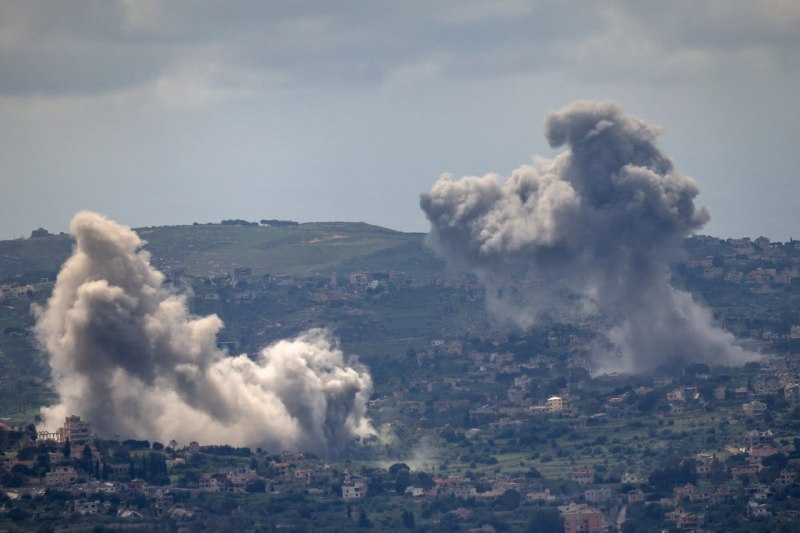
The two messages are not a contradiction in the diplomatic sense; they are the visible edge of a much older argument. A nuclear-capable Iran, an Israeli-occupied southern Lebanon, and an American administration hunting a face-saving deal have collided in a single corridor, and the buffer zone — five kilometres of contested farmland, villages, and observation posts along the Blue Line — is the one piece of ground no party is prepared to release.
This is what the next weeks of Middle Eastern diplomacy will actually be fought over. The headline question — does Iran get a civilian nuclear pathway, and at what enrichment ceiling — is being decided in a quiet back channel. The question on the table in public, and the one that will determine whether anything is signed, is who controls a strip of land in south Lebanon roughly the size of a small European principality.
What Netanyahu actually said, and what Iranian outlets claim is on the table
The Israeli account is the more aggressive of the two. According to reporting aggregated by The Cradle's Telegram channel at 20:51 UTC on 15 June 2026, the prime minister used a public appearance to argue that Israel had 'destroyed' Iranian military assets in a still-unspecified recent exchange, that his government had spared the country a 'nuclear annihilation' it was allegedly weeks from suffering, and that the campaign was unfinished. He coupled that with a stated intention to maintain an Israeli military presence inside Lebanon — language that goes well beyond the existing ceasefire architecture agreed in late 2024 and that, if enforced, would put Israel in permanent occupation of a sovereign neighbour without a parliamentary vote at home.
The Iranian account, as relayed by the same outlet at 20:37 UTC the same evening, is more procedural. It says the Pakistani-mediated draft — a framework Washington is reported to be using as the spine of an emerging understanding — contains an Article 4 that obliges the United States to secure an Israeli withdrawal from the Lebanese buffer zone in exchange for Iranian commitments elsewhere in the package. The framing is significant: it puts the territorial concession on Washington's side of the ledger, not Tehran's, and it implicitly rebukes the Israeli position by naming it as the variable Washington must move.
The third input, a Polymarket newsflash also timestamped 18:46 UTC on 15 June, simply confirms the Israeli line: the prime minister said Iran asked for the withdrawal, and 'that didn't happen.' The prediction-market note is useful less for what it says than for what it shows about timing: Netanyahu's public denial landed before the Iranian version of the same exchange had finished propagating through regional channels. The denial was calibrated for an American prime-time audience, not a Lebanese one.
Why the buffer zone, and why now
The southern Lebanon buffer zone is not a new dispute. It has been the cockpit of every Israel–Hezbollah confrontation since the 1980s, the territory Israel withdrew from in 2000, the terrain it re-entered in 2006, and the strip it has occupied, in varying degrees, since a ceasefire arrangement in late 2024 that was supposed to make the Israeli presence temporary and contingent. The architecture of that ceasefire is precisely what is now being tested.
Three things make 2026 different from the 2000 or 2006 versions. First, the Israeli position is no longer framed as defensive depth against a non-state rocket actor; it is now publicly framed, by the prime minister himself, as a permanent occupation with an explicit claim to have 'saved' the country from a regional power. That is a categorically different legal and political posture. Second, the Iranian negotiating position is publicly tied to the buffer zone's fate. Tehran is not asking for a withdrawal as a goodwill gesture; it is reportedly making it a precondition for whatever restraint it offers on enrichment, missile programmes, and proxy coordination. Third, the United States is treating the package as deliverable in 2026 — a domestic political timeline that compresses the room for Israeli or Iranian recalibration.
The structural read is straightforward. A state that says the war is 'not over' is not a state preparing to honour a withdrawal clause. A state that makes a withdrawal a precondition of a deal is not a state preparing to accept a unilateral Israeli stay. The two claims are stable only if one of three things happens: the US extracts a concession from Israel, the US drops the buffer-zone requirement from the package, or the deal collapses and the war continues by other means. The 15 June messaging from both sides suggests the third option is the one currently being tested for viability.
The counter-narrative: what the Iranian demand is actually doing
It is tempting to read the Iranian insistence on a Lebanese withdrawal as a maximalist bargaining position — opening high, settling for sanctions relief and an enrichment ceiling. That is the standard Western-wire framing. It deserves a more careful read.
Iran's argument, made in the language of state-aligned outlets and the social-media accounts of its negotiating team, is that the existing Israeli presence in south Lebanon is the operational infrastructure for any future strike on Iranian assets, personnel, and proxy logistics in Syria and the Mediterranean. From that vantage point, an Israeli pullback is not a Lebanese-sovereignty gesture; it is a security guarantee Tehran can audit. A nuclear deal that leaves Israeli armour in the southern Litani corridor is, in this framing, a deal that leaves a tripwire in place.
The counter-position — visible in the Israeli messaging on 15 June — is that the buffer zone is the only terrain on which a non-state rocket threat can be physically suppressed, and that withdrawal in exchange for paper commitments has failed before. Israeli public commentary in 2024, when the existing ceasefire was negotiated, argued exactly this: that the 2000 withdrawal produced the rocket arsenal of 2006, and that the post-2024 arrangement must not repeat the cycle. That argument has a domestic constituency, a military-intelligence constituency, and a prime minister who has now publicly tied his personal legacy to the position.
A fair read of where this stands: both arguments are coherent on their own terms, neither is a negotiating posture alone, and the US is the only party with the leverage to choose between them.
Structural frame: corridor politics and the narrowing American middle
The interesting question is not whether the deal is good or bad. It is why a superpower that spent two decades arguing it would not negotiate with Iran under coercion is now running a Pakistani-mediated channel whose central territorial ask is not in the superpower's gift. Washington does not control the buffer zone. Israel does. The Pakistani track is functioning, in effect, as a courier service between Tehran and a third party whose actual decision-maker sits in Jerusalem.
That is the structural reality. The US can offer sanctions relief, unfreezing of assets, civil-nuclear architecture, and a de-escalation language regime. It cannot offer Lebanese territory. The Iranian insistence that Article 4 name a US obligation to extract an Israeli withdrawal is, in this light, an attempt to bind Washington to a fight with its own ally — to convert a bilateral nuclear file into a trilateral territorial one. The Israeli response, announced the same day, is to deny that any such obligation exists and to assert a permanent presence.
This is what 'corridor politics' looks like in practice: the deal's deliverability is not a function of the deal's text but of the alignment between the guarantor and the territorial actor. When those diverge, the text is moot. The history of 2015's JCPOA is instructive; the deal that Iran, the US, France, the UK, Germany, Russia, and China signed was undone by an Israeli government that was not a signatory. The 2026 version, in this reading, faces the same structural problem one layer down: the United States and Iran can agree on paper, but the Israeli veto travels through the buffer zone.
Stakes: what the next eight weeks will decide
If the deal collapses, the immediate consequence is kinetic. The Israeli prime minister has now framed the next phase of the conflict as unfinished business. Iranian negotiators are framing the package as conditional. A failure in the channel produces the conditions for a renewed air campaign against Iranian assets, a renewed ground operation in south Lebanon, and a re-escalation across the Syrian and Iraqi theatre. Oil markets, which have been trading on the assumption that 2026 is the year the de-escalation arrives, reprice on the first serious indication that it is not.
If the deal survives, the Lebanese buffer zone becomes the test case. An Israeli withdrawal would be the first territorial concession in this corridor since 2000, executed under a Pakistani-mediated framework that, until June 2025, did not exist as a diplomatic track. It would also be the first time Israel has accepted a constraint on its southern Lebanon posture as the price of a US-Iran arrangement rather than a US-Israel bilateral. That is a precedent, and the Israeli government of 15 June 2026 is signalling, in public, that it is not prepared to pay that price.
The honest read of the evening of 15 June 2026: the two principals are talking past each other through the same news cycle, and the United States is in the awkward position of having to choose which principal to overrule. The buffer zone is the ground on which that choice will be made.
What remains uncertain
The source material for this read is the public messaging of the three principals in a single news cycle, plus an Israeli prediction-market feed. The Iranian version of Article 4 is reported by state-linked outlets and has not been independently confirmed in the Western wire services available in the thread. The Israeli prime minister's claim of 'destroying' Iranian military assets is unsourced in the available reporting; the counter-narrative from Iranian outlets does not engage with it. The Pakistani role is described as a mediator, but the substantive content of the track is not on the public record. The most consequential single fact — whether the United States has privately committed to a buffer-zone ask it cannot deliver, or is running a bluff it expects Israel to call — is the one fact none of the day's reporting settles. The next days will narrow it. They will not, on present trajectory, resolve it.
This publication framed the 15 June messaging as a structural collision between an Israeli claim of permanent occupation and an Iranian demand for a US-guaranteed withdrawal, rather than as a routine bargaining exchange — a read the available wire sourcing does not contradict.
Wire provenance
This editorial synthesis draws on the following public wire/social posts:
- https://t.me/thecradlemedia
- https://t.me/thecradlemedia
- https://t.me/TheCradleMedia
- https://en.wikipedia.org/wiki/South_Lebanon_conflict
- https://en.wikipedia.org/wiki/Blue_Line_(Lebanon)
- https://en.wikipedia.org/wiki/Joint_Comprehensive_Plan_of_Action
- https://en.wikipedia.org/wiki/Israel%E2%80%93Hezbollah_ceasefire_(2024)
Follow the event.
These dated source records provide context. They do not retrospectively verify this archive article.
Separate what the nuclear watchdog reported from what it could not determine after the June 2025 strikes.
- https://t.me/thecradlemedia
- https://t.me/thecradlemedia
- https://t.me/TheCradleMedia
- https://en.wikipedia.org/wiki/South_Lebanon_conflict
- https://en.wikipedia.org/wiki/Blue_Line_(Lebanon
- https://en.wikipedia.org/wiki/Joint_Comprehensive_Plan_of_Action
- https://en.wikipedia.org/wiki/Israel%E2%80%93Hezbollah_ceasefire_(2024