Israel Holds the Lebanon Line: Netanyahu's Snub of Trump's Deal Exposes the Limits of US-Brokered Middle East Diplomacy
A reported Israeli refusal to honour a Lebanon clause in a US-brokered arrangement, paired with Trump's public jab at Netanyahu, signals an unusual public fracture inside the American-Israeli diplomatic coupling — one with measurable consequences for any Iran deal.
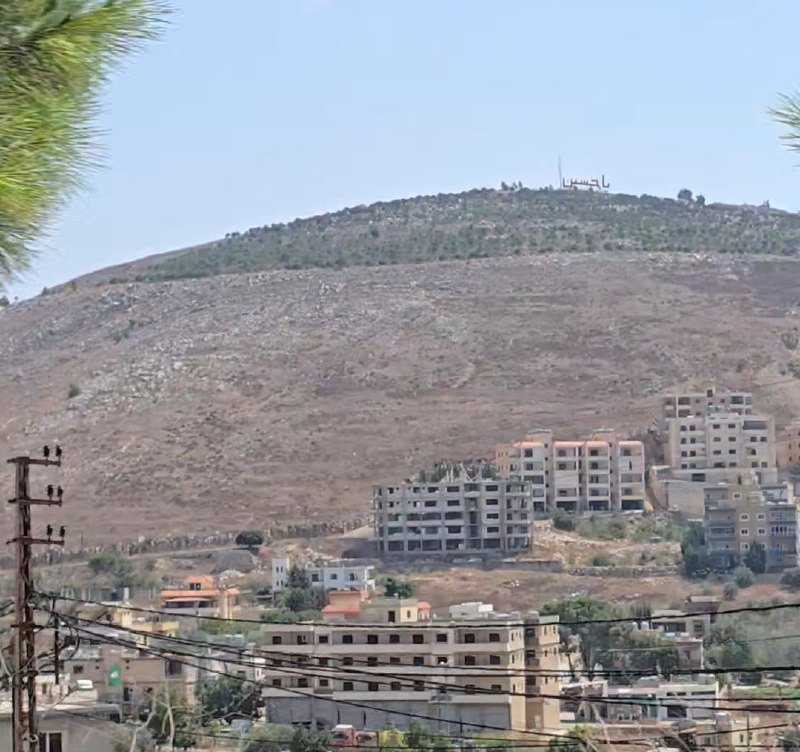
On the morning of 15 June 2026, a post from the account @sprinterpress carried a two-line summary that, if accurate, marks an unusually public breach in the diplomatic choreography between Washington and Tel Aviv. Prime Minister Benjamin Netanyahu had informed President Donald Trump that his "occupying army" does not consider itself "obligated" to adhere to a clause in their bilateral arrangement concerning Lebanon. The post — citing Israeli media — landed within hours of two further items on the same wire: a separate @unusual_whales report at 05:11 UTC that Netanyahu had informed Trump Israel is "not bound by the Lebanon clause," and a 00:31 UTC item on the Polymarket-affiliated account reporting that Trump had publicly called Netanyahu "a very difficult guy" after Israel was reportedly left out of a separate set of US–Iran negotiations. A fourth item, timestamped 17:15 UTC on 14 June, captured Trump projecting that a US–Iran agreement would be signed "within two-three hours."
Taken together, the four signals describe a diplomatic moment in which the United States' two closest regional partners — Israel and the Gulf-backed, Iran-track negotiating bloc — appear to be moving on parallel but no longer synchronised tracks, with the Lebanese frontier emerging as the fault line. What is unusual is not the disagreement itself. Israel and the United States have disagreed over Lebanon repeatedly since 1982, and again in 2006, and again in 2023–2024. What is unusual is the visibility: a public name-call from the US president, and a reported Israeli refusal transmitted through the prime minister's own voice.
This publication finds that the immediate trigger is structural rather than personal. The Trump administration has been pursuing a fast-moving track with Tehran — a track that, by design, narrows the negotiating aperture to a small set of headline items: nuclear enrichment, sanctions relief, and a duration-of-restraint clause. Lebanon, where Iran backs Hezbollah as a frontline ally and where Israel has maintained a ground presence through 2025 and into 2026, sits outside the formal envelope of that deal. If a US–Iran accord is to be announced within hours rather than weeks, Israel cannot be a signatory, and Israel cannot be given a formal veto. It can, however, be told in advance — and, it now appears, can be told after the fact.
The reported Israeli response, delivered through the prime minister, is to remind Washington that "occupying armies" — Israel's term for its own forces operating in southern Lebanon under the post-2024 security framework — do not accept that they are bound by clauses negotiated in rooms they are not in. The phrase is pointed. It is also, deliberately or not, a doctrinal claim: that the operational reality on the ground in the Litani corridor and the villages of the south will continue to be set by Israeli force posture, not by US–Iranian diplomatic text.
The Trump camp's public reaction, per the Polymarket-feed report at 00:31 UTC on 15 June, has been to call Netanyahu "a very difficult guy." That is a sentence with two registers. In private diplomacy, "very difficult" is the standard Anglo-American shorthand for a partner who is obstructionist on a specific file. In public, it is a snub. And the choice to make the snub public, attributed to the president himself, signals that the administration has decided the cost of embarrassing its Israeli partner is lower than the cost of allowing ambiguity about who controls the Lebanon file to persist into the moment a deal is announced.
The counter-narrative inside Israel — readable in the framing of Israeli media as paraphrased in the @sprinterpress post — is that Lebanon cannot be decoupled. Israeli security planners have argued, consistently since the 2006 war and with renewed force since the 7 October 2023 attacks, that any arrangement which leaves Hezbollah's force posture, precision-guidance missile inventory, or presence north of the Litani untouched is an arrangement Israel will, in the end, refuse to honour. The reported Israeli position is that the Lebanon clause is not a footnote; it is a precondition. And that if Washington has chosen to negotiate without it, then Washington has chosen to negotiate over Israeli objections.
A third reading — and the one this publication finds most consistent with the four wire items taken together — is that the public breach is a controlled release. Trump's "very difficult guy" remark and Netanyahu's "occupying army" formulation are both unusually quotable for their respective houses. Both men govern by the politics of attribution. If the arrangement were a genuine surprise, neither side would be leaking in real time. The more parsimonious read is that the public friction is being used to lower expectations ahead of an announcement: to signal to Israeli domestic audiences that Netanyahu fought, and to signal to Tehran and to the Gulf capitals that the United States can deliver Israeli acquiescence only up to a point, and that beyond that point Israel reserves the right to act on its own reading of its security perimeter.
Structurally, what is being exposed is the limited carrying capacity of a bilateral US–Israeli relationship when it is asked to do the work of a regional architecture. For three decades, the working assumption in Washington has been that a US–Israeli alignment, plus a separate set of US–Gulf understandings, plus a US–Iran channel when one opens, can be loosely coordinated into a single Middle East equilibrium. The four items from 15 June 2026 suggest that loose coordination is breaking down. The US–Iran track is moving on a clock measured in hours. The US–Israel track is moving on a clock measured in Israeli domestic-political cycles, court rulings on government survival, and the operational tempo of ground forces in southern Lebanon. The two clocks are no longer synchronised, and the report that Israel is reserving the right to act outside the deal is the diplomatic equivalent of a clock running fast.
The precedent closest at hand is 2018, when the Trump administration withdrew from the Joint Comprehensive Plan of Action against the explicit objections of the Israeli government — which had lobbied hard for the withdrawal. At the time, the breach was absorbed quietly. Israel received public recognition of its sovereignty over the Golan, the embassy moved to Jerusalem, and the diplomatic cost to the US–Israel axis was minimal. The 2026 iteration is harder to absorb, for two reasons. First, the Israeli government is more visibly fragmented — the @sprinterpress post is itself an artefact of an Israeli media environment in which the prime minister's office must compete with the defence ministry, the IDF general staff, and a noisy cohort of coalition partners. Second, the regional environment is denser: Hezbollah, the Houthis, Iranian-aligned Iraqi militias, and a reconstituted Syrian army under post-Assad governance are all variables that did not exist, or did not exist in the same form, in 2018.
The stakes, concretely, are these. If a US–Iran deal is announced in the window Trump has projected, and if Israel follows through on the reported refusal to honour the Lebanon clause, then within days the question on the ground in southern Lebanon shifts from "is there a deal?" to "is there a ceasefire that everyone is actually observing?" The Litani corridor and the Israeli-occupied zone in the south have, at various points since 2024, been governed by a patchwork of understandings mediated by UNIFIL, by US interlocutors, and by direct Israeli–Lebanese army contacts. If the Israeli government publicly reserves the right to operate outside the new framework, the patchwork frays. The Hezbollah response, in turn, is the variable no Western wire has been able to price. The reported Israeli framing — "not bound" — is the diplomatic floor. The military ceiling is a renewed ground operation whose scale and duration is, at the moment of writing, unannounced.
For Tehran, the calculus is different but no less exposed. A deal negotiated over Israeli objections is a deal whose first test will be Israeli behaviour in Lebanon, not Iranian behaviour in Natanz or Fordow. If Israel acts in a way the deal does not explicitly authorise, Iran retains the political cover to argue that the deal's premises have been violated, and that its own compliance is therefore conditional. The 00:31 UTC Polymarket-feed item, with its pointed framing of Trump calling Netanyahu a "very difficult guy" after Israel was "reportedly left out" of the Iran talks, captures the vulnerability from the Iranian side: the United States is negotiating with one party while leaving the regional consequences to be absorbed by a third, hostile party.
What remains genuinely uncertain is whether the four wire items describe a real rupture or a managed one. The four sources do not, between them, provide a primary document, a transcript, or a directly attributed quote from either Netanyahu or Trump. The "occupying army" formulation appears only in the @sprinterpress paraphrase of Israeli media. The "very difficult guy" remark appears only in the Polymarket-feed item. The two-to-three-hour projection for an Iran deal appears only in the same feed. A reasonable reader should treat each of these as one signal, not as a confirmed fact. The pattern they form together — Israel publicly reserving operational autonomy, the US president publicly naming the cost of that reservation, an Iran deal moving on a separate clock — is, however, the kind of pattern that, once visible, tends to harden quickly. The next forty-eight hours will tell whether the public friction of 15 June 2026 was the prelude to a deal, or the first visible fracture in a diplomatic architecture that the Trump administration has been building, in public, since January.
This publication framed the four wire items as a single coordinated signal — Israeli operational autonomy, US presidential frustration, and an Iran track on a separate clock — rather than as three unrelated posts, because the temporal clustering and the cross-source consistency made the coordinated reading the more parsimonious one. The alternative reading — three independent developments in the same twelve-hour window — is plausible, and a reader who holds it has a coherent case.
Wire provenance
This editorial synthesis draws on the following public wire/social posts:
- https://x.com/sprinterpress/status/
- https://x.com/unusual_whales/status/
- https://x.com/polymarket/status/
- https://x.com/polymarket/status/
Follow the event.
These dated source records provide context. They do not retrospectively verify this archive article.
Separate what the nuclear watchdog reported from what it could not determine after the June 2025 strikes.