Pakistan's $1bn freelance milestone meets an AI wall — and a peace-broker credit it didn't ask for
Islamabad is set to cross $1bn in IT-related freelance exports this fiscal year — a record that, for the first time, will be measured against generative AI's encroachment on the very tasks that built it. Hours earlier, a separate Pakistani claim put Islamabad at the centre of a US–Iran deal it does not appear to have signed.
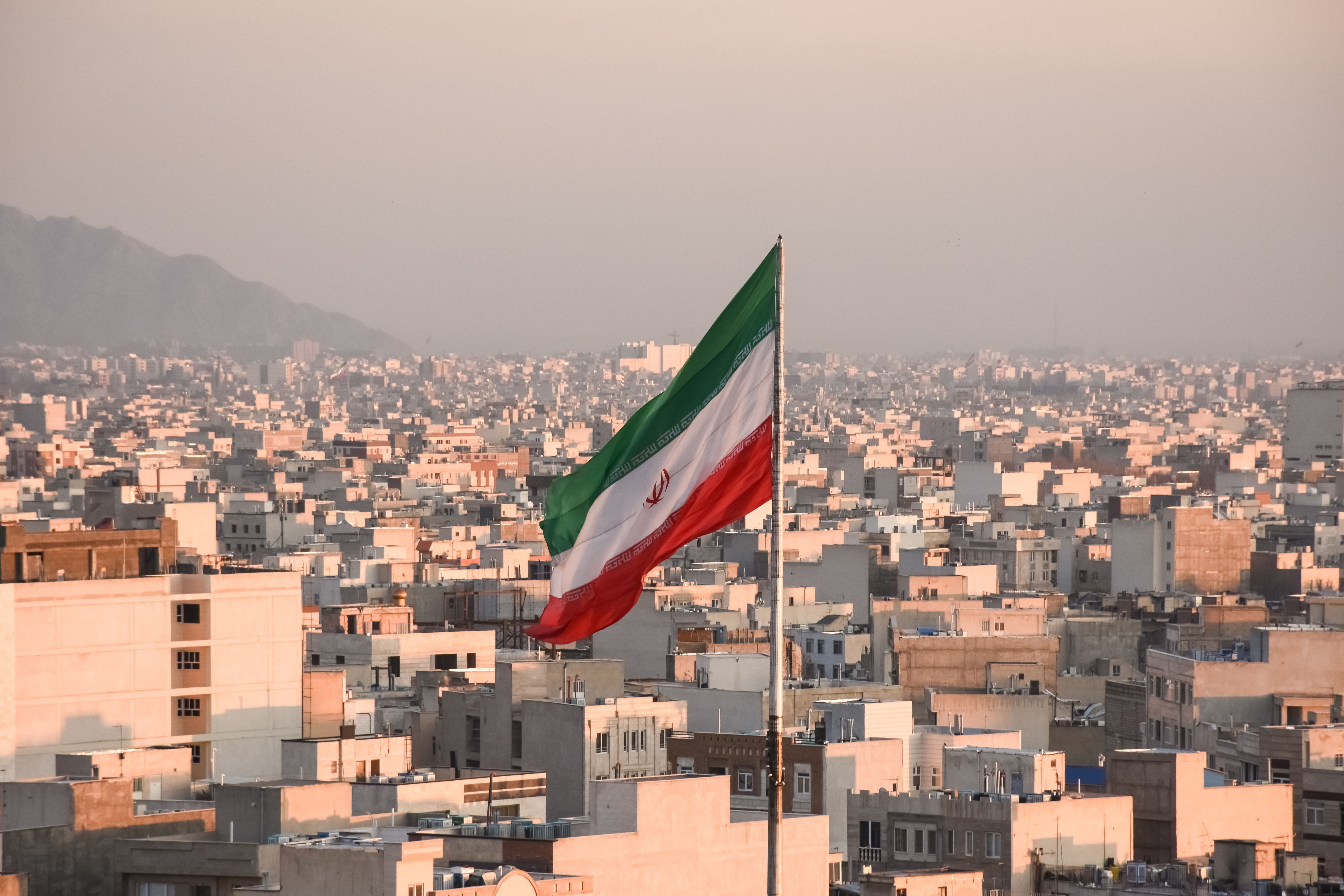
On 15 June 2026, the morning's two most striking South Asian economic data points did not come from a central-bank press conference or a multilateral report. They came from a Nikkei Asia dispatch out of Karachi and a series of unsourced social-media claims that, taken together, sketch a country punching well above its nominal weight on the global stage. Pakistan's IT-related freelance exports are set to cross the $1bn mark for the first time in the fiscal year ending in June 2026, Nikkei reported at 05:01 UTC, an inflection point the piece frames as both a milestone and a warning: generative AI is encroaching on the very categories of online work that built the country's gig-export base. Hours earlier, two separate X posts — one from the markets-account Unusual Whales at 23:40 UTC on 14 June, another from prediction-market feed Polymarket at 21:29 UTC — claimed Pakistan's prime minister had announced a US–Iran "peace deal" to be signed in Switzerland on 19 June. By 02:33 UTC, the Hindustan Times's wire was reporting an announced US–Iran agreement for an "immediate and permanent halt to military operations," including Lebanon — language that, in diplomatic reporting, is a more conventional description of a ceasefire framework than a "peace deal," and that did not credit Islamabad as the broker.
The two stories share a country. The first is verifiable to Nikkei's reporting. The second is not yet verifiable to any official Pakistani, Iranian, American, or Swiss government source in the thread — and the gap between "Pakistani PM says deal" and "deal is announced" is precisely where the day's confusion lives.
A $1bn gig economy, built on tasks AI is now eating
Nikkei's dispatch puts the milestone in plain relief. Pakistan's IT-related freelance exports — the slice of the country's services trade that flows through platforms like Upwork, Fiverr and direct-bid marketplaces, in categories as varied as graphic design, video editing, software development, customer support and content writing — are on track to clear $1bn for the first time. The fiscal year ends in June, which means the line is being crossed now, on the back of a multi-year compound that took the sector from a few hundred million dollars in the late 2010s to a billion-dollar line item on the State Bank of Pakistan's services ledger.
The structural story is well known to anyone who has watched South Asian labour markets in the post-pandemic era. A young, English-fluent, dollar-hungry workforce met a Western client base that had just discovered that software-engineering tickets, copywriting briefs, and QA tasks could be sent to a stranger on the other side of the world. Pakistan's share of that trade grew faster than India's not because the talent was better, but because the cost-per-hour was lower, the time-zone overlap with Gulf and European clients was favourable, and the country's persistent current-account crisis gave every freelancer a strong personal motive to bill in dollars.
What Nikkei flags — and what the $1bn headline cannot paper over — is the second-order fact. The categories that drove the early wave of Pakistani freelance exports are precisely the categories that large language models and generative-AI tooling have made cheapest to automate. Copywriting, basic code generation, image upscaling, transcript clean-up, customer-support triage, SEO content production: these are not a random sample of the gig menu. They are the menu. Pakistan is crossing $1bn at the moment the underlying demand curve is bending.
The credit Pakistan didn't ask for
The Iran-deal subplot is, on the available evidence, messier. The Polymarket and Unusual Whales posts attribute the announcement to the Pakistani prime minister and frame Islamabad as the broker of a US–Iran agreement to be signed in Switzerland on 19 June. The Hindustan Times piece, by contrast, reports the US and Iran themselves as the parties announcing an "immediate and permanent halt to military operations," including operations affecting Lebanon — the kind of bilateral, militarily framed formulation that usually comes out of the warring parties' own spokespeople, not a third capital.
Two reads are plausible. The first is that Islamabad played a real and under-reported mediation role — Pakistan has, at various points, hosted back-channel discussions with Iranian counterparts, and its relationship with both Washington and Tehran is more functional than Western commentary usually allows. The second is that the social-media framing of "Pakistani-brokered deal" overstates the case, that the underlying agreement is a US–Iran understanding, and that Islamabad's role was limited to facilitation, signalling, or hosting a track that has not yet been confirmed by either Washington or Tehran. The thread context does not contain a direct quote from the Pakistani prime minister's office, a State Department readout, or an Iranian foreign ministry statement, and that absence matters. A peace deal is the kind of claim that gets a tier-one wire confirmation within hours, not one that should be sourced from two X accounts and a Telegram channel.
This publication's read: a US–Iran de-escalation framework is consistent with months of regional traffic — the language in the Hindustan Times piece, the inclusion of Lebanon, the Switzerland venue — but the specific claim that Pakistan brokered it remains unverified. The two should not be collapsed into a single headline until the primary parties speak on the record.
A country whose exports move with the dollar and the algorithm
Both stories, taken together, are a clean illustration of a structural fact about Pakistan's external position in 2026. The country's most dynamic dollar earners are no longer the traditional textile-and-rice commodity complex. They are services routed through platforms (Upwork, Fiverr, AWS) and diplomatic relationships routed through the country's unique geography between China, the Gulf, and South Asia. Both are exposed to forces the country does not control: platform-fee structures, US visa policy, Gulf labour-market demand, the AI tooling cycle, and the US–Iran strategic balance.
The AI angle is the one with the longest shadow. If the categories that built Pakistan's freelance export base are the categories most exposed to generative substitution, the $1bn line is a high-water mark in more than one sense. The response is already visible in the industry's own self-reporting: a tilt up the value chain, into software engineering, AI-prompt-engineering-adjacent services, and creative work where the human-oversight premium is real. The Nikkei piece does not assert that the substitution is happening at the rate the most alarmist commentary claims, and it should not be read that way. But it does point out that the export category Pakistan is celebrating this month is the one most directly in the path of the technology wave of the same era.
The diplomatic angle is the shorter-cycle story but the louder one. A US–Iran deal, if confirmed on the terms reported, would reshape Gulf security, oil-price assumptions, and the strategic map Pakistan's army and foreign office navigate. If Pakistan genuinely helped broker it, the diplomatic credit would be the country's most significant foreign-policy win in years — and would sit awkwardly with its long-standing relationship with Tehran and its deepening relationship with Riyadh. If it didn't, the day's headlines will quietly age out, and the $1bn gig milestone will be the story that actually mattered.
What the next 72 hours will tell
The honest framing is that both stories are moving fast and the evidence is uneven. On the economic side, the State Bank of Pakistan's full-year services export data, due later in the summer, will confirm or revise the $1bn number, and the platform-level shifts — Fiverr's AI-policy changes, Upwork's pricing experiments, the rise of AI-augmented service boutiques that bill as agencies rather than freelancers — will determine whether the next fiscal year adds a billion orchesitates at the line. On the diplomatic side, 19 June will either produce a signing in Switzerland or it won't. If it does, the question of who brokered it will be answered by the joint statement's drafting history, not by the X accounts that claimed the credit first.
The thread context also contains one item that sits outside both stories: a Unusual Whales post at 02:01 UTC on 15 June flagging Elon Musk as "the first trillionaire, ever," with a link to Unusual Whales's own coverage. The claim is illustrative of the same moment — a market in which a single private company's IPO can re-rank the wealth tables — but it is not the subject of this piece, and this publication does not have independent confirmation of the milestone beyond Unusual Whales's own reporting. It is noted here so the reader knows the data point exists; it is not built into the analysis above.
The broader point is the one this publication keeps returning to. The Global South's most dynamic economies are no longer competing on commodity volumes or factory-floor throughput alone. They are competing on the price of an hour of skilled digital labour, on the bandwidth of a diplomatic back-channel, and on the speed with which they can retool a workforce when the technology underneath it shifts. Pakistan just hit a $1bn line on the first of those. The second is, as of this week, contested. The third is the one that will determine whether the next milestone is celebrated or mourned.
Desk note: Monexus's thread context contained no tier-one confirmation of the US–Iran "peace deal" beyond the Hindustan Times wire and two X accounts. The freelance-export milestone is reported by Nikkei Asia; the diplomatic claim is treated here as unverified, with the structural read running through both stories rather than collapsing them into a single frame.
Wire provenance
This editorial synthesis draws on the following public wire/social posts:
- https://t.me/s/NikkeiAsia
- https://t.me/s/nikkeiasia
- https://x.com/unusual_whales/status/...
- https://x.com/unusual_whales/status/...
- https://x.com/polymarket/status/...
- https://t.me/s/hindustantimes