Pakistan's Geneva moment: how a $300bn economy ended up hosting the U.S.-Iran deal
Shehbaz Sharif announced Geneva as the signing venue for a U.S.-Iran understanding. The choice says more about the diplomatic map of 2026 than the agreement itself does.
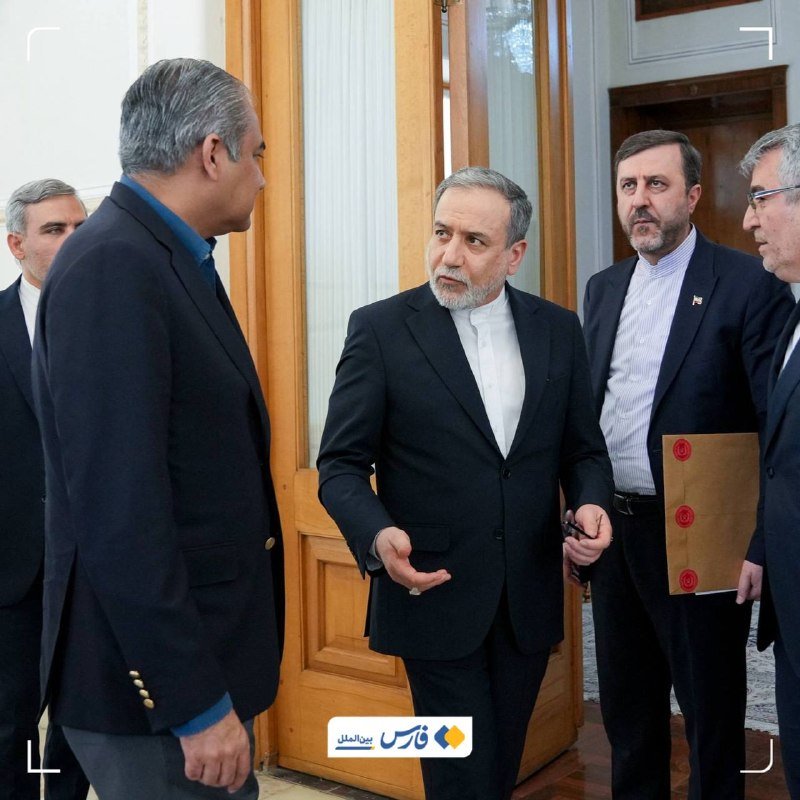
Pakistan's Prime Minister Shehbaz Sharif announced on 15 June 2026 that Geneva would host the official signing ceremony of a United States–Iran understanding, with the ceremony scheduled for Friday. Sharif framed the agreement, in remarks reported by Iranian state-aligned outlets Fars News and Tasnim, as "a victory of dialogue over the scourge of war" and a win for "peace and diplomacy." The same framing was carried by the Beirut-based Al Alam, which specified Geneva as the venue. Iran's chief negotiator, Foreign Minister Abbas Araghchi, added that a memorandum of understanding between the heads of the two delegations "will probably be signed on Friday" after his meeting with members of the economic team, in remarks carried by Tasnim.
The venue is the story. A medium-sized South Asian state with limited leverage over either Washington or Tehran has positioned itself as the diplomatic host of a settlement that, if it holds, will be one of the defining security arrangements of the year. The announcement was made in Islamabad and amplified in three different Iranian-aligned languages within the same hour — a sign that Tehran wants the optics of Pakistani stewardship to land. Pakistan did not negotiate the text. It is offering the room, the cameras, and the imprimatur of a Muslim-majority nuclear-armed state that has, for the better part of a decade, lived on the fault line between the two parties.
What Pakistan gets from the podium
For Sharif, the announcement performs three jobs at once. It re-anchors Pakistan to a peace process after years of being discussed almost exclusively through the lens of counter-terror, IMF programmes, and Afghanistan border management. It also signals to Washington that Islamabad can be useful in a Middle East theatre where the United States has spent the past two years preferring to keep Pakistan at arm's length. And, perhaps most consequentially for domestic politics, it gives the Sharif government a foreign-policy win that is not debt-relief — a category of achievement that has been thin on the ground in 2026.
The structural read is straightforward. When a great-power settlement needs a neutral-with-credentials venue, the shortlist has historically been Geneva, Vienna, Muscat, Doha, and — for matters touching the Muslim world — Islamabad or Ankara. Pakistan making the shortlist is meaningful, but it is not the same as Pakistan making the deal. The country's diplomatic weight, after the 2022–25 economic crisis and a series of IMF standbys, has been judged in Western capitals somewhere between "essential" and "fragile." Hosting the signing is the kind of role a state accepts when it wants the prestige without picking up an enforcement tab.
What the Iranian framing tells us
That the announcement travelled through Fars, Tasnim, and Al Alam before any Western wire picked it up is itself a data point. Tehran's English-language propaganda infrastructure does not push ceremony logistics for their own sake. The coordinated rollout — Sharif quoted in near-identical language across three Iranian outlets between 15:33 and 16:17 UTC on 15 June — suggests that Iran's communication planners view the Pakistani readymade as a useful complement to their own narrative. Araghchi's qualifier that the MoU is "expected to be signed" rather than confirmed lets Tehran preserve the option of last-minute friction while still reaping the goodwill of a peace dividend.
The reading worth holding open: this is the part of the deal where both sides need a third-party endorser, and Pakistan is filling that role with enthusiasm. The reading worth pushing back on: the venue is not the substance. What is in the MoU, what has been conceded on enrichment, on sanctions sequencing, on regional proxy behaviour — none of that is in the source material available today, and the wire traffic of the next 72 hours will matter more than the symbolism of the room.
Why Geneva, and why Friday
The Swiss-host convention is doing real work here. Geneva carries the infrastructure of the Iran nuclear file — it is where the E3+3 talks were anchored for two decades, where the JCPOA was negotiated, and where the UN European headquarters sit. Returning to Geneva, after years of Oman-mediated back-channels, is a signal that the United States is willing to fold the present understanding into a longer-standing multilateral architecture. That matters for the European allies who have been frozen out of the recent bilateral phase, and it matters for the sanctions architecture, which is still partly European in its reach.
Friday, for its part, compresses the timeline. Announcement Monday, signing Friday: that is the rhythm of a deal that has been pre-negotiated down to a ceremony rather than a deal that is being hammered out in real time. It also means the first substantive read on the text will land on a day when financial markets in the Gulf are closed, muting the immediate oil-price reaction. That scheduling choice alone will tell analysts a great deal about who wrote the optics and who wrote the substance.
What remains genuinely uncertain
The source material is thin in three places that matter. First, neither the U.S. State Department nor the White House has been confirmed, in the items available to this publication, as having accepted the Geneva venue — only Sharif and Araghchi have spoken on the record, both on Iranian-aligned channels. Second, the legal status of a "memorandum of understanding" between delegations is weaker than a signed agreement between governments, and the gap between an MoU and a deal will be the first thing lawyers and sanctions-compliance officers parse. Third, the regional guarantors — Saudi Arabia, the UAE, Turkey — have not been named in the available reporting, and any deal that leaves them out of the room is a deal that has to be re-sold in the Gulf before it can be considered durable.
Monexus will treat Friday's ceremony as the floor of the news cycle, not the ceiling. The text, if it is released, and the U.S. confirmation, when it comes, will determine whether 15 June 2026 is remembered as the date a war was averted or the date an MoU was over-marketed.
— Desk note: where Western wires have tended to lead with the bilateral U.S.–Iran substance, the source material here leads with the Pakistani and Iranian framings of the venue. Both angles are real; Monexus ran them in the order they arrived.
Wire provenance
This editorial synthesis draws on the following public wire/social posts:
- https://t.me/FarsNewsInt
- https://t.me/tasnimnews_en
- https://t.me/alalamarabic
- https://t.me/tasnimnews_en
- https://t.me/OANNTV