The Strait, the Price, the Pipeline: How a Sunday in Islamabad Reset Global Risk
A peace announcement brokered in Pakistan pulled the geopolitical premium out of crude, lifted Bitcoin above $65,000, and offered the first credible off-ramp from a war few saw coming in January.
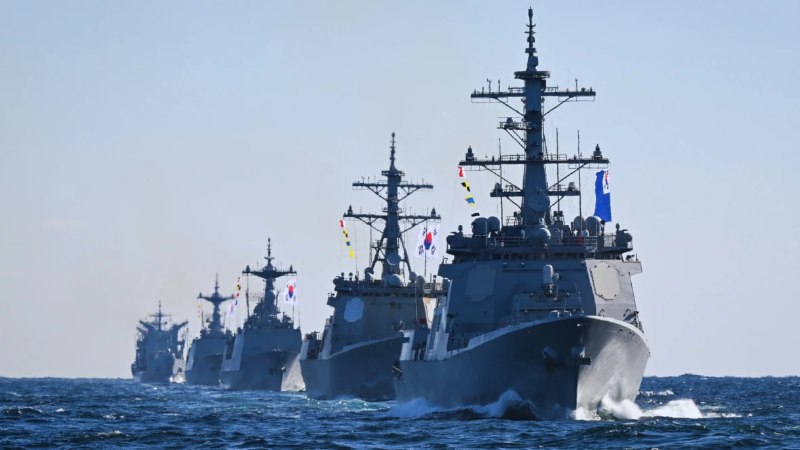
On the evening of 14 June 2026, with oil already sliding and US stock futures pushing higher, the governments of the United States and Iran announced a preliminary deal to reopen the Strait of Hormuz and halt a war that, by any honest accounting, killed thousands of people and reshuffled the assumptions under which global energy, finance, and shipping had been operating since the conflict began. Pakistan stepped forward to host the formal signing ceremony, a venue choice that is, on its own, a small geopolitical fact with outsized consequences: the country that borders both Iran and the Arabian Sea is now positioning itself not as a bystander to a Gulf crisis but as the chosen mediator in it. By the early hours of 15 June, Bitcoin was trading above $65,500 — a two-week high — and the move was being read in trading desks from Singapore to London as a single, legible signal: the risk premium that had been baked into crude, into Gulf equities, into defence names, and into the safe-haven bid under gold, was coming out, and fast.
The headline is a peace agreement. The substance is something narrower, and worth treating with the same scepticism one would apply to any framework signed in haste under the pressure of open-ended escalation. What has been announced is (a) a halt to active hostilities, (b) the reopening of the Strait of Hormuz to commercial traffic under conditions to be elaborated, and (c) a sequenced move toward talks on Tehran's nuclear programme. What has not been announced, at least in the reporting available on the morning of 15 June, is the legal architecture, the monitoring regime, the sanctions sequencing, or the role of the Gulf states and the International Atomic Energy Agency. The Cradle's 12:55 UTC bulletin frames the package as a "preliminary" agreement; the BBC's 23:37 UTC report on 14 June quotes President Donald Trump saying the waterway will "open to all." Those two formulations are not in conflict, but they are not the same sentence. One is a diplomatic verb; the other is a market verb. Both can be true, and both usually are, at the moment a war stops.
The shape of the announcement
The mechanics, as reported, are straightforward. A peace deal was reached on Sunday 14 June 2026, with Pakistan named as the host of the signing ceremony. The Strait of Hormuz — the chokepoint through which a meaningful share of seaborne crude transits — is to be reopened. The US side, per BBC reporting citing Trump, characterises the arrangement as opening "to all." The Iranian side, per Live Mint's 01:54 UTC dispatch on 15 June, frames the deal as "halting a war that killed thousands of people and roiled the global" economy, with talks on the nuclear file to follow. The sequencing matters: a deal that puts the chokepoint back into commercial use before the nuclear file is resolved is, structurally, a deal that buys time for both sides more than it resolves the underlying disagreement. It is, in plain terms, a de-escalation instrument with a negotiation track bolted on.
The oil market read it that way. The Coindesk 00:08 UTC bulletin on 15 June and its 03:56 UTC update both flag crude sliding on the announcement, with Bitcoin moving inversely: a peace agreement that reopens the Strait "pulled the geopolitical premium out of oil and put [it] back into risk assets." Cointelegraph's 10:06 UTC report on 14 June, filed before the formal announcement, captured the market leaning into the same expectation — Bitcoin nearing $65,000 on the expectation that Hormuz would "open to all." The price action is not in dispute. The interpretation of the price action is.
The market read, and what it is not
The cleanest version of the trade is the one the equity desks are running. A reopened Hormuz means a wider, more reliable flow of Gulf crude at a moment when global inventories have been worked down by the conflict itself. Lower expected crude prices feed through, with a lag, into lower expected input costs for refiners, shippers, airlines, and the petrochemical complex. The flip side of that trade is a weaker safe-haven bid: less reason to be long gold, less reason to be long US Treasuries on a geopolitical risk premium, and more reason to rotate into growth assets and emerging-market debt. Bitcoin, for a cohort of positioning reasons that have been exhaustively documented elsewhere, tends to behave, in the short run, like a high-beta proxy for that rotation rather than a pure safe haven. A two-week high above $65,500 is consistent with that read.
That is the trade, though, not the peace. Equities do not price wars; they price the expected duration and intensity of wars. The market is pricing the expected duration of this one as shorter than it did on Friday. The market is not in a position to tell us, on the morning of 15 June, whether the underlying dispute — the nuclear question, the sanctions architecture, the regional alignment of Iran, the standing of the Iranian rial, the question of who pays for reconstruction — has actually been resolved. The price of crude in seven days will tell us more about whether the deal is holding than the price of Bitcoin in seven minutes did about whether the deal is good.
What Islamabad bought, and at what price
The venue is the under-reported story. Pakistan has, in recent memory, been a difficult place for American diplomacy — the Abbottabad operation, the long rupture of 2011, the slow partial repair. It is also a country with a working relationship with Tehran, a shared border, and a navy that, for whatever the navy of a country of Pakistan's size is worth, operates in the same sea. Hosting the signing of a US–Iran deal in Islamabad signals, at minimum, three things: that the Pakistan Army is comfortable with the optics; that the civilian government of Prime Minister Shehbaz Sharif is willing to lend the country's name to a settlement it did not negotiate; and that the principal players on both sides believe Pakistan is, on this question, a credible-enough third party to be photographed next to.
That is real diplomatic capital, and the Sharif government will want to spend it. The structural question is whether Pakistan can convert a single signing ceremony into a longer-term role as a mediator for Gulf security questions. The historical record on mediators is unforgiving — the moment the deal needs enforcement, the mediator's leverage tends to disappear, and the principals either keep the agreement or do not, on their own. For now, the upside for Islamabad is concrete: a higher profile, a stronger case for the financial assistance and IMF programme flexibility Pakistan has been negotiating, and a quiet counter-narrative to the long-running story of Pakistan as a problem to be managed. Whether that is a durable posture or a one-off frame depends on the next ninety days, not the next ninety minutes.
The counter-narrative worth taking seriously
A peace announcement is not a peace. The preliminary framing of the deal — emphasised by The Cradle, by Live Mint, and by the language used in the BBC report — is doing real work. There is no published text. There is no agreed monitoring regime. There is no answer to the question that sank the 2015 framework, which is what happens when one side believes the other is cheating on enrichment capacity, on stockpile size, on the rotation of centrifuges that the IAEA cannot continuously inspect. The 2015 deal held for the length of time that the United States, under one administration, chose to honour it; it did not survive a change of administration because the architecture was, in retrospect, too dependent on continuity of political will. The current deal, to the extent that the reporting reveals its shape, has the same vulnerability.
There is also a counter-narrative from the Iranian side that does not always make it into Western wire copy and is worth weighing on its own terms. The framing in Iranian state-aligned media — that the war was a war of attrition forced on the country, that the negotiation is from a position of having absorbed punishment and refused to break, and that the regional balance of power is the true subject of the deal, not the nuclear file alone — is not a marginal view in Tehran. It is, by most accounts, the dominant view. The Cradle's editorial line tends to amplify that framing; reporting in Live Mint and the BBC includes it by way of attribution. The point for a reader is not to adjudicate which framing is correct; it is to notice that a deal whose principal parties describe its substance differently has not been stress-tested. The market is pricing the stress-test as if it has been passed. The market has been wrong about that kind of thing before.
The structural frame, in plain prose
What we are watching is a hegemonic transition expressed through the price of energy. The architecture of the post-1970s oil order — Gulf producers pricing in dollars, US naval power underwriting the sea lanes, European and Asian importers paying a premium for the insurance that the US guarantee provides — has, for the better part of two generations, been the background condition of global finance. A war that closes the Strait of Hormuz and forces the United States to negotiate its reopening through a third-party capital is, regardless of the eventual terms, a small data point in a much larger story about whether that background condition is going to hold for another two generations. It may. The dollar's reserve status is sticky, and the US Navy remains the only force that can, on its own, keep the lanes open in extremis. But the fact that a settlement needed Pakistan, that a settlement needed to be called "preliminary," and that a settlement needed to be announced on a Sunday evening to catch the Asian open — all of that is information about a system that is more contested than the consensus framing allows.
The market reaction is the part that is fully visible. Bitcoin above $65,500, oil sliding, US equity futures higher, gold easing — these are the prices of a world in which the war is shorter than expected and the chokepoint is open. They are not the prices of a world in which the underlying dispute is resolved. The two are not the same. The first is a relief rally; the second would be a regime change. The reporting on the morning of 15 June supports the first, and is consistent with — but does not yet prove — the second.
Stakes, with a time horizon
The short-horizon stakes are concrete. If the deal holds for the next thirty days, the price of crude normalises further, the insurance premiums on Gulf shipping fall, the Iranian rial stabilises from whatever level the war pushed it to, and the reconstruction arithmetic becomes discussable. If the deal breaks in the next thirty days — over an inspection question, a sanctions sequencing dispute, a kinetic incident in the Gulf, a change of messaging from either capital — the premium goes back in, the Strait re-closes, and the same market that is celebrating on Monday morning will be repricing risk on Tuesday. The medium-horizon stakes are larger. A US–Iran framework that is allowed to mature, with IAEA access, with a sanctions-for-enrichment-cap exchange, and with a Gulf security architecture that includes the Saudis, the Emiratis, and the Iraqis, would be the most consequential regional settlement since 2015. A framework that collapses back into managed confrontation would, fairly or not, be read as evidence that the United States can no longer sustain the kind of patient, multi-administration diplomacy that the 2015 deal required. That reading would have consequences well beyond the Gulf.
For Pakistan, the medium-horizon stake is its own diplomatic brand. For the oil importers of South and East Asia, the stake is the working assumption that the next energy transition will be orderly, which it cannot be if the existing transit system remains intermittent. For the Bitcoin market, the stake is more straightforward: the asset has, once again, behaved in the short run like a beta to global risk appetite, and the question of whether it is also, in the long run, anything else, has not been settled by any of this.
What remains uncertain
The honest list of things the reporting does not yet tell us is long. It does not tell us the text of the agreement. It does not tell us the inspection regime, or whether the IAEA is named in it. It does not tell us what "open to all" means operationally — whether insurance underwriters will price the Strait as open, or whether tanker captains will treat it as such. It does not tell us the sanctions sequencing, or the timeline for the release of any frozen Iranian assets. It does not tell us the position of Saudi Arabia, the United Arab Emirates, or Iraq, all of whom have first-order interests in any arrangement that is concluded in their neighbourhood. It does not tell us the casualty figure with any specificity beyond "thousands." And it does not tell us, because no announcement can, whether the agreement will hold past the first disagreement. The market is pricing as if several of these questions have been answered. They have not. They have been deferred, which is a different thing.
This publication's frame: the wire reporting on the morning of 15 June is right to lead with the deal and the price action, and right to treat the venue in Islamabad as a structural fact rather than a colour detail. What the wire is doing less well is naming what this deal is not — a settlement of the underlying dispute — alongside what it is. Monexus reads the announcement as a de-escalation instrument with a negotiation track, priced by markets as if it were a resolution, and is therefore more skeptical than the price action warrants.
Wire provenance
This editorial synthesis draws on the following public wire/social posts:
- https://t.me/thecradlemedia
- https://t.me/LiveMint
Follow the event.
These dated source records provide context. They do not retrospectively verify this archive article.
Separate what the nuclear watchdog reported from what it could not determine after the June 2025 strikes.