Moscow's Patriot blame-game over Pechersk Lavra falls flat
Russia's defence ministry blamed a US-made Patriot for striking the historic Kyiv-Pechersk Lavra. The claim collapses on contact with the available evidence — and tells us more about Moscow's information strategy than about the incident itself.
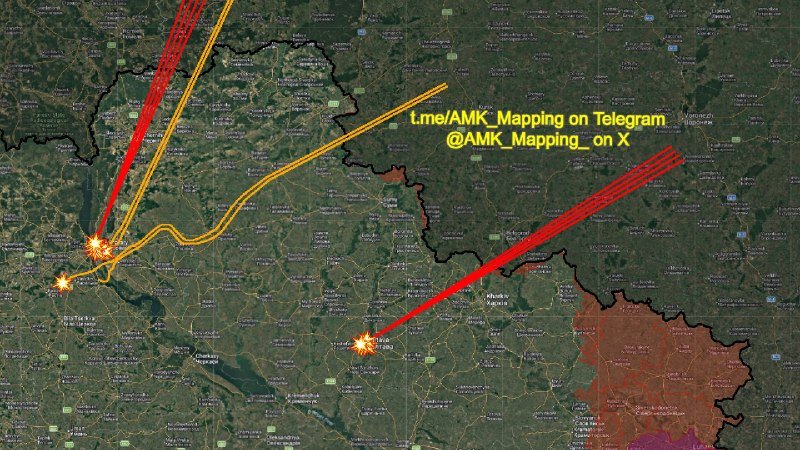
When the Russian Ministry of Defence puts out a line at 07:19 UTC on 15 June 2026 claiming that an American-made Patriot air-defence missile struck the Kyiv-Pechersk Lavra, the temptation is to treat it as serious operational reporting. It is not. It is messaging — and on the available evidence, it is messaging that does not survive contact with itself.
The claim, carried on Russian-state-linked channels and relayed by Euronews at 07:44 UTC, runs in a familiar register. A Western-supplied weapon system has malfunctioned. Ukrainian civilians and a UNESCO-recognised monastery complex have paid the price. The implicit coda is unmistakable: continued Western arms deliveries to Kyiv are not just escalatory but reckless, the kit itself is dangerous in Ukrainian hands, and the moral burden of any future incident rests with the suppliers in Washington, Berlin, Paris, and beyond. It is a clean line. It is also, on the face of the sources we have, unverified — and the most charitable reading of it is that the ministry is not in possession of evidence, only of a story it wants told.
What Moscow is actually saying
Strip the claim to its components. Russia asserts that a missile launched from a Patriot air-defence battery hit the Lavra, a monastic complex on the right bank of the Dnipro in central Kyiv. The same statement floats an explanation: that "incorrect operation" of the system could be a result of Western countries "handing over" the complex to Ukrainian crews without adequate training. The framing collapses cause and effect into a single sentence and asks the reader to accept the second clause as a natural extension of the first.
There is, in the thread material available to this publication, no corroborating imagery, no independent technical analysis, and no Ukrainian confirmation. There is no debris assessment, no radar-trace data, and no identification of the firing unit. The Russian ministry has not, as of 15 June 2026 08:14 UTC, released a tail-number, a serial, or a crater survey that would let a third party cross-check the claim against the known operational record of the batteries Kyiv has received from Germany and the United States. The only named institutional voice on the Russian side is the ministry itself.
Why the framing is suspect
Russian state messaging on Western weaponry follows a recognisable template. The same channels that attributed earlier strike damage to HIMARS, Storm Shadow, and ATACMS have, in past reporting cycles, sometimes been contradicted by open-source investigators within hours. The pattern matters because it shapes the prior probability a sceptical reader should assign to a new claim. A Patriot round striking one of the most photographed and most monitored pieces of urban real estate in Ukraine — a complex that is on UNESCO's World Heritage tentative list and sits roughly two and a half kilometres from government ministries — would, in any plausible sequence, leave a forensic trail that a serious investigator could walk. None has been produced.
There is also the question of motive. The Lavra has been the subject of a long-running dispute between the Ukrainian state and a branch of the Orthodox Church historically aligned with Moscow. Any incident there sits inside an information war that pre-dates February 2022. A strike narrative that puts the weapon in the hands of the wrong side, that implicates a foreign supplier, and that lands on a contested religious site is, in information terms, a three-for-one: it embarrasses Ukraine, it embarrasses Ukraine's allies, and it pressures the religious constituency inside Ukraine that Moscow still hopes to court.
The counter-read
The most plausible competing reading is also the most boring one: a Russian missile or drone, of the kind that has hit civilian and religious sites across Ukraine for more than four years, struck the Lavra. That is the reading consistent with the bulk of reporting on damage to Ukrainian heritage sites since the start of the full-scale invasion, and it is the reading a reader should reach for by default when an interested party announces a conclusion in its own favour before any independent assessment is on the table. Saying so plainly is not a refusal to update on new evidence. It is a refusal to update on no evidence.
Stakes, and what to watch for
If the Russian framing takes hold in audiences that have already grown tired of the war, the practical effect is to soften Western political appetite for further air-defence deliveries at precisely the moment Kyiv is asking for more. The supply of interceptors, not the supply of launchers, is the binding constraint on Ukrainian coverage, and any narrative that frames the system itself as the danger has obvious utility for a side that wants that constraint to bind harder. The test of the next 48 hours is straightforward: a Ukrainian military statement naming the weapon type and the trajectory, an OSINT identification of the strike signature, and — critically — the position of the relevant Russian Telegram channels once those data points are public. Monexus will update on the evidence, not on the line.
This article relies solely on Russian- and European-wire Telegram reporting surfaced on 15 June 2026. Independent OSINT verification of the strike at the Kyiv-Pechersk Lavra was not available in the source material at the time of publication; the framing offered here is therefore a sceptical reading of the claim, not a competing factual finding.
Wire provenance
This editorial synthesis draws on the following public wire/social posts:
- https://t.me/DDGeopolitics/
- https://t.me/euronews/
- https://t.me/DDGeopolitics/
Follow the event.
These dated source records provide context. They do not retrospectively verify this archive article.
A dated voting record is evidence of one decision. Use the original UN record before turning it into an alignment label.
Visual explainer · historical vote of 2022-03-02 →