The Strait of Hormuz Deal and the Problem with 'Now Complete'
A presidential declaration on 14 June 2026 that a US-Iran deal is 'now complete' outran the same-day denial from Tehran. The gap between the two is the story.
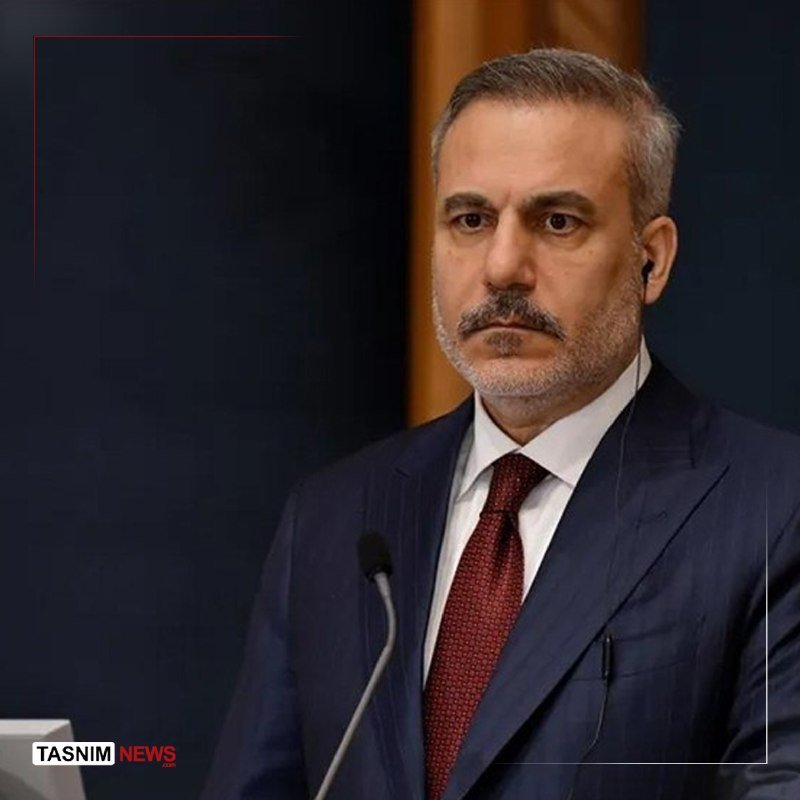
On 14 June 2026, at 23:14 UTC, the headline crossed the wire: President Trump had declared the US-Iran deal "now complete," authorising the reopening of the Strait of Hormuz and lifting the US naval blockade, with officials set to formally sign in Switzerland [Cointelegraph, 14 Jun 2026, 23:14 UTC]. Hours earlier, at 09:31 UTC the same day, the same newsroom had reported the more cautious version — Trump saying a deal "could be signed today," while Tehran insisted no final decision had been made [Cointelegraph, 14 Jun 2026, 09:31 UTC]. Between those two bulletins, the temperature of the story changed entirely. It is the distance between them, more than the deal itself, that is the news.
The instinct, on a headline like the 23:14 dispatch, is to treat the deal as done and move on to the consequences. The instinct is wrong. A presidential declaration is not a treaty; a Swiss signing ceremony is not yet on the public schedule; and Iran's own counter-position, captured in the 09:31 bulletin, has not been retracted. Reporting this story responsibly means holding both versions on the page at the same time and asking what the gap between them tells us about how Middle East deals now get sold to markets.
A deal announced before it is signed
The 23:14 wire item lays out a remarkably tidy package: a deal "complete," the Strait reopened, the naval blockade lifted, a signing in Switzerland. It reads less like reporting than like a press release relayed at speed. The 09:31 wire item, by contrast, reads like the messy reality: the US side signalling confidence, the Iranian side refusing to confirm. The two dispatches were filed by the same outlet on the same day. The contradiction is not a transcription error; it is the actual state of play.
The pattern is not new. Major-power deal-making with Iran in recent memory — the 2015 Joint Plan of Action, the 2020 maximum-pressure standoff, the various back-channel exchanges that followed — has repeatedly produced a phase in which one capital declares victory before the other has signed anything. The Hormuz announcement fits that pattern. The fact that it is now a presidential declaration rather than a joint communique should give any market participant pause.
Why the framing matters for the oil market
Brent and the regional benchmarks do not move on diplomatic atmospherics; they move on the perceived reliability of supply through the Strait of Hormuz. Roughly a fifth of the world's seaborne crude transits that chokepoint on most days. A credible reopening compresses the war premium almost overnight; a fake reopening, or one that unravels within a week, inflates it back. The 23:14 headline is, in effect, a tradable claim about future flow. The 09:31 headline is a tradable claim that the future flow is still contested. Reporting that repeats only the first framing is not analysis; it is a position-taking exercise dressed as news.
There is a deeper structural point. When a single presidential announcement is sufficient to move the global benchmark, the centre of gravity in energy-market diplomacy has shifted decisively into the political declaration. The actual text of an agreement, the verification regime, the duration of any blockade pause — all of that has become secondary to the moment a head of state utters the word "complete." That is not how a 20-percent-of-global-supply chokepoint should be priced.
The counter-narrative from Tehran
The Iranian side of the 09:31 dispatch is doing real work and it deserves more than a footnote. "No final decision has been made" is diplomatic language, but it is also a deliberate signal: Tehran is reserving the right to walk, to renegotiate terms, or simply to refuse the framing of "complete." Iranian state media has, in past cycles, been quick to publish its own version of the same negotiations within hours of any US declaration; the present brief does not include those responses and this publication cannot characterise them. What can be said is that until Tehran publicly confirms the package — the lifting of the blockade, the reopening terms, whatever is being traded in return — the deal exists in the form Trump said it does, not in the form both sides have signed.
This is where Global-South-aligned analysis earns its keep. The dominant Western wire framing on US-Iran deal-making tends to treat the US announcement as the load-bearing event and the Iranian response as a footnote to be updated later. The evidence on the page — two bulletins, fourteen hours apart, from the same wire — suggests the reverse. The announcement is cheap; the response is the actual news.
What the sources do and do not tell us
The 09:31 and 23:14 wire items are the only primary inputs for this story at the time of writing. They do not specify the parties to the signing in Switzerland, the legal text, the duration of any blockade suspension, the sanctions relief on offer, or the verification mechanism. They do not name a single Iranian official. They do not contain a direct quote from any named person. A reader relying solely on these items cannot answer the obvious questions: complete according to whom, on what terms, and starting when.
That uncertainty is the most important fact in the story. The standard playbook for markets will be to trade the headline for 24 to 48 hours and then wait for corroboration — a joint statement, a Swiss foreign ministry read-out, a Tasnim or IRNA wire from Tehran. Until then, "now complete" is a claim, not a fact, and reporting it as anything stronger is a disservice to a market that will eventually have to price whichever version turns out to be true.
Stakes, plainly stated
If the deal holds in something close to the announced form, the immediate winners are oil importers across Asia and Europe, the Iranian government, and any administration that can claim a diplomatic win. The losers are the harder-edged sanctions hawks in Washington, Israeli planners who have built contingencies around an open-Strait-versus-blockaded-Strait binary, and any actor whose leverage depended on the blockade continuing. If the deal unravels — and the 09:31 bulletin is the reason to take that branch seriously — the same set of actors flips, and the oil benchmark re-prices the war premium in days, not weeks. The asymmetry is what makes the gap between the two headlines matter more than either headline alone.
This publication framed the 14 June announcement against the same-day Iranian denial rather than treating the presidential declaration as the lead; the wire convention of leading with the US announcement understates the actual state of play.
Wire provenance
This editorial synthesis draws on the following public wire/social posts:
- https://t.me/s/cointelegraph
- https://t.me/s/cointelegraph