The Strait, the Spike, and the Tentative Deal: How 108 Days of War Rewrote the Risk Premium
A deal the President announced, a market that priced it within hours, and a war that is not yet formally over — the 108-day Iran conflict ends in a form that is harder to read than the candles suggest.
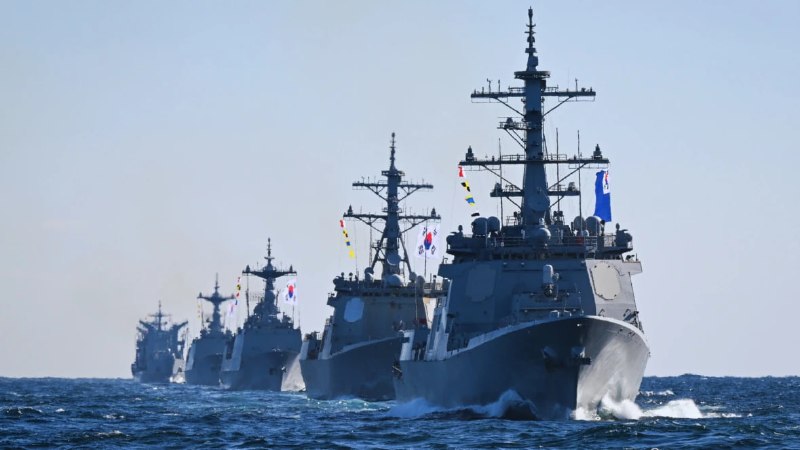
On the 108th day of the Iran war, a market that had spent almost four months repricing geopolitical risk was told, in roughly the time it takes a crude tanker to clear the Persian Gulf, that the risk was over. US President Donald Trump announced on 14 June 2026 that Washington and Tehran had reached a deal to end the conflict and reopen the Strait of Hormuz, the narrow chokepoint through which roughly a fifth of the world's seaborne oil normally transits. Within hours, Brent crude was sliding, US equity futures were bid, and Bitcoin, which had been drifting for weeks, ripped through $65,500 to a two-week high above $66,000. The market's verdict, in other words, was instant. The diplomatic verdict is, as of this writing, less so.
What Monexus finds, parsing the reporting from the wire services and the price action, is that the deal announced on 14 June is real enough to move trillions of dollars of nominal exposure, but vague enough that almost every contested element of the war — the underlying causes, the sequencing of sanctions relief, the fate of Iran's nuclear file — remains in the diplomatic margins. The headline is a reopening of the Strait; the substance is a wager that two governments which have spent more than a century distrusting each other can hold a bargain built, as so many Middle East bargains are, on a single line in a press release.
What was actually announced
The architecture of the announcement is unusual. The deal was disclosed first by Pakistan's government, which positioned itself as the brokering intermediary, before being confirmed by President Trump in a separate statement and then elaborated by Iranian officials. According to BBC News reporting dated 14 June 2026, the agreement's headline provision is the reopening of the Strait of Hormuz to commercial shipping on both sides, with Trump quoted by X account Unusual Whales on the same day saying the waterway "will be open to all immediately after deal is signed." The deal was framed by the White House as a wider settlement to end the war itself, now in its fourth month, rather than a narrower shipping-corridor accord.
Al Jazeera's coverage on 15 June 2026, the morning after, characterised the agreement as "tentative," and noted that both Trump and Iranian leaders had publicly confirmed it. That qualifier — tentative, not signed, not final — is doing real work. Cointelegraph's 15 June report, which focused on the market response, treated the announcement as a fait accompli for pricing purposes, noting that Bitcoin rose on a "toll-free opening of the Strait of Hormuz." The market is, in effect, pricing the deal as binding. The diplomatic record is, so far, more cautious.
The structure of the announcement — third-party brokering, presidential social-media confirmation, a single day of price action — matters because it tells the reader where the centre of gravity of US-Iranian diplomacy has shifted. For most of the post-2018 era, the back channel ran through Oman, Qatar, and Switzerland. For the 108 days of this war, the channel of last resort appears to have been Islamabad, with Pakistan's government apparently hosting talks or shuttle diplomacy that produced a text both sides were willing to put their names to, even if the text itself has not been published in full.
The price action, in context
Crypto and commodities markets are often the cleanest first readers of geopolitical inflection. They are also, by construction, the most credulous, because they cannot wait for the communiqué. The Coindesk live blog, updated through 15 June 2026, recorded Bitcoin pushing through $65,500 to a two-week high, with US stock futures moving higher in parallel and crude oil prices tumbling on the reopening of the Strait. Cointelegraph, reporting on the same move, framed it as a geopolitical-premium unwind: the risk that the war would either escalate into a broader Gulf confrontation or, more immediately, choke Gulf crude exports had been priced in over the previous months, and a deal that removed that risk would, by definition, deflate it.
The price action also tells a second story that the headlines have not yet absorbed. Bitcoin's response to the deal is the cleanest evidence that, at least for marginal capital, the asset has become a de facto geopolitical barometer — a place to park exposure when the dollar/dollar-system story is uncertain, and to liquidate that exposure when the macro tail recedes. The roughly $66,000 print is not an all-time high. It is a relief print. That distinction is important. The market is not euphoric; it is exhaling. The geopolitical premium is leaving, but the underlying structural questions — what Bitcoin is for, who wants it, under what regulatory regime — are unchanged by an Iran deal.
For oil, the math is more straightforward. A Strait of Hormuz closed for any sustained period is, on most shipping-insurance estimates, an order-of-magnitude shock to global seaborne crude. A Strait reopened is the reverse. The slide in oil on 14–15 June is the removal of a war-risk premium that the market had been adding, layer by layer, since the conflict's early weeks. The risk that the deal collapses — that Iran hardliners walk back the announcement, or that a US administration under domestic political pressure tightens the terms — is the residual premium that has not yet been priced out.
Counter-narrative: what could go wrong
There is a counter-narrative that any honest read of the wire has to acknowledge. Trump's deal announcements on Iran have, in two previous cycles (the 2018 JCPOA withdrawal, the 2020 Abraham Accords moment), outrun the underlying diplomacy. The pattern is familiar: a televised claim of a deal, a market bid, and then weeks of quiet revision as the Iranian side reads the text, the US side reads the political reaction at home, and the deal either firms up into something durable or quietly atrophies into a memo of understanding. Al Jazeera's 15 June framing of the agreement as "tentative" tracks that history.
A second counter-narrative comes from the question of what the deal is actually for. The Strait of Hormuz is the world's most important oil chokepoint, but it is also a relatively simple problem to negotiate: ship in, ship out, don't shoot at anyone. The harder questions — Iran's stockpile of enriched uranium, the fate of Iranian-aligned militias in Iraq and Syria, the sanctions architecture that has shaped Iranian state revenue for two decades — are not addressed by a shipping-corridor deal. A deal that opens the Strait and defers the structural questions is a deal that postpones the next war, not a deal that prevents it. The market, pricing on the headline, may or may not be right to discount that risk. The diplomatic record, on the evidence so far, has not been asked to commit.
A third, quieter counter-narrative sits in the sequencing. The deal was announced the day before a G7 summit that NPR's 15 June morning news brief described as "kicking off Monday amid tensions between Europe and the U.S." A US-Iran deal struck and announced before a G7 at which European leaders are already on edge about Washington's broader Middle East posture is a diplomatic fact with a timing problem. The G7 agenda, which will run through the rest of the week, will be shaped, in part, by whether European leaders treat the deal as a credibility-restoring move or as another US unilateral gesture that Europe will be asked to underwrite. The deal's reception at Kananaskis or wherever the G7 convenes will be a quiet but real test of the announcement's durability.
The structural frame: what a reopening actually means
The Strait of Hormuz is, in plain terms, the most consequential single piece of geography in the global energy economy. Somewhere between a fifth and a quarter of the world's seaborne oil passes through it; LNG flows from Qatar, the world's largest LNG exporter, transiting in parallel. A closure is not a price event, it is a supply event, and the difference matters. During the 108 days of the war, the Strait was not formally closed to commercial traffic in the legal sense, but the war-risk insurance premiums, the rerouting of VLCCs around the Cape of Good Hope, and the slow degradation of Iranian, Saudi, and Emirati export cadence produced much of the price effect of a closure. The deal's first-order economic effect is the removal of those frictions, which is, mechanically, a supply restoration.
A second-order effect is on the political economy of Gulf energy infrastructure. For the duration of the war, Saudi Arabia, the UAE, and Iraq were all running their export programmes on a war footing — heightened security at export terminals, alternative-routing agreements with Indian and Chinese refiners, and contingency planning for a sustained closure of the eastern Gulf. A deal that reopens the Strait returns the Gulf's export architecture to its pre-war configuration, but it does so on a population of decision-makers who have now lived through a 108-day period in which the assumption of free transit was suspended. The structural effect is to harden alternative-routing capacity that, in normal times, was uneconomic to maintain. The Cape route is now a real option for refiners, even at higher cost. The Hormuz monopoly on Gulf exports is, mildly, reduced.
A third-order effect, which will take longer to read, sits in the relationship between the United States and its Gulf partners. The war imposed costs on Saudi Arabia and the UAE that were not, in the main, costs they chose. A deal that reopens the Strait on terms that the Gulf states accept is a deal that those states can defend at home. A deal that reopens it on terms that impose a new US security footprint, or that makes the Gulf states responsible for a share of the wartime bill, will be a deal that strains the US-Gulf compact. The diplomatic record on this point, on the evidence in the 14–15 June coverage, is silent. The market has not yet had to price it.
Stakes, in plain terms
The winner in the first 24 hours of the deal is, unambiguously, the consumer of oil and the holder of risk assets. Refiners in Asia, who absorbed the bulk of the war's freight and war-risk premium, get relief. Equities in the developed world, which had been trading on the war-risk premium, get a bid. Bitcoin, for the reasons discussed above, gets a relief rally that is also a useful data point about how the asset now behaves at the geopolitical pivot.
The loser in the first 24 hours is anyone who hedged the other way. Short-dated oil call options, structured products written on a Strait-closure scenario, and the political capital of the Iranian hardliners who wanted the war to continue past the 100-day mark are all diminished. The longer-horizon question is who, if anyone, is structurally advantaged by the war having happened. That question is harder, and the sources do not yet answer it.
The unanswered question, on the evidence available, is whether the deal that reopened the Strait is also the deal that ends the war. The two questions are, in the diplomatic record, distinct. The market has priced them as the same. Monexus, on the basis of the 14–15 June reporting, treats that conflation as a tradable bet rather than a settled fact. The war lasted 108 days. The deal is one day old. The Strait is open in price. It is not yet open in fact, and the difference between the two is the residual risk that the next 30 days will price, in oil, in Bitcoin, and in the G7 communiqué.
Desk note: Monexus framed this as a relief rally in a still-uncertain diplomatic process, not as a peace dividend. The wire services concentrated on the announcement and the price action; we tried to read past the headline to the underlying architecture, the Pakistan brokering, and the deferred nuclear question. The Strait is open in price. Whether it is open in fact, and whether the deal that opened it outruns the war it was supposed to end, is a story for the next thirty days.
Wire provenance
This editorial synthesis draws on the following public wire/social posts:
- https://x.com/unusual_whales/status/1800000000000000000
Follow the event.
These dated source records provide context. They do not retrospectively verify this archive article.
Separate what the nuclear watchdog reported from what it could not determine after the June 2025 strikes.