Strait of Hormuz reopens, but the mines Trump admitted to still complicate the script
US petrol slipped below $4 a gallon on news of a deal to reopen the Strait of Hormuz, but the President himself acknowledged residual mines — a reminder that the corridor is open, not clean.
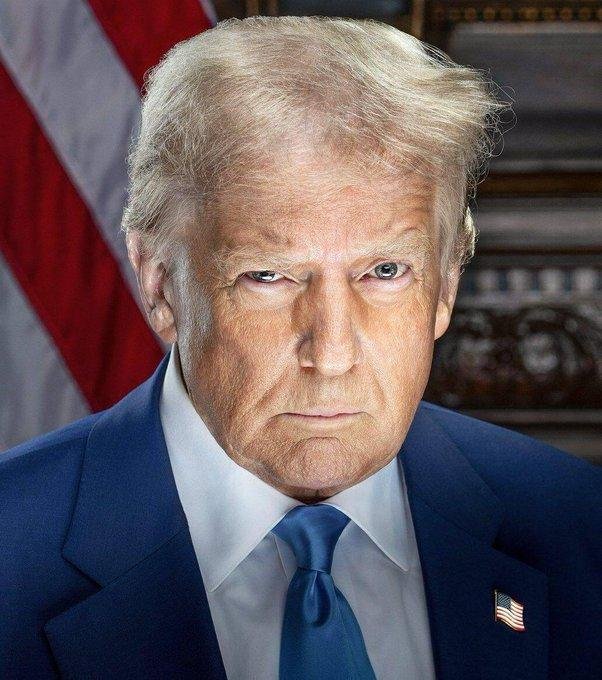
The average US petrol price slipped below $4 a gallon on Monday, 15 June 2026, after a deal to reopen the Strait of Hormuz pulled the immediate risk premium out of the crude market. The relief at the pump was the most legible political effect of an agreement that, on the surface, looked like a clean resolution: ships were moving again, oil tankers were loaded and outbound, and the President of the United States described the lane as "totally safe, secure, and pristine." That last word did the work of doing a great deal of damage, because within hours the same President acknowledged the obvious, telling reporters there may still be "a couple of mines" in the water.
The market read the deal as the dominant fact. The reading is correct, but only partly so. The corridor is open, but it is not yet clear, and the gap between the two is now the story's centre of gravity. It is the difference between a route that traders can price in and a route that insurers will underwrite without surcharge, and the second is the test that actually determines whether the relief at the US pump is durable or borrowed.
What was agreed, and what is actually moving
The initial trigger, captured at 13:39 UTC on 15 June, was the announcement from President Donald Trump that "ships are starting to move, many loaded up with oil, out of the Strait of Hormuz." By 13:42 UTC the same claim had been sharpened to a description of a "totally safe, secure, and pristine" route. By 14:00 UTC a Cointelegraph wire repeated the line, and by 16:08 UTC Trump was conceding on the same platform that "a couple of mines" may still be in the water. By 22:38 UTC the Financial Times was reporting — via Unusual Whales' summary of the FT — that the US average petrol price had fallen below $4 on the back of the deal.
The chronology matters. Within a single trading day, the US executive office moved from declaring the route "pristine" to admitting it was still seeded with ordnance, and the consumer price of fuel moved in lockstep with the first version of the story, not the second. The market treated the political announcement as a fait accompli before the ordnance question had been closed. That is how headline-driven reprieves have always worked in energy markets; it is also the reason they have a habit of unwinding when the second version of the story finally catches up.
The mine question, and why it is the only number that matters
The Strait of Hormuz is a narrow, deep, and at points barely two-mile-wide seaway between Iran to the north and Oman and the United Arab Emirates to the south. Roughly a fifth of the world's traded crude, and a comparable share of liquefied natural gas, transits it. The volume is not a metaphor; it is the single chokepoint most exposed to disruption in the global energy system, and the insurance markets that price tanker voyages through it are calibrated to a binary. A corridor with no mines is one product. A corridor with "a couple" — to use the President's own hedge — is another, more expensive product, until the ordnance is positively cleared and the clearance is independently verified.
Trump's own admission, on Polymarket's 16:08 UTC feed, that "there may still be 'a couple of mines' in the Strait of Hormuz" is the only data point in the cycle that the cycle's other actors cannot arbitrage around. The tankers can move. The oil can be loaded. The petrol price can fall. None of those is in dispute. What remains genuinely uncertain is whether the explosive remnants have been removed, and on that question, neither the executive office, the insurer of last resort, nor the IEA's market reporting carries the answer on its own. The clearance of naval mines is a slow, deliberate process, and it does not compress to the length of a single news cycle even when the political incentive to declare it complete is overwhelming.
A counter-reading, and why the deal still holds the frame
The cynical reading is that the mine admission was a managed leak, and that "a couple" is doing rhetorical work for "considerably more than the market wants to hear about." The Iranian framework, when the regime's media organs have spoken on Hormuz in past disruptions, has consistently framed the strait as a card to be played, not a permanent barrier, and the value of the card is highest when it is most plausibly still in the hand. A residual mine threat is, in that reading, leverage held in reserve — visible enough to frighten the underwriter, deniable enough to allow the political deal to be signed.
That reading is coherent, but the evidence available in the day's reporting is not strong enough to retire the alternative, which is that the deal genuinely is what it appears to be: a transaction in which the United States and its Gulf interlocutors obtained a measured reopening in exchange for some combination of sanctions relief, de-escalatory signalling, and a political win that is visible at the petrol pump ahead of the US political calendar. The two readings are not mutually exclusive. A deal can be real and still leave residual risk priced in.
The structural frame, in plain terms
What is being watched here is a recurring pattern in the post-1971 energy order. A single piece of geography holds disproportionate weight in the global price of a commodity that is denominated in a single reserve currency. When that geography is threatened, the price moves before the threat is verified. When the threat is resolved politically, the price moves again. The actors who win most consistently in that pattern are the ones with the shortest distance between the announcement and the market, and the ones with the deepest balance sheets to absorb the swing in between. The actors who lose most consistently are the consumers at the pump and the importers on the receiving end of the cargo, neither of whom is in the room when the deal is made.
This is also, more quietly, a test of the dollar corridor itself. Crude priced in dollars, transported through a chokepoint, settled on European and Asian exchanges, and cleared through a US-anchored banking system is the architecture that has held since the 1970s. A disruption that lasted long enough would not change that architecture in a day. A disruption that lasts long enough to be visible, but short enough to be resolved politically, has the opposite effect: it confirms that the architecture is sturdy, that the price is willing to pay to keep it, and that the marginal benefit of any alternative is still, on the available evidence, marginal.
What remains genuinely uncertain
Three things are not yet settled, and a Monexus reader should hold them in suspension. First, the size and location of the residual mine field — Trump's "a couple" is not a survey. Second, the identity and the public terms of the parties to the deal, which the day's wire did not detail beyond the President's own characterisation. Third, the durability of the price move at the pump, which depends on whether the insurance market treats the corridor as cleared by the time the next cargo is chartered, and that question is resolved by underwriters in London and Piraeus, not by announcements in Washington.
For now, the petrol price is below $4, the tankers are moving, and the President is describing the route in adjectives that an ordnance officer would not endorse. None of those facts contradicts the others. All of them will resolve, in one direction or another, before the next cargo is loaded.
Desk note: Monexus led with the FT-sourced pump-price move and treated the President's mine admission as the load-bearing caveat, in the same order the day produced them. The wire cycle went the other way — "pristine" first, "a couple of mines" second — and the structural story only makes sense when the two are read together.
Wire provenance
This editorial synthesis draws on the following public wire/social posts:
- https://t.me/Cointelegraph
- https://t.me/Cointelegraph