Strait of Hormuz reopens for tanker traffic, pulling US petrol below $4 a gallon
President Trump declared the Strait of Hormuz open on 15 June 2026, sending oil-laden tankers through a route he called "totally safe, secure, and pristine." The announcement pulled the US average petrol price under $4 a gallon, though the president acknowledged "a couple of mines" may remain.
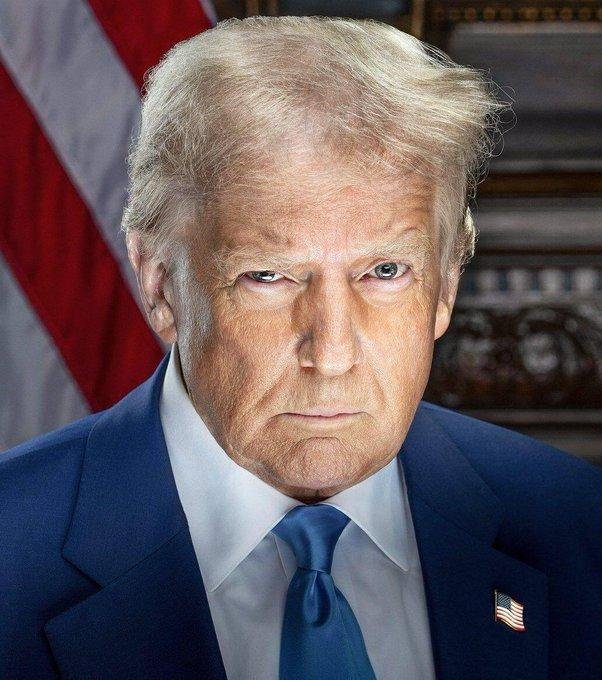
At 14:00 UTC on 15 June 2026, President Donald Trump announced that commercial shipping had resumed through the Strait of Hormuz. "Ships are starting to move, many loaded up with oil, out of the Strait of Hormuz," Trump said in remarks carried by Cointelegraph and other outlets. Within hours, the president added a caveat — there may still be "a couple of mines" in the waterway — and a boast: tankers were transiting along what he described as a "totally safe, secure, and pristine" route. By 22:38 UTC, the Financial Times was reporting that the deal had pushed the US average petrol price below $4 a gallon for the first time in the current crisis cycle.
The sequence matters more than the price tag. A president using his own social media channel to declare a critical chokepoint de-risked — then partially walking that declaration back inside the same news cycle — captures the way energy security is now priced, narrated and contested in real time. It also puts a hard number on a market that, for weeks, had been quoting the strait as a war-risk premium rather than a transit fee.
What changed on the water
According to Trump at 14:00 UTC, the immediate change is operational: oil tankers that had been holding offshore began moving through the strait, transiting the corridor between Iran and the Arabian Peninsula that handles roughly a fifth of seaborne crude. By 13:42 UTC the polymarket wire had already flashed the headline — oil ships moving along a "totally safe, secure, and pristine" route — and by 13:39 UTC the unusual_whales feed carried the same line verbatim. Cointelegraph's Telegram channel ran Trump's quote in full, and Sprinterpress confirmed at 21:25 UTC that oil deliveries had begun.
The second move was symbolic. A US president who has spent months publicly leaning on Iran over the strait was now, on his own timeline, declaring the emergency over. That sequence is now a tradable asset in its own right: prediction markets, oil futures, and petrol futures all repriced inside the same afternoon, with the FT's gas-price report following roughly eight hours later.
What the deal does — and does not — guarantee
The Polymarket wire's second bulletin, at 16:08 UTC, is the part of the day that deserves the most weight. Trump, asked directly about the residual threat, said there may still be "a couple of mines" in the waterway. The strait is narrow, tidal, and among the most heavily mined bodies of water in modern commercial use. A handful of unexploded ordnance is not a metaphor for "mostly safe"; it is the technical definition of a mine-clearance operation that is, at best, in its early stages.
Read against the Cointelegraph-carrying line about ships "starting to move," the picture that emerges is partial. Tankers are transiting, but the transit is being executed against an acknowledged residual hazard, on the assurance of a US president rather than the certification of a maritime authority or a multinational minesweeping force. Iran's state-aligned outlets have not, in the source material available to this publication, confirmed a parallel clearance narrative — a gap that matters, because Iran has historically retained the capability to close or re-mine the corridor.
How the market translated the speech
The Financial Times' petrol-price report, carried via the unusual_whales feed at 22:38 UTC, is the most consequential downstream effect: the US national average for a gallon of petrol moved below $4. That is a politically loaded number. Through the 2024 campaign and into 2025, retail fuel at the pump was the single most cited barometer of household economic stress in administration communications. A sub-$4 reading is, by the White House's own framing of the issue, a win.
It is also a number that the underlying statement only partially supports. The market appears to be pricing a closure resolution, not a clearance certification. The two are not the same. A "couple of mines" in a 21-mile-wide shipping lane is a problem that naval clearance teams can solve; it is not a problem that rhetoric alone has solved. The price drop is therefore, fairly read, the market pricing political risk as receding — not the market confirming that physical risk has receded.
Stakes, and the read that goes against the day's grain
The dominant framing of 15 June is straightforward: a deal, a declaration, a price drop. The case against the dominant framing is also straightforward. The US and Iran have not jointly announced a clearance protocol. The president himself has said ordnance may remain. The FT's price move is the market pricing a statement, not a survey. And the same prediction-market and wire feeds that carried Trump's opening line also carried the qualifier an hour and a half later — meaning the two pieces of information reached traders and consumers in the same news cycle, with no editorial gatekeeping between them.
The honest read is that the strait has moved from a declared crisis to a managed uncertainty, and the petrol market has decided, for now, to price the management rather than the uncertainty. If even one of those residual mines produces an incident, the price move unwinds faster than it arrived. Conversely, if the next 72 hours produce a coordinated Iranian acknowledgement and a clearance update from a recognised maritime body, the sub-$4 reading locks in. The two outcomes are both live.
This publication treats the FT's sub-$4 print as the day's headline datapoint and the Polymarket/Cointelegraph transmission of the president's own words as the raw input, rather than reporting the FT's framing as established fact. The source items do not specify the exact US average, the identity of any Iranian counterpart in the arrangement, or the existence of a formal clearance protocol; the narrative above is built only from what the wires on 15 June 2026 carried.
Wire provenance
This editorial synthesis draws on the following public wire/social posts:
- https://x.com/unusual_whales/status/
- https://x.com/polymarket/status/
- https://t.me/cointelegraph/
- https://x.com/polymarket/status/
- https://x.com/unusual_whales/status/
- https://x.com/sprinterpress/status/