Taremi's press conference and the question of who speaks for the Iranian national team
A pre-match press conference in Auckland, three Iranian outlets, and a single repeated line about "uniting the civilized country of Iran" — what the framing tells us about who is allowed to address whom, on the eve of a World Cup cycle.
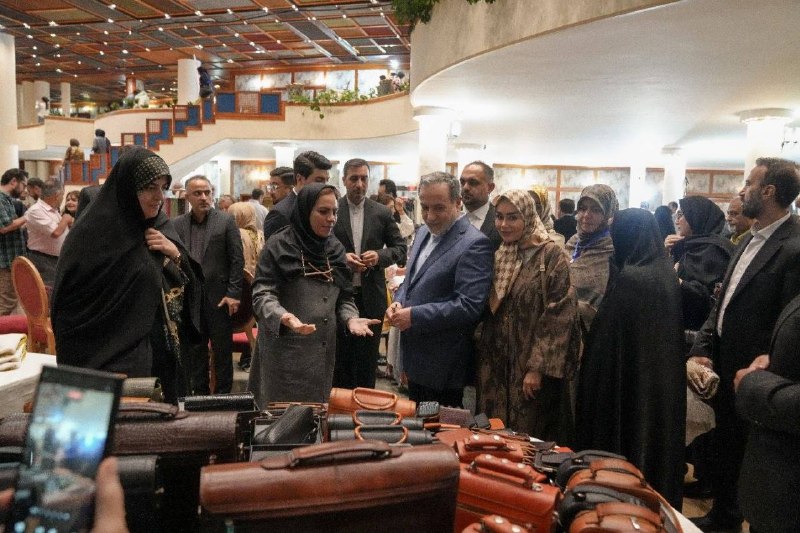
On 15 June 2026, hours before Iran face New Zealand in Auckland, Mehdi Taremi stood at a press conference and offered a line that Iranian state-aligned and state-adjacent outlets agreed, almost word for word, to repeat. "We play for all the people of Iran, whether they are inside or outside," the striker told reporters, "and football can unite everyone." According to three separate Iranian wire services, Taremi added that the team seeks "to make all Iranian people happy" and that football would "unite the civilized country of Iran."
Read in isolation, this is a familiar line from a senior national-team player on the eve of a friendly abroad. Read in the context of the 2026 World Cup cycle — Iran's first appearance at a finals since the 2022 tournament in Qatar, and the first staged in North America — it is also a small, legible test of who is permitted to address whom, and through which channels, in the country's public life.
The press conference was a thin moment. Three Telegram channels — Fars, Tasnim English, and Mehr — each pushed the Taremi clip in the 24 minutes before midnight UTC on 14 June 2026, with Tasnim and Mehr leading on the line about Iranian people "inside or outside," and Fars adding the framing of a "civilized country." None of the three outlets produced a transcript of a question about protests, sanctions, or the political climate at home. None of the three outlets reported a follow-up from a journalist. The clip circulated as a complete unit: a player, a podium, a country.
That decision — to publish the unity line without friction — is itself the story. Iran's national team is a soft-power asset that the state has, in cycles, tried to monopolise and, in other cycles, tried to use to project normalcy. The 2022 World Cup, played under the shadow of the Mahsa Amini protests, was the most visible recent example of that tension. Players did not sing during the national anthem in their opening match against England; the gesture was widely read as a refusal, and Fars News moved within hours to publish counter-clips emphasising that the squad had sung in training. Two years later, in 2024, the federation quietly removed several players from the squad, citing "technical reasons" in the official communiqués that federation-aligned outlets recycled.
So when Taremi tells a press conference in Auckland that the team is a "thorn in the side of all Iranian people," the choice to foreground the line — and only the line — is a familiar one. The phrase is unusual enough to warrant a second read. In standard Persian sports-page English, a senior forward does not typically describe his own squad as a "thorn." The translation, distributed by Fars in the early hours of 15 June 2026, reads as a deliberate signal: that the team's role is to be a point of friction inside an Iranian body politic that is otherwise difficult to move.
What the three wires said, and what they left out
The mechanics of the story are worth laying out plainly. On 14 June 2026 at 23:27 UTC, Mehr News pushed a short Telegram post built around the line that Taremi "plays for all Iranian people, whether they are inside or outside" and that "football can unite everyone." Sixteen minutes later, Tasnim's English-language channel put out a near-identical post and explicitly framed it as a pre-match press conference before the New Zealand game. Then, at 00:33 UTC on 15 June, Fars published a longer version that introduced the "civilized country" formulation and the "thorn in the side" line — material that the other two wires had not carried.
In other words: three outlets, one underlying press conference, three different editorial slants on the same thirty-second answer. Mehr and Tasnim, both with close ties to the state broadcasting apparatus, kept the framing inside the football register — unity, happiness, representation. Fars, which is structurally closer to the security establishment, reached for the harder language — a "thorn," a "civilized country" — that situates the player inside an explicitly political register.
None of the three outlets reported a question. None reported a journalist by name. None noted the Auckland venue with any specificity. None reported on the squad list, the head coach's opening remarks, or the federation's travel arrangements. In a normal pre-World Cup friendly cycle, those are the standard beats. The omission of those beats, and the elevation of the unity line, is a small indicator of the political value the state-aligned ecosystem places on the press conference as an event.
The structural read
There is a wider pattern here, and it is worth naming it in plain terms. When a state wants to project cohesion at a moment of perceived external pressure, it tends to lean on the one institution in the country that is allowed to compete abroad and that, by design, addresses itself to a transnational audience. Football does that work for Iran, as it has done for other states under sanctions. The format is well established: send a squad, deliver a press conference, allow one or two senior players to deliver carefully prepared lines about unity, and let the state-aligned press distribute those lines to a domestic audience that has no other access to the team's voice.
This is not a uniquely Iranian arrangement. The point is structural. Where a government controls the channels through which a team's voice is amplified, a press conference becomes less an act of communication with foreign journalists and more an act of communication with the domestic population via the foreign journalists' microphones. The press conference produces two artefacts simultaneously: a usable line for international media coverage, and a usable line for the Telegram channels and state broadcasters that will re-broadcast it in Persian.
Taremi is a useful messenger for this arrangement for a few specific reasons. He is the squad's most recognisable forward, with senior spells at Porto and Inter Milan. He has, in past cycles, given interviews to European outlets that have been uncontroversial. He is, in the federation's own framing, "experienced" — a designation that, in Iranian football coverage, often signals a player who has been briefed on the political register expected at a podium. The 14 June press conference, in other words, did not produce a surprise. It produced a planned output, distributed through the channels that the state already controls.
The counter-narrative, and why it is harder to source
The other read of the same footage is straightforward and it is the one that the state-aligned wires are not going to carry. There is a large Iranian diaspora — concentrated in Los Angeles, Toronto, Stockholm, and the Gulf — that watches the national team with ambivalence at best. For many of them, the "inside or outside" formulation is not a unifying line but an awkward one, because it places the act of representing Iran inside a politics that the speakers do not recognise. The diaspora has its own press layer — Iran International, BBC Persian, Iran Wire, Manoto — that did not, on the evidence of the three wires in this thread, pick up Taremi's press conference at all in the 24 minutes after it ended.
That silence is itself a data point. When a national-team press conference produces a unity line, the diaspora press usually either amplifies it, to mock the framing, or ignores it, on the grounds that the line is not news. The three wires in this thread — Fars, Tasnim, Mehr — are all on the state-aligned side of that spectrum. A full provenance check would require pulling the diaspora outlets' 14–15 June coverage, which the thread does not supply, and noting what they did not carry.
The Monexus reading, on the available evidence, is that the press conference was framed, packaged, and distributed as a state-aligned artefact before the diaspora press had a chance to decide whether to engage. That ordering matters. It is the difference between a press conference that produces news and a press conference that produces authorised content.
The stakes, in plain terms
If the 2026 World Cup follows the pattern of the 2022 cycle, the next six months will be a sustained test of which channels get to define what the Iranian national team says and to whom. The squad is a soft-power asset. The diaspora is a constituency that the state has, for most of the post-2018 period, addressed through legal pressure and consular obstruction rather than through public argument. The foreign press is a channel that, in the Iranian government's framing, has historically been too ready to read the team through the lens of sanctions coverage.
The press conference on 14 June 2026 is a small event inside that larger picture. Three wires agreed to carry the unity line. None carried a question. The team is now travelling to Auckland to face New Zealand in a friendly that, on the evidence of the coverage, is being used as a delivery vehicle for the line rather than as a sporting event in its own right. The structural pattern — the squad as a projection surface, the press conference as a curated output, the wires as a controlled amplifier — is older than Taremi and will outlast his career. What changes, on each cycle, is how cleanly the output is delivered.
On this evidence, the answer is: very cleanly. The Taremi line was distributed within sixteen minutes by two of the three wires in this thread, and the third, Fars, extended the framing within fifty. The diaspora press did not engage, the foreign press was not given a question, and the squad moved on to the match. The state-aligned ecosystem got exactly the artefact it wanted, in the time window it wanted, in the language register it wanted. On a 1,800-word read, that is the story.
Wire provenance
This editorial synthesis draws on the following public wire/social posts:
- https://t.me/farsna
- https://t.me/tasnimnews_en
- https://t.me/mehrnews