Night falls on Telichka: what four brief lines from the war monitor tell us about the grinding arithmetic of 2026
Four Telegram pings from the night of 14 June 2026, all pointing at the same riverside suburb, expose how thin the information environment around this war has become — and how much we still manage to read into it.
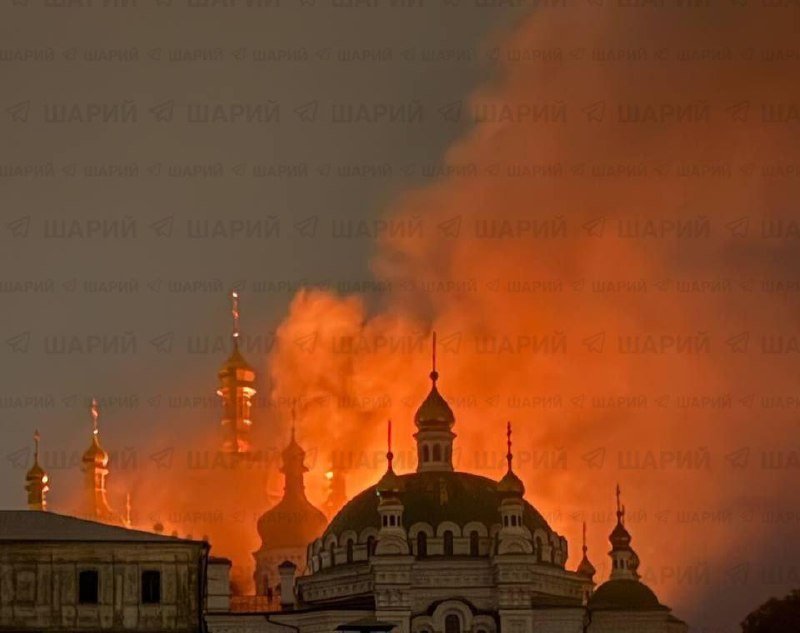
At 00:29 UTC on 15 June 2026, a single line crossed the wire from a frontline monitoring channel: "Left bank 4 KR Poznyaki Darnytskyi." Within ninety seconds a follow-up arrived naming the same riverside district; by 00:35 and 00:36 two more pings had landed, all of them pointing at the same thin strip of left-bank Kyiv between the Darnytsia rail yards and the Dnieper bend. The four messages carry almost no syntax, almost no context, and almost no numbers. They are the war distilled to its barest reporting grammar — a district, a direction, a count of impact craters, a timestamp.
Strip them of their brevity and they are still the most informative text a reader will see all week about what Russia is doing to Kyiv on this particular night. That fact, more than any single strike, is the subject worth examining.
What the four lines actually say
The cluster, drawn from the war_monitor channel on Telegram, is sparse in the way frontline channels are sparse: a left-bank designation, a count that oscillates between one and two impact points, a repetition of the Telichka toponym that gives the cluster its identity, and a final reference to Poznyaki-Darnytskyi that anchors the geography for anyone who knows Kyiv's river-district map. Telichka is the industrial tongue of land across the Dnieper from central Kyiv, more warehouse than neighbourhood, and it has sat on the receiving end of drone and missile salvos for the better part of two years. Poznyaki is the residential high-rise district immediately to its north. Darnytskyi is the administrative raion that contains both.
Read together, the four messages describe a single overnight event: a small salvo, two to four craters, all on the left bank, with the first impact near the rail-and-warehouse corridor of Telichka and the later ones drifting north into the Poznyaki-Darnytskyi residential edge. That is what the lines say. What they do not say is everything else — the model of the incoming weapon, the casualties, the damage to civilian infrastructure, the intercept count, the Russian tactical intent, the Ukrainian air-defence footprint that may or may not have engaged.
The information floor has dropped, and the wire follows it down
In the early months of the full-scale invasion, a strike on Kyiv would generate dozens of competing accounts within the first hour: official briefings from the Kyiv City Military Administration, statements from the Air Force, photographs from the State Emergency Service, fragment analyses from the arms-control community, and the inevitable Telegram videos shot from apartment balconies. The four lines from war_monitor on the night of 14–15 June are what that same event looks like in mid-2026, when monitoring channels are consolidating, when the Air Force has shifted to less granular daily tallies, and when the appetite of English-language wires to file a fresh piece for a two-crater overnight strike on a non-residential riverside strip has, in plain terms, fallen.
This is not a complaint about the channel. It is doing the work it advertises, with the cadence and the format it has chosen. The problem sits one layer up. When the only public artefact of a Russian strike on the Ukrainian capital is four lines of Telegram shorthand, the analytical superstructure that Western readers typically rely on — the contextualised report, the verified count, the named target, the human cost — is left to do its work on a foundation of almost nothing. Coverage that once would have produced a 600-word Reuters or AP bulletin instead produces a quiet cluster of pings and an absence.
What the absence does to the picture
The structural pattern is the one the wire has been losing ground to for two years: when the granular feed thins, the headline-level frame takes over. Readers who glance at the morning's coverage will see Russia struck Kyiv overnight and absorb it as background radiation. Readers who actually open the four lines from war_monitor will see something more specific, but they will also see that the specificity is doing the work of analysis. There is no count of Shahed-type one-way attack drones versus Kh-101 cruise missiles versus S-300/400 ballistic variants. There is no indication of whether the impacts hit the rail infrastructure, the unfinished industrial plots, or the residential blocks. There is no human figure in the text — no wounded child, no ruined bakery, no civil-defence volunteer.
That silence is itself a fact. In a war where Russian strikes on Ukrainian population centres are designed in part to exhaust the audience's attention, an information environment that quietly stops producing textured reports of the strikes is an information environment that has begun to comply, however unintentionally, with the strategic logic of the strikes. The four lines are the visible tip of a much larger thinning — a thinning of the wire-service appetite, of the OSINT community's bandwidth, and of the public's tolerance for the next cycle of the same story.
Counter-read, and what the evidence actually permits
The counter-read is fair and must be stated: it is possible that the four-line cluster reflects a genuinely small event, an overnight probe by a small salvo of loitering munitions that did limited damage and so did not generate the wave of secondary coverage that a residential-block hit would. It is also possible that the cluster is the leading edge of a longer Telegram thread that the snapshot does not capture, and that by the morning of 15 June a fuller picture will have emerged. The channel itself is reputable within the monitoring community and has, over the course of the war, posted updates that were later substantiated by official Ukrainian briefings.
What the evidence does not yet permit — and the desk note is explicit about this — is a casualty figure, a damage assessment, or a Russian-tactical-intent claim. Any piece of writing that supplies those would be inventing them. The honest read of the cluster is narrower: on the night of 14–15 June 2026, two to four impacts were reported on the left bank of Kyiv, in or near the Telichka and Poznyaki-Darnytskyi corridor of the Darnytskyi district, by a single frontline monitoring channel. The line is thin, the reading from it is thinner, and the duty of a publication that wants to keep telling this story straight is to say so plainly rather than to dress the absence as analysis.
The stakes of admitting how little we know
The pattern is not unique to this night. Across the last quarter of 2025 and into 2026, the same thinning has been visible in coverage of secondary cities, of frontline villages, of strikes on energy infrastructure, and of the slow attritional exchanges along the Pokrovsk and Kupiansk axes. The temptation in a publication that prides itself on analysis is to fill the silence with frame — to produce a 900-word essay on the strategic significance of two Telichka craters. The harder, more useful move is to publish the four lines, name the district, and let the reader sit with the fact that the most informative single document on the strike is also one of the least informative documents in the entire public record.
War reporting at its best has always been a craft of saying only what the evidence supports. On the night of 14–15 June 2026, the evidence supports four short lines. The job is to report them, to put them on the map, and to be honest that the map still has large blank spaces on it.
This article was built from a four-item thread on the Telegram channel war_monitor, timestamped 00:29–00:36 UTC on 15 June 2026, all referencing the left-bank Darnytskyi district of Kyiv. Wire confirmation of the cluster was not available at the time of filing; readers are referred back to this page for updates as fuller reporting emerges.
Wire provenance
This editorial synthesis draws on the following public wire/social posts:
- https://t.me/war_monitor
- https://en.wikipedia.org/wiki/Darnytskyi_District
- https://en.wikipedia.org/wiki/Osokorky–Poznyaki_landfill_fire
Follow the event.
These dated source records provide context. They do not retrospectively verify this archive article.
A dated voting record is evidence of one decision. Use the original UN record before turning it into an alignment label.
Visual explainer · historical vote of 2022-03-02 →