The Hormuz MoU and the Limits of Reading Tehran
A mid-afternoon cascade of claims from Tehran describes a US-Iran memorandum ending the war on all fronts. The pattern is familiar — and the editorial challenge is to report the claims without amplifying them.
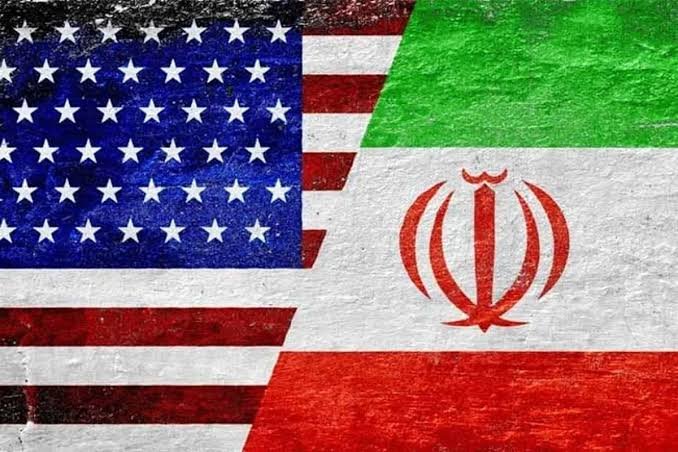
At 12:32 UTC on 15 June 2026, Iranian Foreign Ministry spokesperson Esmail Baghaei told reporters in Tehran that "developments over the past four hours indicate the finalization of a memorandum of understanding between Iran and the US to end the imposed war." Within fifteen minutes, two regional channels — the Beirut-based Middle East Spectator and the Lebanon-aligned The Cradle — were running the line that the document, by Iran's account, would also cover Lebanon, and that Tehran and Muscat would jointly "manage passage through the Strait of Hormuz." By 12:47, Iran's state-linked GeoPolitical Watch was reporting the same claims packaged as a fait accompli.
It is tempting to treat that cascade as a diplomatic event. It is better treated as a press event — and the difference matters.
The shape of the announcement
Baghaei's statements, as relayed by Iranian state and Iran-adjacent outlets, describe a memorandum that is broad in geography (a claimed "all fronts" scope including Lebanon), narrow in implementation (Iran and Oman managing Strait of Hormuz traffic), and entirely unconfirmed on the American side. There is no read-out from the US State Department in the public record, no joint statement from Muscat, no comment from the Lebanese government, and — critically — no signed text. The closest parallel in the recent record is the run-up to the 2015 Joint Comprehensive Plan of Action, when Iranian officials briefed details in advance of any Western confirmation. That parallel is instructive but not flattering: a one-sided drip-feed, repeated until it becomes the reference point for coverage.
The incentives on the Tehran side
Reading the announcement structurally, three incentives line up. First, Iran is absorbing a sustained security shock — direct strikes on its territory, ongoing operations against Lebanese allies — and a public MoU, even an unsigned one, performs the work of de-escalation without requiring Iran to make verifiable concessions. Second, the Hormuz clause hands Tehran and Muscat a joint stewardship role over one of the world's most sensitive chokepoints, an arrangement that formalises a de facto Iranian position into a paper entitlement. Third, a "national unity" frame — Baghaei's own framing, in which diplomats are "like the warriors of the hard defense field" — flatters a domestic audience that has watched months of warfare with little to show for it.
The incentives on the Washington side
The American incentives are weaker and more ambiguous. There is no obvious domestic constituency for a quiet deal that leaves the Strait of Hormuz partly under Iranian-Omani management. A White House preparing for the November midterms is, if anything, moving in the opposite direction — and the pattern of Iran-US back-channel deals that surface in Israeli, Saudi, or Gulf press in advance of any Tehran announcement is, by now, familiar enough that the absence of a single US confirmation in this thread is itself a tell. (Baghaei's separate complaint that "the Security Council and the International Atomic Energy Agency are silent in front of the Zionist regime" is the tell within the tell: it positions Iran as the aggrieved party seeking a normalisation that others are blocking.)
Why the press problem matters
The structural problem is not that Tehran briefed a claim. Governments brief claims. The problem is the downstream pipeline: when a single Iranian spokesperson holds a press conference and the claim is, within minutes, running on Lebanon-aligned, Iran-aligned, and Omani-aligned channels in the same sentence, the resulting wire traffic looks, to a casual reader, like multilateral confirmation. It is not. It is one source, repeated by outlets with overlapping editorial sympathies, dressed in the syntax of confirmed diplomacy. Treating that as a story without flagging the structure of the amplification is the failure mode — and it is the failure mode the Western wire services have intermittently fallen into during past rounds.
Stakes, and what remains contested
If the MoU is real, the strategic consequence is large: a de-escalation across the Iran-Lebanon-Israel axis, a Hormuz management arrangement that ratifies Iranian influence, and a quiet win for Oman's perennial mediator role. If it is a one-sided talking-point — floated to test reaction, to anchor the Overton window for a later negotiation, or simply to manage a domestic audience — the consequence is different but not benign: it widens the gap between what readers believe is happening and what is actually on paper. The sources available at 12:47 UTC on 15 June 2026 do not let a careful reader choose between those two readings. The honest move is to report the claim, name its origin, and decline to launder it into a headline.
— Monexus is reporting the Baghaei statements as the Iranian government's framing of a claimed agreement, not as a confirmed diplomatic outcome. The US side has not, at the time of writing, corroborated the contents.
Wire provenance
This editorial synthesis draws on the following public wire/social posts:
- https://t.me/TheCradleMedia
- https://t.me/Middle_East_Spectator
- https://t.me/GeoPWatch
- https://t.me/JahanTasnim
- https://t.me/alalamfa
Follow the event.
These dated source records provide context. They do not retrospectively verify this archive article.
Separate what the nuclear watchdog reported from what it could not determine after the June 2025 strikes.