The Pause That Binds: Reading the US-Iran Ceasefire Before the Ink Dries
A deal is announced, a blockade is announced, and a $24 billion figure is announced — all in 24 hours. Monexus reads what is actually on the table before the signing in Switzerland on 19 June.
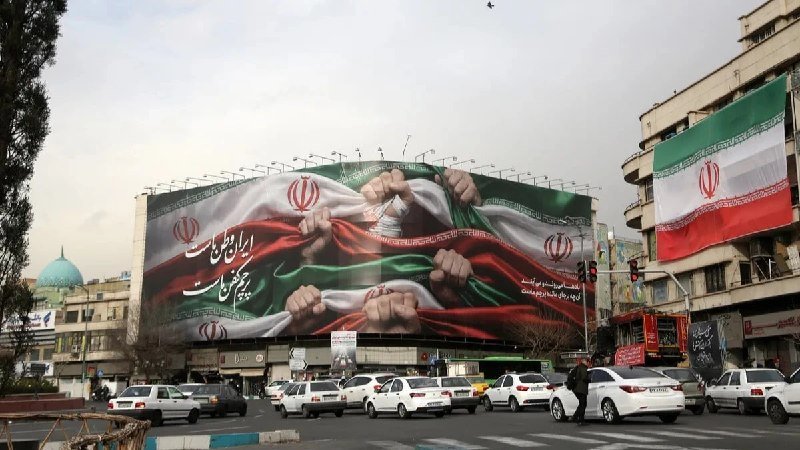
A ceasefire between the United States and Iran is scheduled to be signed and implemented on 19 June 2026, according to multiple wire reports circulating on 14 and 15 June. The first public confirmation came from Pakistan's government, which announced on 14 June that a US-Iran peace agreement had been reached and that the official signing would take place in Switzerland. Within hours, Iranian state-linked outlets reported the deal would unlock roughly $24 billion in frozen Iranian assets. By midday on 15 June, the US military confirmed a maritime blockade of Iranian ports would remain in force until the agreement is formally completed. The pause is real. So is the leverage that surrounds it.
This publication reads the 14–15 June wire cycle as the outline of a settlement, not the substance of one. Three claims are in circulation, only one of them is a verifiable act, and the gap between announcement and implementation is where the next round of bargaining will be fought. The reporting that follows treats each thread on its merits — and is honest about which ones are still fraying.
What is actually on the table
The hard fact in the cycle is a logistical one: the US naval blockade of Iranian ports continues until 19 June, per a US military announcement relayed through market channels on 15 June at 14:50 UTC. That is a verifiable posture, not a negotiating position. A blockade lifted on a published date is a different instrument from a blockade paused indefinitely; the timing matters for oil markets, for shipping insurance, and for the Iranian government's ability to stage a domestic "victory" once it lifts. Until the agreement is signed, the pressure does not lift — it merely has a calendar.
Around that logistical fact, two softer claims are circulating. The first, attributed to Iranian media on 14 June, is that the deal would release approximately $24 billion in frozen Iranian assets. The figure is striking, but no correspondent wire has independently confirmed it, and the institutions that hold such balances — mostly in Iraq, South Korea, and a handful of Gulf intermediaries — have not been named. The second is the geography of the signing itself. Pakistan's announcement on 14 June at 21:29 UTC placed the ceremony in Switzerland, a venue with the virtue of neutrality and the vice of being far from either capital. Geneva or Lausanne would put the United Nations, the European banking infrastructure, and the Americans' European allies within an hour's drive — useful if the deal collapses mid-signing and a backchannel is needed.
The Iranian reading, and the hardliner reservation
Reporting from Middle East Eye on 15 June captured a population-level response that any honest read of this story has to honour: many Iranians have voiced relief at the prospect of an end to months of conflict. That is the central humanitarian fact of the announcement. After a grinding war, a pause that prevents another night of strikes is not a footnote; for civilians in Tehran, Isfahan, Bandar Abbas, and the Kurdish border regions, it is the entire story.
It is not, however, the only story in Tehran. The same Middle East Eye reporting records that some hardliners are uneasy — about the terms, about the optics of a settlement concluded under blockade conditions, and about the precedent set for the next confrontation. That reservation is not fringe. Iran's national-security establishment has spent a decade building a doctrine of strategic patience calibrated to outlast American electoral cycles. A deal signed while a US carrier group sits in the Arabian Sea is, in that doctrine, not a peace; it is a memorandum of surrender, with a price attached. The $24 billion figure, if it holds, will be read in two directions: as relief in the bazaar and as humiliation in the IRGC's internal councils. Which reading wins will shape Iran's behaviour the next time sanctions snap back.
Why the deal is being announced the way it is
The information flow around this agreement is unusual and worth naming plainly. Pakistan, not Qatar, not Oman, not Switzerland, is the government that publicly announced the deal. That choice is not neutral. Pakistan has spent the past year positioning itself as a regional mediator: hosting Iranian and Saudi back-channel meetings, signing the China-brokered rapprochement between Tehran and Riyadh's diplomatic outriders, and offering itself as a logistical hub for any Western withdrawal from the Gulf. For Islamabad, naming the agreement is itself a foreign-policy deliverable — a way of signalling to Washington, Beijing, and the Gulf monarchies that Pakistan is not a bit-player in Asian security architecture. It is also a soft message to Tehran: we helped deliver this, and we expect a seat at whatever comes next.
The choice of a wire-light announcement strategy — social media, market terminals, and a Pakistani statement — reflects a deeper problem. The US–Iran track has not had an authoritative lead mediator since 2018. Negotiations between officials with no shared political mandate, conducted through intermediaries, produce agreements whose terms are not yet legible to the press that has to explain them. What is being called a "deal" is, in the most defensible reading, a framework: a date (19 June), a venue (Switzerland), a financial claim ($24 billion, Iranian-sourced), and a sequencing of confidence-building measures whose first item is the lifting of the naval blockade. The implementation details — sanctions sequencing, frozen-asset custody, IAEA verification — are the substance that has not yet been confirmed.
Stakes, in plain language
If the 19 June signing holds, the immediate winners are the populations on both sides who have been absorbing the cost of a hot front for months. Iranian access to roughly $24 billion in frozen assets, if confirmed, would meaningfully ease the liquidity crisis that has driven the rial's collapse and Tehran's emergency subsidy spending. For the United States, the deal would lower the cost of the maritime posture, reduce the political exposure of an election-year war, and let the administration claim a regional de-escalation. For the Gulf monarchies, a pause is preferable to a strike — provided the pause does not normalise Iran's regional role.
If the signing slips, the leverage inverts. A blockade that was always intended as a confidence-building measure becomes a siege. Iran's hardliners, already wary of a deal signed under duress, would have the political ammunition to walk away. The US military's continued presence in the Gulf, paid for at roughly $1–2 billion a month in operating tempo, becomes a recurring line item on a budget the public has not yet been asked to underwrite. And Pakistan, having put its name on the announcement, absorbs a reputational cost it cannot afford.
The pattern is older than this cycle: announcements of peace are made by third parties, financial figures are floated by the party that wants them confirmed, and the actual document is signed in a place none of the principals call home. That is what the 14–15 June wire cycle describes — and that is why this publication will read the 19 June signing, when it comes, against the announced framework rather than against the press releases.
Desk note: Monexus treated the four wire items of 14–15 June as a bundle, not as four stories. The reporting privileges the verifiable maritime posture and the Pakistani announcement as primary, treats the $24 billion figure as Iranian-sourced and unconfirmed, and reads the hardliner reservation from Middle East Eye as structural, not marginal.
Wire provenance
This editorial synthesis draws on the following public wire/social posts:
- https://t.me/middleeasteye
- https://x.com/polymarket/status/
- https://x.com/polymarket/status/
- https://x.com/polymarket/status/