The TON rebrand lands, a peace rumor lifts Bitcoin, and Strategy keeps stacking — a single news cycle tells you everything wrong with the market's signal-to-noise
A token gets a new name, a rumored peace deal adds 5% to Bitcoin in a day, and the largest corporate holder adds another 1,587 BTC to an 846,842-coin stack. The signal is in the simultaneity, not in any one headline.
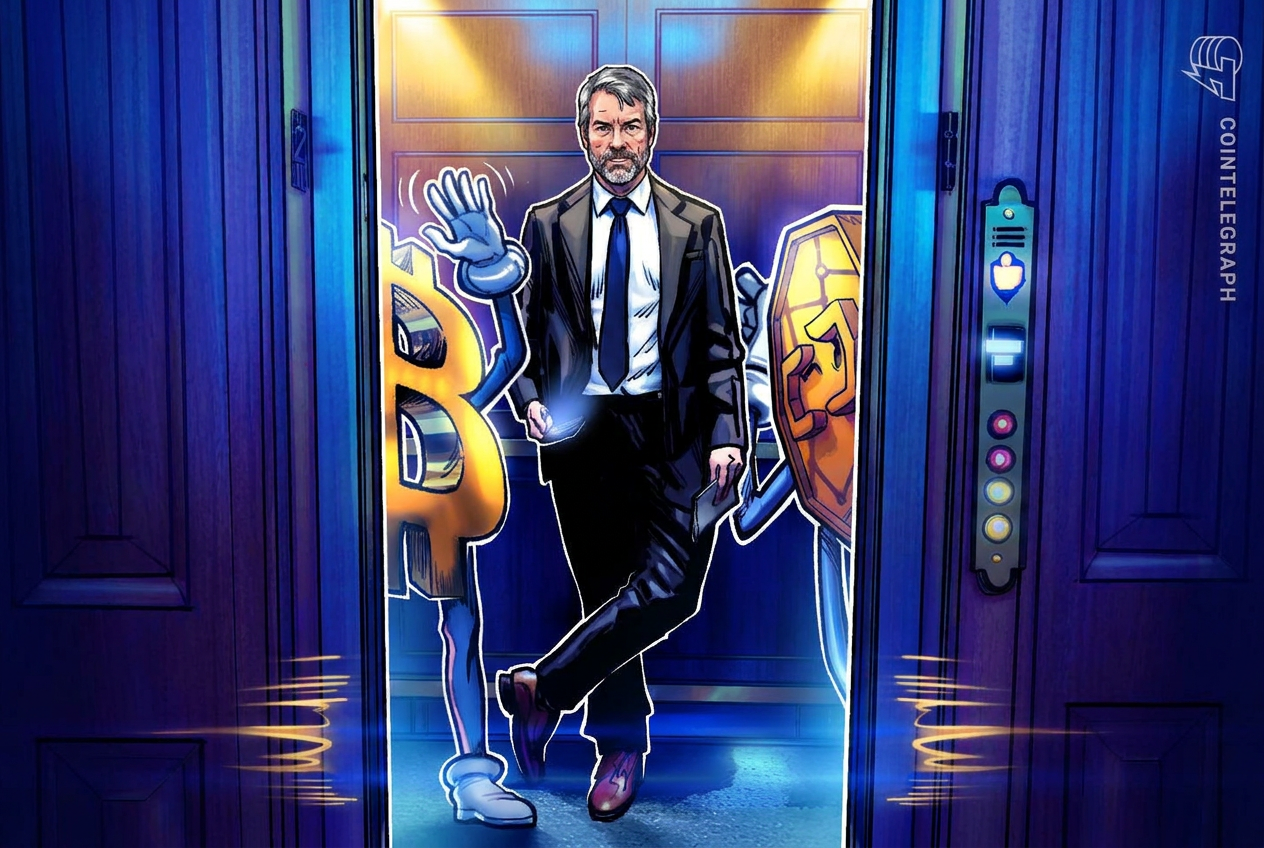
On 15 June 2026, between 12:04 UTC and 18:16 UTC, the Telegram wire that this publication monitors ran four distinct crypto market alerts in roughly six hours. TON, the token associated with Telegram's blockchain effort, was rebranded to GRAM, with exchanges told to convert balances automatically (Cointelegraph, 15 June 2026, 18:16 UTC). Bitcoin broke above $67,000, gaining nearly 5% in 24 hours, on news of a U.S.–Iran peace deal (Cointelegraph, 15 June 2026, 15:51 UTC). Strategy, the corporate treasury vehicle run by Michael Saylor, disclosed the purchase of 1,587 BTC for roughly $100 million, lifting its holdings to 846,842 BTC (Cointelegraph, 15 June 2026, 12:04 UTC). And Cointelegraph teased an exclusive sit-down with Saylor in which he would, in the channel's own teaser language, "clap back at Bitcoin bears and Strategy critics" (Cointelegraph, 15 June 2026, 15:00 UTC). Treat them as a single data point. The signal is in the simultaneity.
Four of the loudest stories in crypto on a Sunday afternoon were, in order: a cosmetic rebrand, a geopolitical rumor priced into the largest asset in the space, a corporate balance-sheet ritual, and a pre-release framing of the executive who runs that ritual. None of them, individually, is a story. Together, they describe a market whose information environment is no longer about price discovery at all — it is about narrative coordination, and the actors who can move the narrative are the same actors who benefit from the move.
The rebrand that isn't
The TON-to-GRAM rebrand is the smallest of the four events and, in some ways, the most revealing. Token renames are routine; the mechanism is a swap contract, the exchanges do the work, and the price action is usually negligible. What matters is that a name change still produces a wire alert with a siren emoji, six hours of attention, and a slot in front of readers who would otherwise be reading about the Bitcoin move. The rebrand exists to occupy the channel. It is content in the literal sense — a thing that fills the space where analysis would otherwise sit.
The honest read: a token's ticker is a marketing artifact, not a fundamental. A publication that treats a rebrand as a top-tier alert is signalling that it has no fundamental to report, and would rather you not notice.
The 5% move that wasn't a move
The Bitcoin surge above $67,000 on a "U.S.–Iran peace deal" is more consequential, and more worrying. A 5% intraday move on a single unconfirmed headline is not price discovery — it is reflexivity. Buyers chase the headline, the chase is itself a headline, the second-order buyers chase the chase. The original sourcing in the Cointelegraph alert is a single phrase: "news of a U.S.–Iran peace deal." The alert does not name the parties, the venue, the text, or the confirmation status. It is the financial-information equivalent of a rumour at a bar.
And yet the market moved. The implication is not that Bitcoin traders are gullible. The implication is that a market this deep, this liquid, this saturated with leverage, is now structurally responsive to single-sentence geopolitical rumours when they arrive in the right format on the right channel at the right time. That is not a feature. That is a vulnerability. The same plumbing that lets a peace rumor add 5% lets a war rumor take it away — and war rumours travel faster than peace ones.
The 1,587-coin ritual
Strategy's purchase of 1,587 BTC for $100 million — at an implied average price near the $63,000 area implied by the round figures, well below the $67,000 print on the same day — is the steady drumbeat underneath both stories. The treasury is now 846,842 BTC, per the disclosure. The interesting number is not the purchase. It is the predictability: a buy disclosure on a Sunday, an interview teaser within hours, the executive available to defend the strategy on camera while the price of the asset responds to a completely unrelated geopolitical input. The corporate balance sheet has become a media property, and the media property has become a price-input.
This is the part the bullish case does not want to discuss. Strategy's pitch to equity holders is that the share price should track net asset value per BTC held. The pitch to BTC holders is that the corporate bid provides a floor. Neither pitch works without continuous narrative support, and continuous narrative support requires a continuous news cycle, and a continuous news cycle is exactly what an unverified Iran rumor and a ticker swap will provide for free. The market is, in a real sense, paying Strategy to be its own content arm.
What this publication would note instead
The same six-hour window in which all four alerts landed also contained, somewhere, a real story that none of them displaced. We do not know which one, because the wire does not. That is the point. In a market where the marginal piece of information reaching a trader is a token rebrand, a single-sentence peace rumor, a routine corporate buy, and a pre-release interview teaser, the trader's edge does not come from knowing more. It comes from recognising that the channel is engineered to make the four events feel equally important — and the four events are not equally important. One is a marketing artifact, one is a leverage-driven reaction to an unverified claim, one is a balance-sheet update, and one is a publicity vehicle for the executive who runs the balance sheet. Treating them as a coordinated narrative cluster is the only honest read. Treating them as four separate news items is the read the channel is selling you.
The structural frame, stated plainly: the price of the largest crypto asset is now set, on a nontrivial number of days, by a feedback loop between corporate treasury disclosures, executive media availability, and geopolitical rumours whose first stop is a Telegram channel with a siren emoji. That is not a market. It is a narrative engine that occasionally prints a number. The 5% move is the engine's exhaust. The rebrand is the engine's idle. The 1,587 BTC is the engine's fuel. The interview is the engine's marketing brochure.
The stakes, for the reader, are clarifying. If you are a holder, the lesson is not to sell. It is to notice that the news environment you are reading is not measuring the thing you are holding — it is measuring the willingness of the people who are talking about the thing you are holding to keep talking. That willingness, like a rebrand, can be manufactured. A 5% move on a rumour is a reminder that the next 5% move, in either direction, can be manufactured too. Position for that, not for the rumour.
Desk note: Monexus ran the four Cointelegraph Telegram alerts in chronological order rather than as four separate stories, because the simultaneity is the story. The wire treats them as discrete events; this publication treats them as a single market signal.
Wire provenance
This editorial synthesis draws on the following public wire/social posts:
- https://t.me/cointelegraph
- https://t.me/cointelegraph
- https://t.me/cointelegraph
- https://t.me/cointelegraph