Trump announces Iran deal 'complete' as Hormuz reopens — and a UFC birthday spectacle folds the presidency into spectacle
A reported US-Iran understanding lifts the naval blockade and reopens the Strait of Hormuz, sending crude futures lower — hours before the president hosts a UFC cage fight on the White House lawn for his 80th birthday.
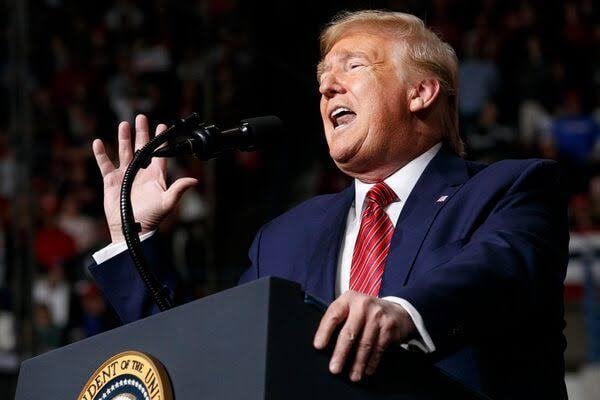
Two dispatches, separated by twenty-two minutes, crystallised a particular Washington aesthetic on 15 June 2026. At 03:29 UTC, US President Donald Trump declared that a deal with Iran "is now complete," announcing the end of the American naval blockade and the reopening of the Strait of Hormuz. At 03:51 UTC, France 24 reported that Trump had marked his 80th birthday hours earlier with a UFC cage fight staged on the White House South Lawn — a spectacle that coincided with a memorandum of understanding the president had signed the same day. The pairing is not incidental. Foreign policy delivered as personal theatre, then ratified by a choreographed crowd scene, is a method, and on Monday it produced a market move: crude oil futures dropped sharply, with NPR reporting that prices had already fallen "quite dramatically" on Thursday and Friday in anticipation of an imminent signing.
The thesis here is narrow but worth stating plainly. Whatever the eventual legal architecture of the US-Iran arrangement, its first observable effects are running through the energy market and the presidential brand simultaneously — and the second is doing more political work than the first.
What the announcement actually said
The headline claim comes from Trump's own social media posts, as relayed by Middle East Eye: the deal "is now complete," the US naval blockade is over, and the Strait of Hormuz will reopen. NPR, citing the same posts, framed the announcement as the fulfilment of a promise Trump had made that the agreement would be signed on Friday. The Middle East Eye dispatch did not include the full text of a signed document, the named Iranian counterparties, or any verification from Tehran at the time of writing. NPR noted the price reaction but likewise stopped short of quoting Iranian state media or naming the Iranian signatory on the record.
The Strait of Hormuz is the chokepoint through which roughly a fifth of globally traded crude passes. A blockade, even a partial one, or even the credible threat of one, is the kind of lever that moves Brent and WTI within hours. A credible reopening, announced by the US president, moves them in the opposite direction. The market moved first, on anticipation; the announcement confirmed the bet.
The Iran file: what we know, and what we don't
The through-line of the past several weeks has been an episodic escalation: a blockade declared, a price spike, an off-ramp negotiated, a signing postponed, another threat. The pattern is familiar from earlier oil-market shocks in which the price curve reacts not to the underlying supply change but to the probability of one. Trump's Monday posts reset that probability. NPR's report explicitly anchors the futures drop to the anticipation of the Friday signing, not to the signing itself.
What the dispatches do not yet establish is the legal status of the agreement. "Complete" is the president's word. Iranian confirmation, the text of any memorandum, the precise conditions attached to the blockade's end, and the role of any third-party mediator are not specified in the source items reviewed here. The reporting carries a present-tense market effect and a past-tense diplomatic claim; the connective tissue between them — the document — is, for the moment, a presidential assertion rather than a verifiable record. Readers tracking this file should expect the next 24 to 72 hours to determine whether the deal exists on paper in a form that Iranian officials and oil traders alike can act on.
The South Lawn UFC and the presidency as production
The second story is the one most readers will already have an opinion about, which is exactly the point. France 24's dispatch describes a UFC event on the South Lawn of the White House, framed as a birthday celebration for the eightieth. The optics are not subtle. A cage fight staged where foreign leaders are received; a sitting president presiding over a commercial promotion; the choreography of fandom doing the work that a press conference would otherwise do. The same France 24 item notes that a memorandum of understanding — context not fully specified in the source — was signed the same day, before the spectacle.
The argument this publication finds most coherent is that the order matters. The deal was signed; the celebration was staged; the announcement was timed to land in the same news cycle. A reader trying to interpret Monday's news cannot separate the foreign-policy event from the cultural event, because the administration did not separate them. That is the point of doing them together. The presidency is not merely announcing a policy — it is hosting the announcement inside a piece of entertainment that doubles as base mobilisation.
Structural read: energy, image, and the modern executive
The pattern is older than this administration, but the execution is distinctive. Twentieth-century presidential communication used the bully pulpit; the early twenty-first century used cable hits and Twitter threads; the present moment is the production set. The UFC staging, the birthday framing, and the same-day foreign-policy win form a single message: the executive is the show, the show is the policy, and the policy is the show. This publication finds the energy-market reaction genuinely consequential — a credible Hormuz reopening does alter the near-term oil outlook — and the image-making genuinely consequential for an entirely different reason, which is that it makes the executive harder to argue with on the terms the press has traditionally used.
The honest counter-reading is that the two stories are unrelated and that news organisations are over-reading the choreography. The South Lawn event was, on that view, simply a birthday party. The Iran announcement was, on that view, simply the Iran announcement. The case for that reading is that no source item proves the two were coordinated. The case against it is that they happened on the same day, in the same news cycle, under the same byline, and that the present administration has made an art form of this exact sequencing.
What remains uncertain
Three things are unsettled as of 15 June 2026, 03:51 UTC. First, the legal status of the Iran arrangement — Trump's "complete" is a presidential statement, not yet a corroborated agreement with a named Iranian signatory and a published text. Second, the durability of the market reaction; oil futures often retrace on confirmation gaps, and an announcement without a signed document invites that. Third, the political durability of the South Lawn model — whether the spectacle normalises a new baseline or provokes the institutional pushback that the staging appears designed to bypass. The sources reviewed here do not specify any of these, and a responsible read keeps all three open.
Desk note: Monexus reports the energy-market reaction and the presidential announcement as separate-but-same-cycle stories, declines to declare a deal "done" until Iranian confirmation or a published text is on the record, and notes that the South Lawn staging is itself the political story the administration is selling.