Trump's Iran deal is real. The Lebanon clause is not.
A US-Iran framework deal is being hailed as a regional breakthrough. Israel is already telling Washington the Lebanon provisions do not bind it. The contradiction is the story.
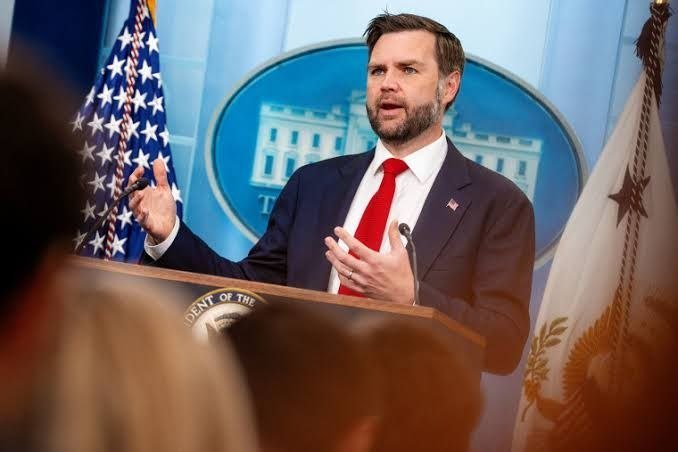
A US-Iran agreement described by Donald Trump as complete is, on the morning of 15 June 2026, more of a scaffolding than a treaty. The headline is the end of an American naval blockade and an Iranian commitment that the war will end "on all fronts, including Lebanon," as reported by Middle East Eye's live coverage at 06:55 UTC. The crack in that scaffolding appeared within hours: Israeli Prime Minister Benjamin Netanyahu has informed Trump that the Israel Defence Forces do not consider themselves bound by the Lebanon clause, according to the same outlet at 06:36 UTC and to Israeli media cited by Unusual Whales at 05:11 UTC. Trump's response, captured on Polymarket's news feed at 00:31 UTC, was to call Netanyahu a "very difficult guy" in remarks to reporters — a remark that, stripped of its colour, concedes a public disagreement between the deal's principal sponsor and the one regional actor the deal was partly designed to manage.
The pattern is familiar, and worth naming plainly. A US-brokered framework is announced with maximum presidential theatre. A regional party the framework was meant to constrain signals within hours that it will honour the bits it likes and disregard the rest. The American sponsor responds not by enforcing the framework, but by venting about the regional party's temperament. The framework then persists in the news cycle as a fact-on-the-page while functionally ceasing to be a fact on the ground. This is not a glitch in American Middle East diplomacy. It is, by now, its working method.
The deal, in plain terms
Per the Middle East Eye live blog at 06:55 UTC, Trump announced the end of a US naval blockade of Iran and characterised the agreement as complete. Iran, in turn, signalled its understanding that the arrangement would terminate hostilities "on all fronts, including Lebanon" — language that, if taken seriously, would have direct implications for Hezbollah's posture and for the Israeli presence in southern Lebanon that has been a running flashpoint since the 2023 Gaza war and its spillover. The blockade's end is itself a substantial concession: it relieves the maritime pressure campaign that had been the most visible instrument of US economic warfare against the Islamic Republic.
The subtext of the announcement is that something has shifted inside the Trump administration's risk calculus. The naval blockade was escalatory by design; its suspension is the kind of move a White House makes when it wants a deal more than it wants leverage.
The Israeli counter
Netanyahu's response, reported by the Sprinter Press wire at 06:32 UTC and echoed in Unusual Whales' summary of Israeli media at 05:11 UTC, is unambiguous. Israel is not withdrawing from Lebanon on the basis of a US-Iran understanding in which Israel was not a negotiating party. The language — that the "occupying army" does not consider itself "obligated" by the Lebanon clause — is unusually pointed. It puts on the public record that the Israeli government regards a US-Iran diplomatic instrument as not binding on Israeli operational decisions inside Lebanese territory.
This is not a negotiating tactic. It is a statement of fact about how the region works. Israel sets its own operational tempo in southern Lebanon, and the United States, in this transactional phase, is a messenger rather than a commander.
The structural frame
What is unfolding is the visible part of a larger realignment. The US-Iran track runs through a White House that has spent the year negotiating with Tehran over the heads of traditional Middle Eastern intermediaries, including Israel. The Trump-Netanyahu friction — captured in the Polymarket-reported "very difficult guy" line at 00:31 UTC — is the diplomatic residue of that bypassing. When the President of the United States calls a long-standing regional ally "very difficult" in front of cameras, the message is not just to the ally. It is to the audience that has watched, for two decades, every American president treat Israeli red lines as an extension of American red lines.
That consensus is being renegotiated, in public, in real time. The Lebanon clause is the most concrete evidence of the renegotiation: an attempt by Washington to lock in a regional de-escalation that Israeli planners view as constraining their freedom of action. The Israeli response is to refuse the lock.
The risk of this moment is not a return to the status quo. It is that a US-Iran deal, marketed as a comprehensive regional framework, will be carried forward as a partial settlement — nuclear and maritime issues resolved, the Israel-Lebanon track left to fester — and the discrepancy will itself become a source of escalation. The framework's strongest proponents will say it has bought time. Its critics will say it has bought an argument.
What the sources do not yet show
Several things remain genuinely uncertain. The Middle East Eye report attributes the "all fronts, including Lebanon" formulation to Iran's reading of the deal; it is not yet clear whether that language appears in the operative text of any signed document or is a unilateral Iranian characterisation. The Israeli non-acceptance is sourced to Israeli media and to Netanyahu's communications with Trump, not to any publicly released Israeli government document. And the operational question — what Israeli forces in southern Lebanon actually do, this week and next — is not answered by any of the wire items at the time of writing. The deal is complete, in the President's telling. What it compels is a separate question, and the morning of 15 June 2026 is too early to answer it.
Monexus has framed this as a story about the gap between a declared framework and a regional actor's refusal to honour it — not as a story about a diplomatic triumph, because the most consequential party to the underlying dispute has already said it is not on board.
Wire provenance
This editorial synthesis draws on the following public wire/social posts:
- https://t.me/s/middleeasteye
- https://t.me/s/sprinterpress
- https://t.me/s/unusual_whales
- https://t.me/s/polymarket
Follow the event.
These dated source records provide context. They do not retrospectively verify this archive article.
Separate what the nuclear watchdog reported from what it could not determine after the June 2025 strikes.