Trump's Iran MoU, the regulator's bank probe, and the unwinding war: three threads of a single American bet
A sanctions-track MoU with Tehran, a regulator's probe into alleged political debanking, and an admission that the war he started has not met its goals — three moves, one day, all of them inside the same political economy.
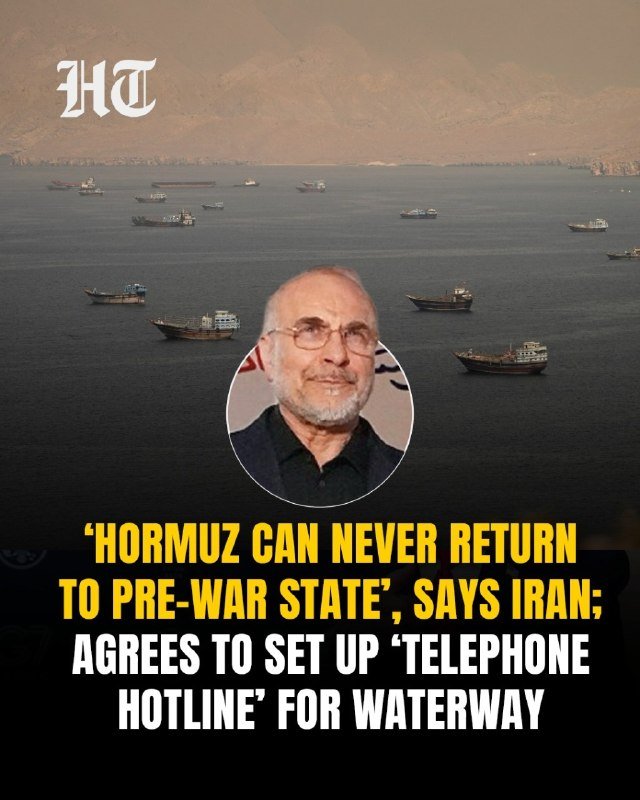
The three stories landed within ninety minutes of each other on 15 June 2026, and they read, taken together, like a single document with the serial numbers filed off. At 18:52 UTC, Donald Trump announced that a memorandum of understanding with Iran had been signed and that there would be "no sanctions relief" attached to it, a position he framed as the final word in a negotiation that has run for the better part of two years. At 19:52 UTC, an Indian Express wire quoted Trump conceding that the war he started was winding down with its goals unmet. At 20:10 UTC, Reuters reported that US lenders were bracing for the results of a Trump-era regulator's probe into allegations of politically driven account closures, a probe whose targets include institutions that have been publicly hostile to the administration's priorities. The shape that emerges from the three stories is not a coherent foreign policy. It is a management style: the same impulse to substitute a deal, a probe, or a withdrawal for the harder work of governing, applied across three theatres at once, all in a single news cycle.
The thread running underneath these three stories is the use of administrative power as substitute for policy. In Tehran, the deal substitutes for sanctions architecture; in Washington, the regulator's probe substitutes for the rule of law; in the war that Trump himself opened, the substitution is the most naked of all — an exit in which the announcement does the work that victory would otherwise have done. Each of these moves is defensible on its own narrow terms. The risk is that the pattern itself, the substitution of theatrical motion for structural outcome, becomes the doctrine.
The Iran MoU, and what "no sanctions relief" actually means
Trump's announcement, carried by The Indian Express at 18:52 UTC on 15 June 2026, was characteristically compressed. "Deal's all signed," he said, adding that there would be "no sanctions relief" for Iran in the memorandum of understanding. The juxtaposition is the story. A signed deal and an explicit refusal of the concession that the counter-party presumably wanted is not a deal in the conventional sense; it is a record of a conversation in which one side kept the pen and the other kept the page. Iranian state-aligned channels reacted with the weary familiarity of a counter-party that has been through this choreography before. The account @IRIran_Military, posting on Telegram at 20:00 UTC, asked its audience in English whether "it is the first time Trump betrays you" — language that is obviously editorialised, but useful as a measure of how the Iranian street is being primed to read the document.
The structural question is what "no sanctions relief" leaves on the table. The published text of the MoU is not in the public sources this article is drawing from, and the wire reporting does not specify what was conceded on the Iranian side, or whether the document is binding in any sense that would survive a change of administration, or even a change of mood inside the current one. The honest reading of "deal's all signed, no sanctions relief" is that the United States extracted a signed page and gave up nothing it had not already frozen, while Iran got a photograph. The Iranian framing — that this is a familiar sequence of announcement, betrayal, and re-set — is structurally plausible; the Trump framing — that this is a peace dividend extracted without paying for it — is also structurally plausible. The two readings cannot both be fully true, and the sources do not yet let a careful reader choose between them. The single sentence in the public record that does the most analytical work is the one that says no sanctions relief: it tells the reader that whatever was signed, the United States kept its principal lever in its own hand.
The regulator's bank probe, and the politics of debanking
Reuters reported at 20:10 UTC on 15 June 2026 that US lenders were bracing for the results of a Trump-era regulator's probe into allegations of politically driven account closures — the long-running controversy known colloquially as "debanking." The probe targets institutions that have, in various public ways, fallen out of alignment with the administration's priorities. The political reading is straightforward: a regulator appointed by the same administration is now investigating banks that the same administration has publicly criticised, and the lenders in question are watching for the only outcome that is operationally relevant, which is whether the next round of supervisory findings will land on institutions that voted the wrong way. The structural reading is less partisan but more durable. The debanking controversy is, at root, a question about who controls the choke point between a citizen and the basic machinery of payments. When a regulator investigates banks for the politics of their customer lists, the regulator is asserting authority over that choke point, regardless of which party's appointee is doing the investigating. The fact that the present assertion happens to be politically congenial to the party currently in power does not make the assertion smaller; it makes it a precedent, and precedents are inherited by the next administration regardless of its colour.
The counter-narrative, the one the lenders themselves are pushing, is that the probe is a long-overdue accountability exercise after a period in which politically disfavoured customers — gun manufacturers, cryptocurrency firms, fossil-fuel-adjacent businesses, and the political right more broadly — were quietly dropped by banks that did not want the regulatory friction. There is documentary support for that claim in the form of Congressional testimony and state attorney-general actions over the preceding two years, but the public sources this article is drawing on do not contain those documents directly, and the Reuters wire does not enumerate them. What the wire does contain is the timing: a probe whose results are about to land, run by a regulator who is answerable to the same administration that has publicly named the targets.
The war that is winding down without having been won
The most analytically interesting of the three stories is the third. The Indian Express wire at 19:52 UTC, attributing its reporting to a Trump statement, ran the headline "Trump winds down the war he started with goals unmet." That sentence is the entire argument. A war that is being wound down is a war that is ending; a war that ends with goals unmet is a war that did not achieve its stated purpose. The administration is therefore managing a transition from war to whatever comes next, and the whatever is not victory. The domestic political problem is obvious: a country that was told the war would be short and successful is now being told that the war is ending and that success is not on the menu. The administration's preferred framing, in the wire reporting, is that the withdrawal is itself the achievement — that the president's decision to stop is the policy, and that the goals that were unmet are goals that reasonable people understood to be negotiable in the first place. The opposition framing, which the Iranian-aligned channels are already amplifying, is that the war was a choice, the failure was also a choice, and the unwinding is the bill coming due.
The structural point is that the three stories are all versions of the same move. In the war, the move is the substitution of exit for outcome. In the MoU with Iran, the move is the substitution of a signed page for a negotiated settlement. In the regulator's bank probe, the move is the substitution of supervisory discretion for statutory rule. In each case, the visible act of governing is performed; the structural work of governing is deferred. This publication finds the pattern worth naming, but it also finds the pattern insufficiently tested to be called a doctrine. The Iran MoU is, in the public sources, a one-paragraph announcement. The bank-probe results have not yet been published. The war's goals, in the public record, are described as "unmet" by a wire that is itself relying on a single Trump statement, and the official line of the administration is presumably more textured than a single line in a wire.
Stakes, and what a careful reader should watch
The near-term stakes are concrete. If the MoU holds, Iran keeps a frozen sanctions regime and the United States keeps its principal lever; if the MoU collapses, the war the same administration is winding down becomes, in effect, the model for the next one. If the bank probe lands on politically disfavoured institutions, the precedent of regulator-driven account-closure enforcement becomes a tool any future administration can use; if the probe is quietly closed, the political cost of having launched it becomes the administration's problem. If the war ends without a defined off-ramp, the next president inherits a withdrawal that was not a victory and a sanctions architecture that was not a settlement. The audience that is most exposed to all three of these arcs is the same audience that has been exposed to the debanking controversy itself: the small set of politically inconvenient institutions, foreign and domestic, that live at the intersection of bank accounts, regulatory attention, and foreign policy. They are watching the next seventy-two hours more carefully than anyone else.
What remains genuinely uncertain, on the public record this article is working from, is the text of the MoU, the scope of the bank probe, and the operational definition of "winding down." The Iranian counter-narrative, the lenders' defensive posture, and the administration's war-exit framing are all in the record. The verdict between them is not.
Desk note: Monexus read the three Indian Express and Reuters wires as a single pattern, named administrative substitution as the connecting thread, and held back from naming any individual byline as the source of any of the three quotes where the wire itself was the authoritative source.
Wire provenance
This editorial synthesis draws on the following public wire/social posts:
- http://reut.rs/49ZPBOJ
- https://t.me/IRIran_Military
Follow the event.
These dated source records provide context. They do not retrospectively verify this archive article.
Separate what the nuclear watchdog reported from what it could not determine after the June 2025 strikes.