Strait of Hormuz reopens by presidential fiat: what Trump's Iran deal actually changes
Within hours of announcing a deal, the US president lifted a naval blockade, declared the world's most important oil chokepoint "toll-free," and offered two different timelines for reopening — leaving shippers, insurers, and Gulf states to sort out what, exactly, just changed.
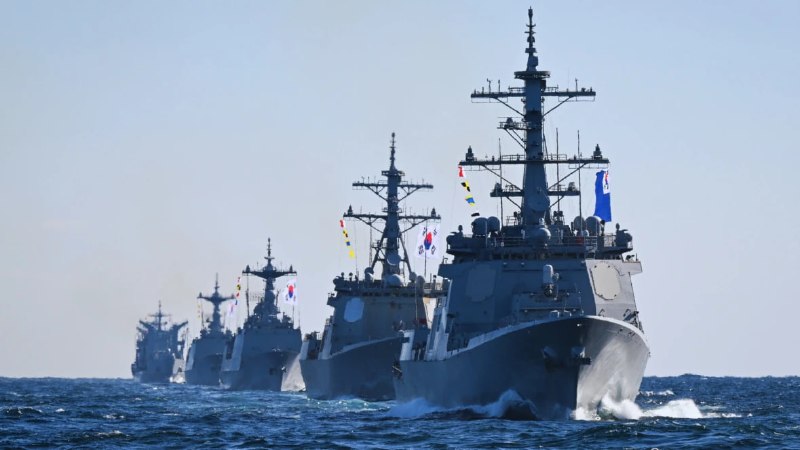
At 21:40 UTC on 14 June 2026, a brief item crossed the wires: Donald Trump had, by his own announcement, "officially" lifted a US naval blockade and authorised the "toll-free reopening of the Strait of Hormuz." Within ninety minutes, the same set of statements was being read three different ways. The president told one audience the waterway would be open "immediately after the deal is signed." Reporting in the New York Times, relayed by Telegram channels tracking the diplomacy, said the understanding would keep the strait "permanently toll-free." Middle East Eye's live blog, by contrast, logged the president giving a "conflicting timeline for Strait of Hormuz reopening" — a phrase that, in shipping and insurance markets, means days of risk premium rather than a single announcement.
The chokepoint through which roughly a fifth of the world's traded oil normally passes had been the lever that turned a war into a negotiation. The announcement, as the Associated Press frame put it, was expected to "return the region to the pre-war situation." But, the same dispatch added, the situation is no longer quite pre-war: "Iran now with its ability to influence ships" had acquired a new pressure point. The deal, in other words, closes one chapter and quietly codifies another.
What changed in the last 24 hours
The most concrete act came from the US side, not the Iranian. Trump's 21:40 UTC announcement — picked up by the Polymarket politics desk and the Unusual Whales account on X, both reading from the same presidential remarks — combined three distinct claims into a single sentence: that the US naval blockade is over, that the strait is now open to commercial traffic, and that no tolls will be levied on transit.
Each of those claims sits on different legal and operational ground. A US naval blockade is a US instrument: Washington can end it without Iranian co-operation. The physical safety of the strait, however, depends on Tehran, on the Iranian Revolutionary Guard Corps Navy that has, since the war began, boarded and redirected commercial vessels using fast boats, drones, and limpet mines. A "toll-free" designation is, in this context, a US policy statement — neither side has the standing to collect transit fees in international straits under the UN Convention on the Law of the Sea, which guarantees transit passage through Hormuz. So what Trump is announcing is partly the unwinding of an American posture, partly a posture aimed at Iran, and partly a posture aimed at a domestic audience.
The Associated Press, on the same thread, drew the line that the regional energy and shipping industries will care about most: the deal "will probably return the region to the pre-war situation; but with the difference that Iran now with its ability to influence ships" retains leverage it did not have before the war began. The phrasing is the wire's careful way of saying the equilibrium has shifted, even if the calendar resets.
The conflicting timelines
Middle East Eye's live blog for 14 June flagged the problem in its own headline: "Trump gives conflicting timeline for Strait of Hormuz reopening." The body of the blog noted that earlier in the day the president had framed the strait as opening "immediately after deal is signed," while later comments referenced a phased sequence. For shipowners, underwriters at Lloyd's of London, and the Gulf energy ministries, the difference between "immediately" and "phased" is not rhetorical. War-risk premia, which during the worst weeks of the conflict rose into the high single digits as a percentage of hull value, are repriced on confidence in physical passage, not on the text of a press release.
The Telegram channel Fars News-adjacent Farsna, citing the Associated Press wire, treated the announcement as a fait accompli and concentrated on the structural implication: that the regional reset would "probably" come, but with Iranian leverage baked in. The ClashReport channel, sourcing the New York Times, framed the same event as a Trump win — "permanently toll-free" — without yet engaging with the question of which authority would have collected any tolls in the first place.
The Polymarket account, built around the prediction market of the same name, simply logged the new facts as discrete data points: blockade lifted, reopening authorised. The Unusual Whales account, run by the markets-data platform of the same name, added the verbal quote — "Hormuz Strait will be open to all immediately after deal is signed" — that later ran into the Middle East Eye problem. The pattern is familiar: the political economy of a single announcement is being read optimistically by the accounts whose business models reward optimism (prediction markets benefit from rapid resolution; market-data feeds benefit from headline transmission), and cautiously by the wire services and regional outlets whose business model depends on the next story being correct.
The Iranian position, in its own frame
Iranian state media, on the Farsna-adjacent channels that republish it, has spent the run-up to the deal emphasising that the strait's status cannot be resolved by an American proclamation. The argument, in its strongest form, runs like this: the Strait of Hormuz is an international waterway. Transit passage is a customary-law right codified in UNCLOS. The United States did not, prior to the war, "own" the strait; it cannot, after the war, "give" it. What it can do, and what the war made vivid, is the difference between safe transit and contested transit. By that reading, Iran's negotiating position throughout the conflict — boarding vessels, harassing shipping, forcing reroutings around the Cape of Good Hope — converted a navigational right into a tactical asset. The deal that ends the war acknowledges that conversion, even if the press conference does not.
The Western counter-read, simpler and more familiar, is that Iran was coerced into de-escalation by the weight of US naval power and Israeli strike capability, and that "toll-free" is shorthand for: the days when Iranian fast boats could dictate commercial insurance rates are over. Both readings are partly true. The interesting structural question is which one becomes the basis for the next crisis — because the next crisis, in this part of the world, tends to come on a six-to-eighteen month cycle.
The structural frame, in plain terms
The Strait of Hormuz has, since the 1980s, been the single most studied chokepoint in energy-economics literature for a reason: it is the place where the global oil market's just-in-time delivery model meets the oldest form of geopolitical leverage, which is the ability to deny geography. The default assumption, baked into refinery placement, tanker-routing software, and Strategic Petroleum Reserve sizing, has been that Hormuz remains open. The war, even briefly, repriced that assumption: shipping rerouted around Africa added roughly two weeks of voyage time and a non-trivial chunk of bunker-fuel cost.
The deal, on its face, restores the default. The new wrinkle is the one the Associated Press flagged: the lever that produced the war is now, by general acknowledgement on the wire, a recognised Iranian capability. That is a different equilibrium from the one that existed in, say, 2019, when Iran briefly seized commercial tankers and was treated, in most Western commentary, as a regional irritant. The post-deal framing treats the same capability as a strategic asset. The reframing matters because it changes the cost-benefit calculus the next time the US or Israel weighs a strike on Iranian assets: the blowback now has a name, a market price, and a precedent.
It is worth saying plainly what this is not. It is not a withdrawal of US power from the Gulf. Carrier strike groups rotate through the Fifth Fleet on schedules set years in advance. It is not an Israeli concession either; Israeli strike capability, and the intelligence and logistics chain that supports it, is not on the table in this particular deal, and Israeli officials have been careful to keep it off the table. It is, more narrowly, an acknowledgement that for a few weeks the United States priced its own carriers and its own allies out of a market it had assumed was free, and that the political cost of doing that again is now visible. That is the lever Iran is, in the AP's careful phrasing, expected to keep.
Stakes, and what remains unknown
The immediate winners are refiners in Asia, where most Hormuz-bound crude is consumed, and the tanker owners whose hulls were running dark to avoid Iranian boarding parties and US sanctions. The immediate losers are the war-risk insurers, whose underwriters had repriced premia into the high single digits during the worst weeks, and the smaller Gulf shippers who lacked the scale to reroute around Africa. The political winners, in the narrow sense, are whichever side in Washington can claim credit before the November cycle: the deal is being sold as proof that maximum pressure, plus a willingness to use force, plus a willingness to talk, produces results.
What remains genuinely uncertain is the implementation. The Middle East Eye live blog is the most honest read on this: the same statement yielded "immediately after deal is signed" and a longer, phased sequence, and the markets have to price both. There is no public text of the deal as of 14 June 23:30 UTC. There is no confirmation from Iranian foreign ministry channels of the specific US claim about the blockade or about the "toll-free" formulation. The Polymarket account logged the announcement as discrete data points; Polymarket's own market on Hormuz transit, in past cycles, has shown that the gap between an announcement and a verifiable, sustained drop in war-risk premia is usually measured in days, not hours.
There is also the question that the Western press, on this thread, has barely touched: what the deal does to the OPEC+ production arrangement, and specifically to the volumes Iran is allowed to export under sanctions relief. The wire items in this thread do not address that. The Telegram traffic does not address that. The Polymarket account does not address that. It is the kind of detail that tends to surface in the fine print two weeks after the press conference, and that determines whether the post-deal oil price is $72 or $88. The shape of the deal, in other words, is visible. The price is not.
A last caveat. The Telegram channels that surfaced the most useful framing here — Farsna and ClashReport, the latter leaning on the New York Times — are not neutral observers. They are participants in the same information war that the deal, on its face, is supposed to wind down. The Associated Press line that the regional situation will "probably" return to the pre-war baseline, with Iran keeping its new lever, is the cleanest summary of the publicly known material as of 14 June 2026. Everything more specific is, at this writing, a forecast.
Desk note: the wire coverage of this story has split into a single line — "deal signed, strait reopens" — and a longer, more cautious read that asks what the deal actually changes. Monexus has foregrounded the cautious read because the next forty-eight hours of tanker movements, war-risk premium repricing, and Iranian foreign ministry statements will determine which framing survives contact with the market. Sources remain thin on the deal text itself; the article is built around what was said in public, not what is in the agreement, because the agreement is not yet public.
Wire provenance
This editorial synthesis draws on the following public wire/social posts:
- https://t.me/farsna
- https://t.me/ClashReport