Trump and Macron meet in France: the optics of a 'special friendship' and the price of oil
The White House and Élysée are framing a Trump–Macron meeting as personal chemistry. The substantive record is more transactional — and quieter than the photo op suggests.
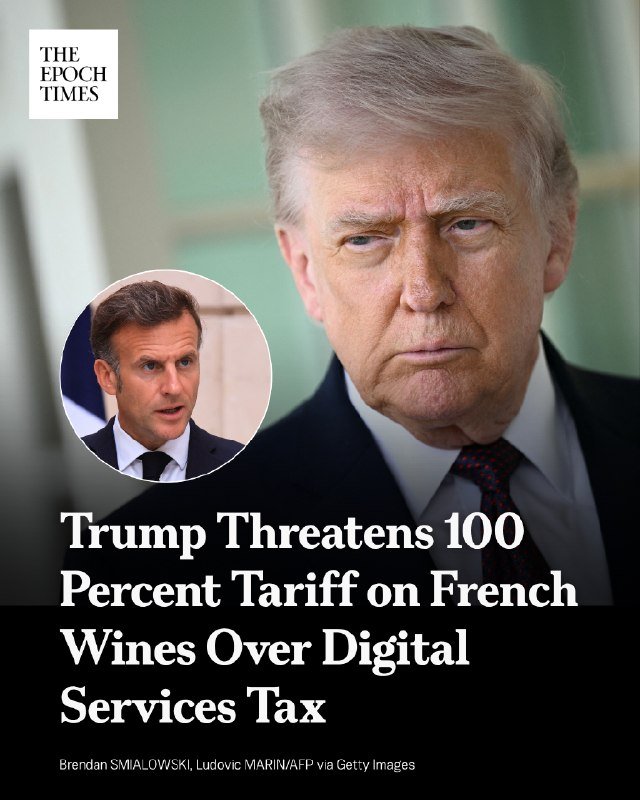
Donald Trump met Emmanuel Macron in France on 15 June 2026, and both sides immediately reached for the same word: fantastic. The American president called the Frenchman a "special friend"; the French presidency, careful as ever, returned the compliment in kind. Within an hour, the photo op had been processed into a usable line for the evening news — two leaders, two flags, one warm handshake. The packaging was personal. The substance, as Trump himself let slip in the same set of remarks, was about price.
The relevant quote is the one the networks will not lead with. According to a transcript circulated by the ClashReport wire on 15 June 2026 at 16:14 UTC, Trump told reporters that Macron "would call me on occasion and say, 'Come on, please, let's go to your prices,'" before adding that "the oil is coming way down, so I'm very honored." The line does more than flatter the host. It concedes a fact the public posturing usually obscures: that recent European pressure on Washington is not ideological, it is commercial. Paris is not asking the United States to be a different kind of ally. It is asking the ally it already has to charge a different rate.
What "going to your prices" actually means
The phrase is a piece of negotiating theatre, and it should be read as one. European leaders have spent the better part of a year quietly lobbying the White House on two connected files: the price European refiners and importers pay for US-shipped liquefied natural gas, and the secondary sanctions architecture that has made it harder for European buyers to source hydrocarbons from anywhere other than the United States. The complaint is not that America is selling energy. It is that the differential between the US domestic benchmark and what European buyers end up paying has widened to a point that looks, from Paris or Berlin, less like a market and more like a rent.
Trump's response to that pressure has been to take credit for the move in the other direction. The same remarks that began with "let's go to your prices" ended with the claim that oil is "coming way down." That is a politically useful claim — it lets a White House that has spent eighteen months jawboning producers argue that the jawboning is working. The price level, the methodology, and the counterfactual (what oil would have cost absent US pressure) are all things a serious piece of reporting would interrogate. The available wire material does not let us do that yet.
The friendship the cameras were told to see
The diplomatic choreography is worth marking on its own terms. Euronews reported on 15 June 2026 at 16:11 UTC that Trump described Macron as "a special friend of mine" with whom he has "a fantastic relationship." The phrase was repeated by the US side a few minutes later, again at 16:09 UTC, in a near-verbatim form on the same channel. Two wire services carrying the same line in the same hour, from two different angles, is the way governments coordinate a message: not by drafting a joint communiqué, but by making sure the same line is on camera twice in a row, with no daylight between the two tellings.
It is also worth noting what the messaging does not include. There is no joint statement in the thread material on the war in Ukraine, on the future of the European defence industrial base, on the status of US tariffs on European goods, or on the Iran nuclear file — all of which are obvious items for a leader-level meeting between Washington and Paris. Either the meeting was narrower than its billing suggests, or those topics will surface in readouts this publication has not yet seen.
What a more honest read of the relationship looks like
The dominant framing in Western wires today is that this is a personal relationship that has stabilised after the noisy patch of 2018–2019, the wine tariffs, the NATO brain-death commentary, the Australian-submarine fallout. That framing is not wrong. It is just incomplete. A more honest read treats the personal warmth as a lubricant on a relationship whose direction is set by structural facts: Europe's dependence on US energy and security guarantees, America's desire to sell more of both at better terms, and a French presidency that wants to keep its "strategic autonomy" rhetoric credible while quietly accepting that autonomy, in 2026, has a dollar-denominated price.
The oil line is the tell. When a French president is on the phone to Washington "on occasion" lobbying for a price, and when the US president is willing to confirm that on the record in front of cameras, the relationship has stopped being one of values and started being one of contracts. Both leaders benefit from calling it a friendship. Neither is naive about what the friendship is doing.
The stakes the photo op will not solve
The meeting does not, on the available evidence, produce a number. There is no read-out of a new price, no announcement of a new facility, no commitment on volumes. The likely deliverable is atmospheric: enough warmth to keep the next tranche of European energy purchases flowing on roughly current terms, and enough public bonhomie to defer the harder questions about European defence spending, the future of the Iran nuclear file, and the political ceiling on how much extra European buyers can be made to pay.
The next test is not in this room. It is in the next European Council meeting, when a French presidency that has just posed for the cameras will have to choose between defending a "special friendship" and defending a price that, in private, it has already conceded is too high.
This publication has read two wire channels on the meeting — the Euronews English feed and the ClashReport geopolitical channel — and treats the price-related quote as the substantive lead rather than the friendship language that dominated the live television coverage. The fuller read-out, if one is published, may yet shift the framing.
Wire provenance
This editorial synthesis draws on the following public wire/social posts:
- https://t.me/s/ClashReport
- https://t.me/s/euronews
- https://t.me/s/ClashReport