Trump Claims the Strait of Hormuz Is Reopening — Even With 'a Couple of Mines' Still in the Water
The US president says tankers are transiting the world's most sensitive chokepoint, but admits mines may remain. The claim is already outpacing the evidence.
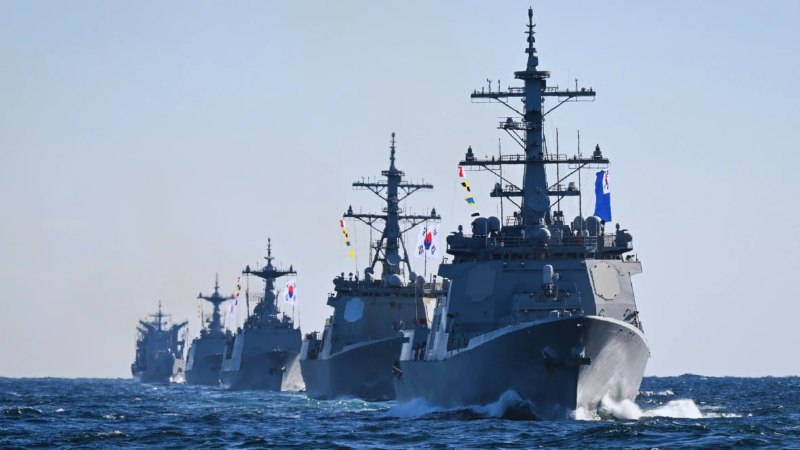
At 16:48 UTC on 15 June 2026, Donald Trump told reporters in Washington that the Strait of Hormuz was on its way back to business as usual. "The Strait is already partially opened," he said. "Essentially, ships are starting to go out now. On Friday, it will be completely opened." Twenty-six minutes earlier, an open-source intelligence account had logged a softer framing: that oil tankers were moving along a route the president described as "totally safe, secure, and pristine." By 16:08 UTC the same account had added the qualifier that no one in the energy-trading community could ignore — Trump had acknowledged that "a couple of mines" might still be sitting on the seabed of the most sensitive oil chokepoint on earth.
The combination is jarring. Either the corridor is reopening in triumph, or it is partially mined, and the only way both can be true is if "totally safe, secure, and pristine" is doing a great deal of rhetorical work. This is the second time in recent weeks that an American president has declared an end to a Middle East crisis on a Sunday-afternoon timeline. The market is going to have to decide which version of the claim it believes — and so is every shipowner with a hull, a crew, and a Lloyd's underwriter on the line.
What Trump actually said, and when
Three discrete claims, all from the US president, sit behind the headlines. Stacked in order, they describe a corridor that is open, then almost open, then conditional on a Friday deadline that has not yet arrived.
The first claim, relayed by the open-source account Open Source Intel at 16:48 UTC on 15 June 2026, is the diplomatic frame. Trump was asked about his relationship with French president Emmanuel Macron — "a special friend of mine," he said, "a fantastic relationship" — before pivoting to the waterway that connects the Persian Gulf to the Gulf of Oman. "The Strait is already partially opened," he told the press pool. The account's earlier post, filed at 16:34 UTC the same day and amplified by the news-aggregation channel Insider Paper, added the timing: ships were "starting to go out now," and "on Friday" — three days out from the briefing — "it will be completely opened."
The second claim is the operational one, captured at 13:42 UTC on 15 June by an X account associated with the prediction market Polymarket, which has been tracking the Hormuz story in real time. Tankers, the president announced, were now transiting a route he described as "totally safe, secure, and pristine." The phrase is the kind of superlative that oil traders will not have heard from any admiral, coast-guard director, or P&I club in living memory.
The third claim is the one that punctures the second. At 16:08 UTC on 15 June, the same X account logged the acknowledgement that the waterway might still hold "a couple of mines." No count, no map, no identification of which side laid them. Just a hedge, delivered into the same press appearance, in front of the same reporters, in a window of less than three hours.
What is and isn't on the record
The US administration has not published coordinates, released a demining timeline, or named the authority certifying the route. Iranian state media, the operators of the strait on its northern shore, have not been quoted in the available material confirming or denying the reopening. No major wire — Reuters, Associated Press, Agence France-Presse, Bloomberg — has yet produced an independent on-the-water report from the strait. The thread of public material, as it stands, is dominated by the president's own words, transcribed by a Telegram account that aggregates political reporting and an X account linked to a prediction market.
That information gap is the story. A clean reopening of Hormuz would, in normal conditions, generate a cacophony of confirmations within hours: a Lloyd's Joint War Committee notice, a US Navy Fifth Fleet advisory, an Iranian Foreign Ministry statement, a regional coast-guard bulletin, a wave of AIS (automatic identification system) pings showing tankers underway. The very absence of that chorus, on the afternoon of 15 June 2026, is itself a piece of evidence. Either the situation is moving faster than the bureaucracy can certify, or the bureaucratic certification has not yet been attempted because the demining is not, in fact, complete.
There is also a question of geography that the available material does not resolve. The Strait of Hormuz is roughly 21 nautical miles wide at its narrowest, with shipping lanes in both directions separated by a two-mile buffer. The phrase "a couple of mines" is, in this geography, a non-trivial figure. Even a single moored contact mine, in a corridor that handles close to a fifth of global seaborne oil, is enough to require a traffic-management regime that the president's language does not describe.
The political frame, and what it leaves out
Trump's staging is familiar. The "fantastic relationship" line with Macron is the warm-up; the announcement is the headline; the qualifier comes almost in passing. The architecture is presidential: deliver the win, soften the risk, move on. It worked with the ceasefire in Lebanon in late 2024, when the president announced a halt to Israeli strikes against Hezbollah in a Truth Social post while Ben Gurion's air traffic control was still logging returns from the latest wave. It worked less well a month later, when the strikes resumed within hours and the same prediction markets that are now tracking Hormuz saw their implied probabilities snap back to the pre-deal level.
Two structural points are worth making in plain language. The first is that Hormuz is the single most consequential oil-transit bottleneck in the global economy, and any disruption — even a partial, brief, symbolic one — is enough to move benchmark crude prices and to test the supply-chain assumptions that anchor Asian, European, and Latin American importers. The second is that the diplomatic choreography around the strait has, for the better part of two decades, depended on Iran and the United States holding an unspoken bargain: Tehran does not close the corridor, Washington does not push for regime change. Statements of "complete" opening, delivered by one party to that bargain without visible acknowledgement from the other, are a fragile instrument.
What the market and the shipowners will be watching
The Friday deadline is the operative date. If, on 19 June 2026, the strait is in fact flowing without a marine-security advisory and without Iranian counter-claim, the president's claim will have been vindicated and the diplomatic weight of the announcement will land cleanly. If, by contrast, AIS data continues to show tankers holding station outside the corridor, or if any underwriter issues a new hull-war advisory, the "totally safe, secure, and pristine" line will be the one the cable-news producers reach for when they write the obituary of the deal.
The prediction-market account that surfaced the second and third Trump claims is, by the structure of its business, the closest thing to a real-time probability engine the public has. Its presence in the timeline — twice in a single afternoon, with the qualifier following the superlative by roughly two and a half hours — is a useful proxy for how the tradable view of the claim has evolved in the minutes since it was made. That view is not yet settled. The Polymarket post is a record of the president's words, not an endorsement of them.
What remains genuinely uncertain, on the available material, is also the most important question: who cleared the mines, or who is in the process of clearing them, and on what authority. No mine countermeasures vessel has been named in the public material available to this publication. No Iranian, Omani, or US Navy command has issued a confirmatory advisory. Until one of those three things changes, the announcement is, at best, a presidential forecast about a Friday that has not yet arrived — and, at worst, a window in which a tanker that follows the "pristine" route into a live minefield becomes a maritime incident that closes the corridor more thoroughly than it was ever closed before.
This publication is treating the 15 June 2026 claims as a single Trump press appearance that has not yet been independently confirmed on the water. The story will be updated as wire confirmation, naval advisories, or AIS data become available.
Wire provenance
This editorial synthesis draws on the following public wire/social posts:
- https://t.me/s/osintlive
- https://t.me/s/insiderpaper