Trump signals Ukraine pivot, says 'Iran is finished', and Kyiv braces for the squeeze
Trump’s Ukraine pivot is not merely a change of diplomatic procedure. For Kyiv, it raises the prospect that Washington will seek a faster settlement by placing the heaviest pressure on the country Russia invaded.
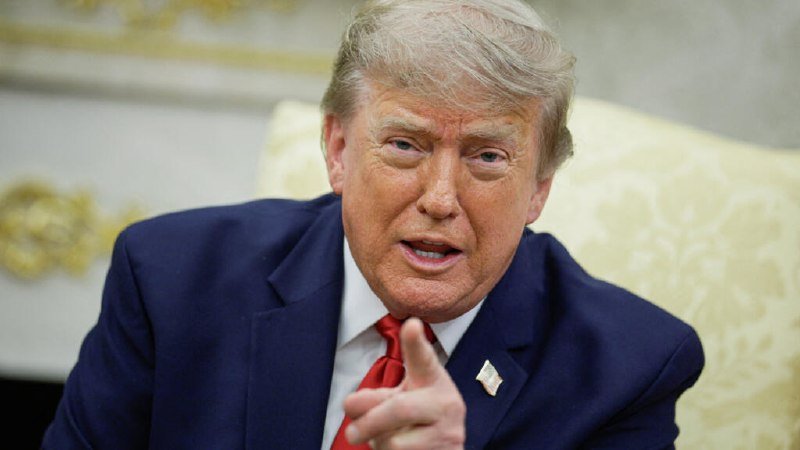
On 15 June 2026, Kyiv faced a familiar danger in a more volatile form: Donald Trump was again treating Ukraine’s future as something Washington might settle through pressure rather than defend through principle. His signal of a Ukraine policy pivot arrived alongside the blunt declaration that “Iran is finished,” compressing two very different conflicts into the same presidential grammar of leverage, exhaustion and dealmaking. The immediate record is thin. The implication is not. For an invaded country defending its sovereignty, any American turn toward an accelerated settlement raises the central question that procedural coverage can obscure: who will be asked to concede, and under what pressure?
Ukraine is the invaded party, and no diplomatic initiative alters that fact. A settlement that rewards Russia’s full-scale invasion or treats occupied Ukrainian territory as a bargaining asset would not be neutral conflict management. It would transfer the cost of ending the war to the country attacked. Trump’s language matters because presidential rhetoric establishes the hierarchy of urgency before policy is written. When rapid closure becomes the objective, the side most dependent on American backing becomes the easiest target for the squeeze.
The pivot is the pressure
A “pivot” can sound administrative, as if Washington were merely changing its sequencing, personnel or negotiating format. For Kyiv, it carries harder possibilities. American support is not an abstraction in this war. It shapes Ukraine’s ability to resist Russian aggression and therefore affects the terms on which any negotiation could occur. A change in Washington’s posture can alter the diplomatic balance even before a formal proposal appears.
That is why the procedural frame is insufficient. The decisive issue is not whether Trump wants talks. Diplomacy is indispensable to ending wars. The issue is whether negotiations begin from the established premise that Ukraine possesses sovereignty and agency, or from the assumption that a major power can define an acceptable outcome over Kyiv’s objections. Talks conducted under unequal pressure can produce a document. They do not necessarily produce a durable peace.
The danger lies in an asymmetry that is easy to miss when every party is described simply as a participant in a peace process. Russia launched the invasion and occupies Ukrainian land. Ukraine is defending internationally recognised territory. If Washington reduces support to force movement, the practical burden falls first on Kyiv, because Moscow does not depend on American military and political backing. Pressure presented as even-handed can therefore operate in one direction.
This is the squeeze for which Kyiv must brace. It may come through public demands for flexibility, through a narrowing of American commitments, or through a negotiating timetable calibrated to Washington’s political needs rather than Ukraine’s security conditions. The supplied record does not establish which instruments will be used. It does establish the political signal: Trump wants room to change course, and Ukraine has reason to examine who pays for that freedom.
Iran is not a template
Trump’s declaration that “Iran is finished” belongs to the same politics of compression. It reduces a regional power, its institutions and a complex security confrontation to a verdict delivered by one man. The appeal is obvious. It projects command, promises finality and turns geopolitical uncertainty into a claim of personal control. But declarations of completion are not strategy.
Nor can Iran and Ukraine responsibly be folded into one model of transaction. The conflicts involve different legal foundations, actors and security obligations. In Ukraine, the baseline is unusually clear: Russia invaded, Ukraine is defending itself, and occupied regions remain Ukrainian territory. A rhetorical habit that treats every crisis as a contest to be closed through maximal leverage risks erasing those distinctions at precisely the moment they should govern policy.
The Iran line nevertheless helps explain the Ukraine signal. Trump’s preferred political register prizes decisive outcomes and visible bargains. That creates a premium on speed, spectacle and presidential ownership. In such a system, an unresolved war is not only a security problem. It is an affront to the promised image of control.
Kyiv cannot assume that its definition of a just peace will survive that political logic intact. Ukraine requires security arrangements capable of deterring another Russian assault, not merely a pause that can be advertised as closure. It also requires that decisions about Ukrainian territory remain Ukrainian decisions. A process designed around the appearance of an American breakthrough could find both requirements inconvenient.
Moscow gains from ambiguity
Russia benefits when the debate shifts from its aggression to Ukraine’s willingness to compromise. The reframing is subtle but consequential. Instead of asking how Moscow will be compelled to end its invasion, the conversation begins asking what Kyiv must surrender to make an agreement possible. Responsibility migrates from the aggressor’s conduct to the defender’s supposed rigidity.
Trump’s pivot signal risks accelerating that migration. The fewer details Washington provides, the more room Moscow has to test allied cohesion and portray continued Ukrainian resistance as the obstacle to peace. Ambiguity can be tactically useful in negotiations, but it is not neutral when one party seeks to convert military occupation into political entitlement. Silence about principles becomes space for the aggressor’s preferred interpretation.
A sovereignty-first policy would reverse the burden. It would ask what credible Russian steps are required before pressure is placed on the state Russia attacked. It would distinguish a ceasefire from a settlement, and a settlement from a secure peace. Most importantly, it would refuse to treat occupied territory as a discretionary American bargaining chip.
This does not require rejecting negotiations or demanding an indefinite war. It requires recognising that diplomacy is shaped by the balance behind it. A Ukraine pressed to accept vulnerability is not being offered peace in the full sense. It is being asked to finance a diplomatic announcement with future insecurity.
The same clarity should govern media coverage. Reports focused narrowly on process can make a shift in American policy look like technical adjustment. Yet the distribution of pressure is the story. If Moscow is rewarded with relief while Kyiv is told to lower its aims, the process is not simply moving faster. It is changing the meaning of the outcome.
Washington controls the clock
The United States possesses a power in this conflict that extends beyond any single weapons package or negotiating initiative: it can alter the tempo. Washington can create time for Ukrainian resistance and allied coordination, or it can compress the timetable and demand political decisions under mounting uncertainty. Trump’s pivot signal indicates that the clock itself may become leverage.
That leverage will test Europe as much as Ukraine. If Washington seeks a rapid course correction, European governments will have to decide whether they can preserve a sovereignty-based position with less dependable American alignment. The supplied wire record offers no basis for predicting their response. The strategic question is already visible, however. An alliance cannot protect its principles if those principles disappear whenever its largest member wants a quicker deal.
Kyiv’s agency must remain central. The phrase is easy to endorse and harder to honour when military dependence meets diplomatic impatience. Genuine agency means more than allowing Ukrainian officials into the room. It means refusing to predetermine which Ukrainian rights are negotiable so that an outside power can claim success.
Trump may believe that disruption creates bargaining opportunities unavailable to conventional diplomacy. Sometimes it does. But disruption directed primarily at an ally can also hand the aggressor a strategic dividend before negotiations begin. Russia need not secure every objective at the front if political pressure abroad lowers the price of occupation.
The next meaningful test is therefore not another adjective from Washington. It is the first concrete demand attached to the pivot. If that demand is directed chiefly at Kyiv, while Russia’s invasion is treated as an immovable fact to be accommodated, the squeeze will no longer be a signal. It will be policy.
Sources
- Kyiv Post official Telegram channel | Kyiv Post | Public wire and social reporting referenced by the original draft | Accessed 15 June 2026
- NOELREPORTS Telegram channel | NOELREPORTS | Public conflict reporting referenced by the original draft | Accessed 15 June 2026
- OSINT Live Telegram channel | OSINT Live | Public wire and social reporting referenced by the original draft | Accessed 15 June 2026
- Jahan Tasnim Telegram channel | Tasnim-linked channel | Iranian state-adjacent reporting referenced by the original draft | Accessed 15 June 2026
- Original Monexus skeleton draft | Monexus News | “Trump signals Ukraine pivot, says 'Iran is finished', and Kyiv braces for the squeeze” | 15 June 2026
Desk note: Monexus frames this as a Ukrainian-sovereignty story first, with the Washington-Moscow axis as the pressure environment. Where procedural coverage sees a possible change in negotiating method, we see a test of whether the cost of speed will be imposed on Kyiv.
Follow the event.
These dated source records provide context. They do not retrospectively verify this archive article.
A dated voting record is evidence of one decision. Use the original UN record before turning it into an alignment label.
Visual explainer · historical vote of 2022-03-02 →