Trump signals retreat from zero-enrichment demand as Iran talks near critical phase
Reporting from Tehran-aligned outlets claims the US president has privately softened his red line. The reported shift, if confirmed, redraws the bargaining map of the nuclear file.
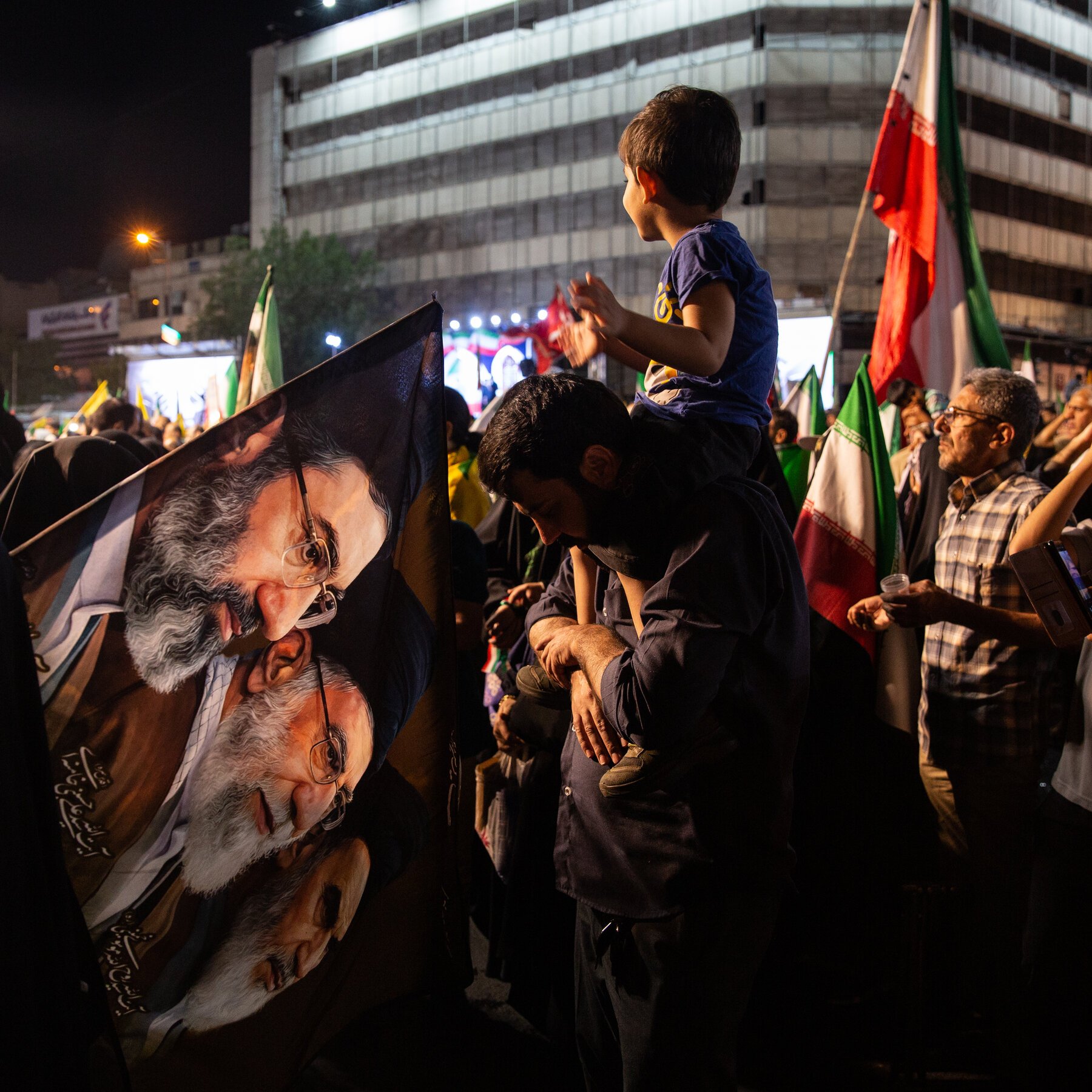
Reporting circulated on 15 June 2026 by Iran's English-language Al-Alam news network claims that US President Donald Trump has privately told the New York Times he is open to walking back his long-standing insistence that Iran retain no domestic uranium-enrichment capacity. The two Telegram dispatches posted by Al-Alam, at 00:53 UTC and shortly before, frame the alleged shift as a significant softening of Washington's negotiating posture, drawn from a fresh interview the American president gave to the newspaper. The same line was carried in parallel by Tasnim News English, Iran's Fars-aligned outlet, in a 00:17 UTC post and a Jahan-Tasnim mirror at 23:41 UTC the previous evening. None of the four Telegram items quotes Trump directly; each paraphrases the New York Times interview and recasts the reporting through Tehran's editorial lens.
The contested question, stripped of spin, is whether the US negotiating position has actually moved, or whether Iranian state media is amplifying a single remark in order to harden Tehran's bargaining stance ahead of a new round of talks. Both readings are plausible, and both have implications for the diplomacy that has lurched between confrontation and concession since the collapse of the 2018 Joint Comprehensive Plan of Action framework.
What the Iranian-language reporting says
The Al-Alam wire frames Trump's reported comment as a "pulse to withdraw from zero enrichment" — a phrasing that suggests wavering rather than settled policy. According to Al-Alam, the president who "previously emphasized the necessity of destroying all nuclear facilities and zero enrichment in Iran" has now signalled, in a New York Times interview, that the position is no longer absolute. Tasnim's English service, run by the Iranian Revolutionary Guard Corps' news apparatus, repeats the framing almost word for word, adding the rhetorical flourish that Iran "makes opportunities out of difficulties" — a line borrowed from a separate press conference by national football-team head coach Amir Ghalenoui ahead of a fixture against New Zealand, and stitched into the political coverage to project a posture of confidence. The Jahan-Tasnim mirror simply headlines the alleged walk-back with a question mark.
The content that matters is narrow: a single New York Times interview, paraphrased by outlets with an editorial interest in showing American resolve eroding, and a decision by Iran's English-language services to amplify it within hours. The Trump administration's public posture, as carried in the same thread items, is not represented at all.
Why Tehran has reason to over-read the signal
Iranian state media has a structural incentive to declare a US climb-down whenever the White House hedges in public language. Zero enrichment has been Washington's publicly stated red line since the first Trump administration withdrew from the JCPOA in May 2018; any softening, even rhetorical, gives Tehran leverage in the next round of talks by making the American position look contingent rather than principled. The Al-Alam and Tasnim amplifications, in other words, do not need Trump to have made a binding concession in order to be useful to Iran's negotiating team. They need only a quotable line.
This is not, however, the same as saying the reporting is fabricated. The New York Times interview, if it exists in the form paraphrased by Al-Alam, is a primary American source being read against the grain. The room for over-interpretation is in the gap between "Trump told the New York Times he is open to discussing enrichment" and "the United States has dropped its demand." Iranian state outlets do not appear to be claiming the latter; their language is the more cautious "pulse to withdraw."
The structural frame, in plain editorial terms
Enrichment policy is the load-bearing element of the entire nuclear standoff. The argument for zero enrichment, as Washington has made it for nearly two decades, is that any domestic Iranian capacity, even at low concentration, can be re-engineered over time to produce weapons-grade material and that the verification gap between declared and undeclared facilities is wide enough to make the bet irreversible. The argument against, as Tehran has made it since the early 2000s, is that enrichment is a sovereign, peaceful, inalienable right under the Non-Proliferation Treaty, and that a demand for absolute zero is not a counter-proliferation demand but a demand for technological surrender.
What the Al-Alam and Tasnim reporting describes, if accurate, is a quiet American move along the spectrum between those two positions — not a breach, but a step. The history of the file since 2018 has been a series of such steps in both directions, with each adjustment marketed by the moving party as either a breakthrough or a betrayal depending on whose embassy is briefing the press.
Stakes, and what the thread does not yet resolve
If the US position has genuinely softened, the consequences extend beyond the negotiating room. Israel's red line on enrichment has been harder than Washington's in public posture, and any visible American softening creates friction inside the regional alliance that has been coordinated around the Iran file. The Gulf states, whose own civilian nuclear programmes depend on a particular reading of the non-proliferation rules, watch the precedent closely. Inside Iran, a perception of American retreat strengthens the faction arguing that time and pressure work in Tehran's favour, against the faction arguing for a more accommodating posture under sanctions strain. The football-coach line that Tasnim borrowed — "we make opportunities out of difficulties" — is the kind of quote that works as policy framing in the Iranian system.
What the available thread items do not resolve, and what Monexus cannot verify from these sources alone, is the precise wording of the New York Times interview, the date of the interview itself, and whether the White House has issued any on-record pushback. Iranian state-aligned paraphrases are the only versions currently in circulation through the items reviewed here. A reader weighing the claim should hold the report as plausible-but-unconfirmed, treat the Al-Alam and Tasnim framings as advocacy rather than wire reporting, and wait for a verifiable American-side quote before concluding that the US red line has in fact moved.
Desk note: Monexus has given equal weight to the Iranian-state framing in the Al-Alam and Tasnim items, paraphrased rather than quoted at length, and has not amplified the red-line-shift claim beyond what those items support. The counter-claim, that the position has not changed, has no representative in the thread reviewed and is noted here as a missing voice rather than a contested one.
Wire provenance
This editorial synthesis draws on the following public wire/social posts:
- https://t.me/alalamfa/3
- https://t.me/alalamfa/2
- https://t.me/tasnimnews_en/1
- https://t.me/JahanTasnim/1
- https://t.me/tasnimnews_en/2
Follow the event.
These dated source records provide context. They do not retrospectively verify this archive article.
Separate what the nuclear watchdog reported from what it could not determine after the June 2025 strikes.