The Strait, the Statement, the Sticking Points: Reading the US-Iran Ceasefire Extension
Washington and Tehran have agreed in principle to extend their fragile ceasefire and reopen the Strait of Hormuz, but the technical disputes behind the headlines remain largely unresolved.
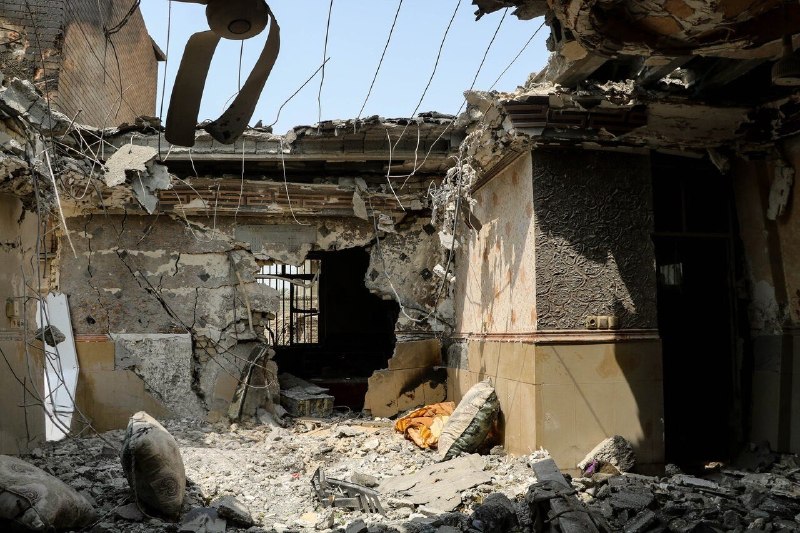
On 15 June 2026, the United States and Iran announced an initial agreement to extend their shaky ceasefire and reopen the Strait of Hormuz to commercial traffic, according to a France 24 report published at 14:14 UTC. The framework is narrow: it preserves the pause in hostilities that has held, in fits and starts, since the most recent escalation, and it commits both sides to restoring freedom of navigation through the waterway that carries a significant share of the world's seaborne oil. Everything else — the nuclear file, the sanctions architecture, the regional proxy question — sits outside the four corners of the document, in language the two governments have so far refused to repeat on the record.
What is on the table is therefore less than the headlines suggest, and more than the sceptics allow. The deal buys time. It does not settle the underlying dispute. Reading it honestly means holding both observations at once: a diplomatic mechanism has, against the odds, produced a written outcome; and the mechanism has not been stress-tested against the issues that brought the parties to the brink in the first place. This publication finds that the extension is best understood as a holding action that stabilises a chokepoint and postpones the hardest questions, not as the beginning of a settlement.
What the announcement actually contains
The France 24 dispatch from 15 June 2026 frames the agreement as a two-part construct: a ceasefire extension and a commitment to reopen the Strait of Hormuz. The first is procedural — a continuation of the existing pause, with associated deconfliction arrangements. The second is operational, and far more consequential for global energy markets and for the governments that depend on Hormuz transit. Reopening the strait is not, in itself, a concession; it is a restoration of a condition that both parties have an interest in maintaining. The question is whether the verification, escort, and inspection arrangements attached to that reopening are robust enough to deter a future incident, and durable enough to survive a domestic political shock in either capital.
Reactions on the day tell their own story. The UN human rights chief welcomed the agreement and urged maximum restraint from all parties, according to a Telegram post from The Cradle at 14:04 UTC. The President's of the European Council issued a parallel statement of support, expressing the hope that the deal "will end the war and allow the resumption of freedom of navigation in the Strait," per a Telegram post from Al-Alam Arabic at 13:16 UTC. The European endorsement matters: Brussels is the largest external customer for Gulf energy and the principal diplomatic counter-weight to Washington on the Iranian file, and its public alignment gives the framework a degree of multilateral cover that the prior rounds of talks conspicuously lacked.
The regional reading: Lebanon, Israel, and the missing middle
The France 24 report flags "mixed reactions" in Lebanon and Israel. That phrasing does a lot of work. In Lebanon, the political class has spent the past several months performing a careful double act: condemning Israeli operations in the south while declining to break with the broader de-escalation track. A reopened strait lowers the cost of fuel imports and reduces the pressure on a财政 already living on emergency lines of credit. That is, in real terms, a tangible benefit. But Lebanese officials are also aware that a US-Iran deal done over their heads, without a parallel track on the Israeli border, locks in the strategic status quo in which Lebanon remains a theatre of someone else's confrontation.
In Israel, the calculation runs the other way. The Israeli security establishment has long treated Iran's regional posture — the network of allied capabilities along the northern border and beyond — as the principal strategic threat, and has been sceptical of diplomatic instruments that it reads as deferring that threat. The mixed-reactions framing captures the position of a public that wants the strait open and the sanctions enforced, but does not want to see the Iranian file resolved in a way that trades away Israeli red lines. The two audiences are not the same, and a deal that satisfies Beirut's energy accountants will not necessarily satisfy Tel Aviv's strategic planners.
This is the under-reported part of the announcement. The press coverage, much of it focused on oil futures and shipping insurance, treats the deal as if it were primarily an energy story. It is also a regional-security story, and the regional-security story is the one with the longer fuse.
Why a deal that solves little still matters
The structural frame here is unglamorous but important. When two governments that have come within a measurable distance of open conflict agree, in writing, to extend a ceasefire and reopen a shared piece of infrastructure, they do three things at once. They create a verifiable record of restraint. They put a price on returning to hostilities — a price measured in the credibility cost of tearing up a signed document. And they give the third parties with skin in the game — Gulf producers, European buyers, Chinese and Indian importers — something they can plan around, even if only for the next ninety days.
The pattern is familiar. Ceasefire extensions and partial reopenings are how the harder negotiations get started. They lower the temperature just enough that the technical talks — on sanctions waivers, on escrow arrangements, on inspection regimes, on the sequencing of any prisoner or asset exchanges — can proceed without the participants having to perform toughness for a domestic audience every forty-eight hours. None of that work is visible in the 15 June announcement. All of it is enabled by it.
The pattern is also familiar in a more uncomfortable sense. Holding actions are vulnerable to single events. A maritime incident in the strait, a kinetic episode on the Israeli-Lebanese border, a parliamentary manoeuvre in Tehran, a court ruling in Washington — any of these can collapse the framework before the technical track has produced a single deliverable. The architecture of restraint is, by design, brittle. That is its weakness, and it is also the reason the European and UN endorsements of 15 June matter: the more external actors who have publicly attached their credibility to the arrangement, the higher the political cost of allowing it to fail.
What is not in the deal — and what that means for the next round
Reading the announcement closely, the conspicuous omissions are themselves a kind of information. The deal does not, on the evidence available, address the nuclear file. It does not commit either side to a specific sanctions relief schedule. It does not mention the regional proxy question, the missile programmes, or the prisoner files. Each of these is, in diplomatic practice, deliberately left for a subsequent phase — but each is also the kind of issue that, in the absence of progress, will be cited by domestic opponents on both sides as evidence that the other party is negotiating in bad faith.
This is the part the wire coverage tends to smooth over. A framework that defers the hardest questions is a framework whose durability depends on the willingness of both governments to keep the deferred questions deferred, even as their own political clocks tick. The history of US-Iran negotiations is, to put it gently, not encouraging on this point. The incentives to demonstrate toughness, especially in a US election cycle and an Iranian political calendar that has its own internal rhythms, are real and structural. The deal is an opportunity. It is not, by itself, a resolution.
The other omission worth noting is verification. The announcement speaks of reopening the strait, but the public reporting on 15 June does not detail the escort, inspection, or notification arrangements that would govern that reopening. The Cradle's reporting and the European Council statement both reference the resumption of freedom of navigation in the abstract. Freedom of navigation in the abstract is a phrase that lawyers can argue about for years. The operational meaning — which vessels, under whose flag, with what cargo, subject to whose inspection — is the question that will determine whether the next three months are quiet or not.
The forward view
The honest read of 15 June 2026 is this: Washington and Tehran have produced a written outcome where, two weeks ago, the most plausible outcome was a kinetic one. That is not a small thing. The reopening of the Strait of Hormuz, if it holds, stabilises a chokepoint on which European and Asian energy security depend. The ceasefire extension, if it holds, creates the political space for the harder talks that neither side is yet prepared to conduct in public.
The risk is that the framework holds long enough to be cited as evidence of progress, but not long enough to deliver progress. The mixed reactions in Lebanon and Israel, the conspicuous silence of the announcement on the nuclear and sanctions files, and the structural incentives on both sides to perform toughness all point in the same direction. The next ninety days will be measured less by communiqués than by whether the strait remains open in practice, whether the technical track produces anything verifiable, and whether the third parties who have attached themselves to the framework are willing to pay a real price to keep it alive.
For readers tracking the file, the practical takeaway is that the headline of 15 June is real but partial. The deal exists. The settlement does not. The work that would convert one into the other has not yet begun, and the diplomatic calendar is unforgiving. Watch the strait, watch the technical track, and watch the domestic political clocks. The next signal will come from one of those three places, not from another joint statement.
This piece was filed in line with Monexus's standing practice of reading Middle East diplomacy through both Western wire coverage and regional outlets in their own voice. The Cradle and Al-Alam Arabic were treated here as primary sources for the UN and European Council positions of 15 June 2026, and France 24 was used to anchor the broader framework and the regional-reaction framing.
Wire provenance
This editorial synthesis draws on the following public wire/social posts:
- https://t.me/thecradlemedia
- https://t.me/TheCradleMedia
- https://t.me/alalamarabic
Follow the event.
These dated source records provide context. They do not retrospectively verify this archive article.
Separate what the nuclear watchdog reported from what it could not determine after the June 2025 strikes.