The $80 Billion Bombing and the $300 Billion Reconstruction: Washington's Iran Paradox
A reported US-Iran preliminary agreement sent the Dow to a record close and crude lower. The arithmetic of bombing and rebuilding, however, is harder to swallow than the market reaction suggests.
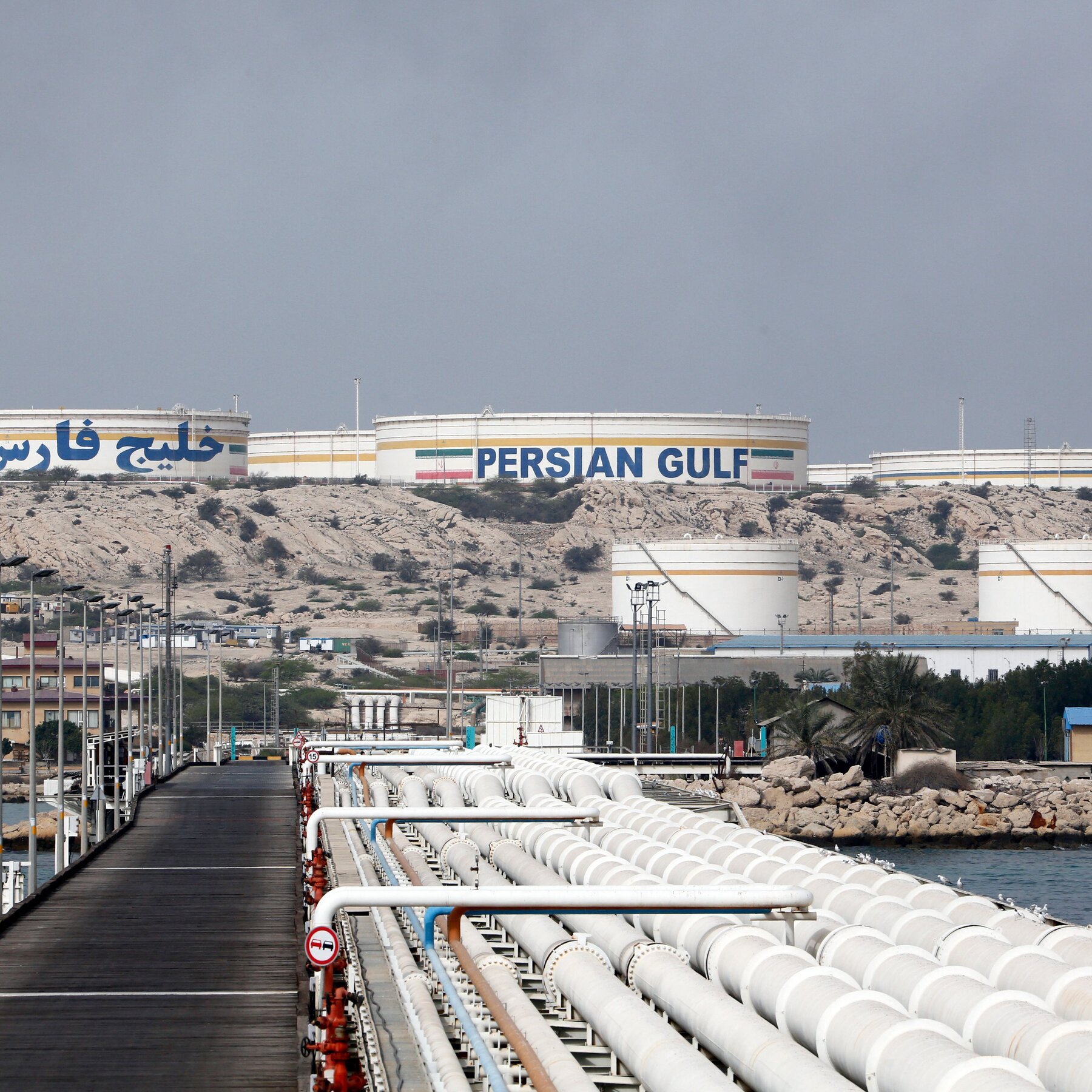
Wall Street did what Wall Street does on a relief rally. The Dow Jones Industrial Average closed at a record high on 15 June 2026 after a reported US-Iran preliminary agreement pulled crude oil prices lower and soothed the inflation fears that have nagged the market for months, according to Reuters. The framing on the tape is straightforward: a deal is better than a war, lower oil is better than higher oil, and the equity complex breathes out.
Look past the index level, though, and the arithmetic on offer is jarring. According to commentary circulating on the same day from the Sprinter Press account, the United States spent roughly $80 billion bombing Iran, only to arrive at a framework under which a $300 billion reconstruction fund — financed by a coalition of Gulf states — would help rebuild the country those strikes damaged. The accuracy of those headline figures remains the central question; the framing itself has already gone viral, and the political class in Washington will have to answer it. That tension — between the market's read of the deal and the taxpayer's read of the cost — is where this story actually lives.
The deal, as the market sees it
The Reuters report of 15 June 2026 is unambiguous on the directional read. Crude prices fell on the announcement, headline inflation expectations receded, and the major US equity indexes rallied into the close with the Dow finishing at a record. The mechanism is conventional: when a major oil-producing region becomes less likely to suffer a kinetic shock, the risk premium embedded in Brent and WTI compresses, and that compression flows through to transport, input costs, and consumer-facing margins. Index investors, in turn, price the path of least resistance, which on a day like this runs straight up.
The same Reuters report frames the document in question as a preliminary agreement — language that matters. A preliminary agreement is a basis for negotiation, not a settlement. It signals intent. It is, in plain terms, a promissory note that the parties are willing to keep talking, and the market is willing to discount it as if it will be honoured. That is, historically, where these trades get dangerous.
The arithmetic nobody is defending in public
The $80 billion cost figure attributed to the bombing campaign, and the $300 billion reconstruction fund attributed to a Gulf-backed facility, both circulate in the Sprinter Press thread on 15 June 2026 with the explicit framing that the United States destroyed what it now intends, in effect, to help finance the rebuilding of. The first number is presented as a wartime cost; the second as a post-war obligation routed through third-party states so the US Treasury does not appear on the cheque. The political alchemy is clever. Whether the alchemy is also factually accurate is precisely the part that the available reporting does not settle.
The Reuters wire covering the market move does not independently confirm either the $80 billion or the $300 billion figure. The two Sprinter Press posts — one raising the reconstruction question, the other juxtaposing the two dollar amounts as a single taxpayer-realisation moment — are the only items in the present thread context that put numbers to the cost ledger. This publication flags that gap plainly: the political point is doing more work than the arithmetic right now, and a serious reader should treat both totals as plausible-but-unverified until audited US budget data, Gulf state finance ministry disclosures, or an official text of the preliminary agreement confirms them.
The geopolitical geometry behind the Gulf cheque
A reconstruction fund "financed by a coalition of Gulf countries," as described in the second Sprinter Press post of 15 June 2026, is itself a story. The Gulf states that have historically underwritten reconstruction efforts in conflict zones — Saudi Arabia, the UAE, Qatar, Kuwait — are not neutral philanthropists. They are regional powers with views on the order that follows a US-Iran deal, and their willingness to put money on the table is itself a form of diplomatic leverage. A fund of the size discussed effectively makes the Gulf states the bank of last resort for Iran's post-war recovery, which means Iran owes the Gulf, the Gulf has standing at the table, and the United States gets the political cover of a war-to-reconstruction handoff without the line-item on its own books.
That geometry has a precedent, and it is not flattering. The post-2003 Iraq reconstruction was supposed to be financed, in significant part, by Iraqi oil revenue and Gulf partners; the actual cost overruns, contractor failures, and security expenses fell heavily on the US taxpayer anyway, and the political disappointment was sharp. The structure being described for Iran is, in plain terms, a more sophisticated version of the same bet: keep the cheque off the Treasury's page, and the political backlash when the bill comes due is diffused across multiple capitals and multiple ledgers. Whether that diffuses accountability or merely delays it is the open question.
Stakes: who wins, who loses, and on what clock
The near-term winner is the equity market, which has discounted a peace dividend. The medium-term winners, if the structure holds, are the Gulf finance ministries that become the creditors of first resort to a rebuilding Iranian economy, and the Western oil majors that retain access to a less-sanctioned Iranian market without having to take the political heat of unilateral re-engagement. The losers, on the same clock, are the American taxpayers who financed the kinetic phase and will not be the principal beneficiaries of the reconstruction phase, and the Iranian public, whose infrastructure was damaged in the first place.
The real risk is timing. Preliminary agreements have a documented habit of collapsing between announcement and implementation, and the gap between "the Dow closed at a record" and "the fund is operational" is where the trade will live or die. If the deal holds, the relief rally looks prescient. If it does not, the same risk premium that compressed on 15 June 2026 re-inflates, and the market's mood swings back toward the scenario the rally had priced out.
What we do not yet know
The sources available for this article do not name the counterparties to the preliminary agreement, do not publish its text, and do not confirm either the $80 billion wartime cost or the $300 billion reconstruction figure. Reuters confirms the market reaction and the directional framing; the Sprinter Press posts provide the political juxtaposition that has gone viral. The combined picture supports a thesis — that Washington's cost-benefit arithmetic on Iran is straining public credibility — but does not yet support a precise dollar ledger. That ledger, when it arrives, will be the document that determines whether the 15 June 2026 rally is remembered as the start of a new regional architecture or as another speculative peak.
— Monexus covered the market reaction as a market reaction. The structural question — who pays for what, and on whose books — is the one the wires have so far declined to answer.
Wire provenance
This editorial synthesis draws on the following public wire/social posts:
- https://reut.rs/3SJiAAn
- https://t.me/s/sprinterpress
- https://t.me/s/sprinterpress