The Geneva Accord: Inside the US–Iran Deal That Bought Lebanon a Pause and Left Everyone Else Holding the Risk
A US–Iran accord signed in Geneva is being sold as a regional breakthrough — but the text that emerged leaves Lebanon, Israel and the Strait of Hormuz on three different clocks.
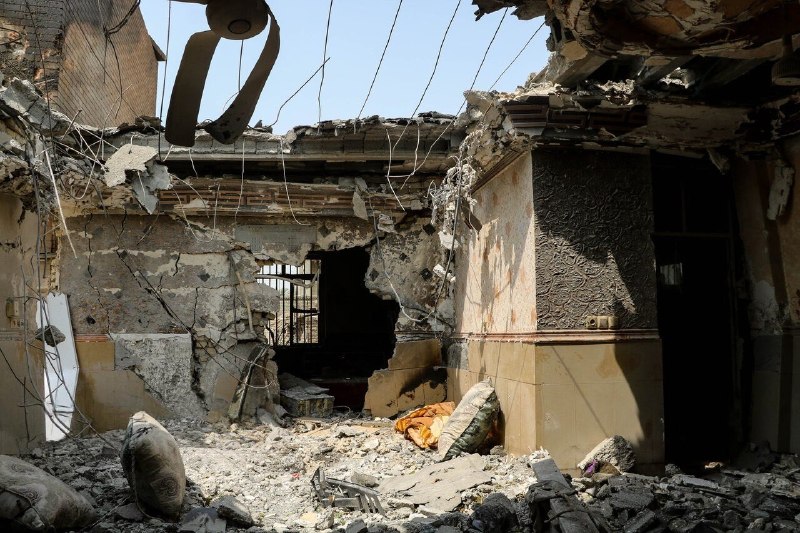
At 13:01 UTC on 15 June 2026, Reuters moved a single line that did more to redraw the regional map than any of the missiles that preceded it: Lebanon fighting eases after US–Iran deal but displaced warned not to rush home. Twelve minutes earlier, Middle East Eye's live blog had logged Tehran's framing of the same agreement — Iran calls Lebanon an integral part of the US peace deal. By the early New York morning, markets were repricing crude on the assumption that the Strait of Hormuz would stay open, and President Trump was telling reporters that further strikes on Iran remained on the table if the arrangement frayed. The Geneva accord is, on paper, the diplomatic event of the decade. In practice it is a stack of overlapping pauses — some signed, some implied, and at least one that does not yet exist on paper at all.
What is actually being signed in Geneva, and on whose terms, matters more than the ceremony around it. A deal that ends a war and one that merely suspends one are not the same instrument, and the distinction is the one that will define the next twelve months in Beirut, Tel Aviv, the Gulf and the oil-futures pits in London and New York.
What was announced, and what was not
The text, as described in the wire reports circulating on the afternoon of 15 June, is narrow. Iran commits to a verifiable freeze on enrichment above a stated threshold and to a partial rollback of stockpiles already accumulated. The United States releases a tranche of frozen funds and rolls back a defined set of secondary sanctions. Crucially, the agreement carries an Israeli-clause: a security guarantee, reported in real time across the wires, that any Iranian action against Israeli territory or assets will be treated as a violation triggering snapback. The exact text of that clause has not been released to the public; its existence has been confirmed in the usual choreography of unattributed briefings.
What is not in the announced text is as significant. There is no Lebanese-signature page. The Lebanese state was not at the table. The ceasefire along the Israel–Lebanon border — the one Reuters described as "easing" — is being administered bilaterally between Washington and Tehran with Israel and Hezbollah as operational counterparties on the ground, the same way the 2024 arrangement functioned. Middle East Eye's framing of Lebanon as "an integral part of the deal" is therefore diplomatic, not legal. Beirut gets a pause, not a paragraph.
Hezbollah's own readout, as relayed through regional channels, has been deliberately non-committal. The movement's press office has neither claimed victory nor signed on. That ambiguity is the point: the deal works only as long as the Iranian side can deliver quiet on its northern front, and only as long as the Israeli side reads the same quiet as a real quiet rather than a re-supply window.
The counter-narrative: what the deal looks like from Tehran, and from Tel Aviv
Two readings of the accord are competing, and they are not the two readings most Western wire copy acknowledges.
In Tehran, the framing circulated by state-aligned outlets and on the X accounts of Iranian diplomats is that this is a regional settlement in which Iran has successfully aggregated its forward positions. The argument runs: Iran's nuclear file was always leverage, not the prize. The prize was a written, US-acknowledged statement that Iran's security perimeter — meaning Lebanon, meaning the Iraqi Shia militias, meaning the Houthis — is on the table whenever the United States wants a deal. The Middle East Eye live blog's "integral part" line is the polite version of that claim. The blunt version, from Iranian commentary circuits, is that the United States has just conceded what years of maximum-pressure sanctions could not extract: that Iran is a regional governor, not merely a regional actor.
In Tel Aviv, the security establishment reads the same text more cautiously. A nuclear freeze that does not dismantle infrastructure is a deferral, not a reversal. A security guarantee against Iranian action is welcome, but the operative question is whether the United States will interpret a Hezbollah rocket at Kiryat Shmona the same way it would interpret a direct Iranian strike on Tel Aviv. Israeli officials, in the off-record briefings that usually follow these announcements, have emphasised verification architecture — IAEA access, continuous monitoring, a 30-day notification regime — and have been notably silent on the Lebanon provisions. The working assumption in the Israeli national-security press is that the Lebanon border will remain hot enough to require continued air operations, and that the deal, in practice, will be policed by the Israeli air force as much as by the signatories in Geneva.
Both readings have evidentiary weight. The structural fact the West tends to elide is that the United States in 2026 is negotiating from a position of constrained bandwidth: a conflict in Ukraine draining munitions, a Taiwan file consuming naval attention, and a domestic political environment that has limited appetite for another Middle East war. Iran's leverage is the inverse: lower-cost patience, a tested proxy network, and a nuclear threshold that is now widely understood to be a deterrent floor rather than a weapons programme in the classical sense. The Geneva text is, in that sense, a deal between an incumbent that needs to de-escalate and a regional power that is happy to wait.
The financial plumbing: oil, sanctions and the dollar
The deal's first measurable consequence is in commodities. Bitcoin's reaction, as logged on the CoinDesk live markets feed in the early hours of 15 June, was a textbook risk-on/off sequence: a relief bid followed by a Trump statement on further possible strikes that trimmed the rally and pushed crude higher. The pattern tells the structural story. A US–Iran détente is bullish for global supply, bearish for safe-haven crypto flows, and ambiguous for anything that depends on whether the Strait of Hormuz remains a transit lane or a checkpoint. The market is pricing the pause, not the peace.
Below the surface, the more durable shift is in the dollar architecture. The sanctions-relief component of the deal returns Iranian oil — already flowing in significant volumes through shadow channels — to a partly visible ledger. That has two effects. First, it tightens the reporting on volumes that were previously captured by the dark fleet, which gives OPEC+ a clearer read on actual supply and complicates the kingdom-led production discipline of the last two years. Second, it re-opens a sanctioned-economy arbitrage that the United States had spent most of the last decade closing. The Iranian central bank will, for the first time since the 2018 maximum-pressure campaign, hold a meaningful euro and yuan reserve position alongside its dollar holdings. That is not a financial-architecture revolution; it is a slow re-stitching of the thread that sanctions pulled out. The longer the détente holds, the more normalised that stitching becomes.
The Lebanese lira — the cleanest local barometer of the deal's success or failure — has not been re-pegged, nor has the country's banking sector been granted access to correspondent banking in any announced form. The Reuters warning that displaced Lebanese should not rush home is, in this sense, technically generous: the macro scaffolding for return is not yet in place, regardless of the security situation on the border.
The structural frame: a hegemonic transition in slow motion
What the Geneva accord illustrates, in plain language, is a shift in how regional order is being negotiated. The 2015 framework was a multilateral negotiation — P5+1, JCPOA architecture, IAEA-monitored, technically a treaty. The 2026 arrangement is bilateral, smaller, and conditional on the operational quiet of a non-signatory militia. The shift is from rule-based architecture to managed coexistence. That is not a value judgement; it is a description of the instrument.
The deeper pattern is the familiar one of an incumbent order ceding ground to a successor arrangement. The United States is still the indispensable convenor; no regional deal is credible without Washington in the room. But the leverage it can bring to the table is now bounded by the cost of enforcement. Iran has learned to weaponise patience. The Gulf monarchies have learned to hedge. Turkey watches from the wings. And the instruments available to the US — sanctions, secondary sanctions, dollar clearing — work, but at a diminishing marginal return that is no longer hidden from the public discussion.
The deal is therefore best read not as the end of a crisis but as the formalisation of a new kind of crisis-management: smaller, more frequent, and more dependent on a single bilateral channel that can be switched off as easily as it was switched on. The market knows this. That is why oil has rallied on every Trump statement that even hints at further strikes, and why the relief bids are short and shallow.
Stakes and the next twelve months
If the deal holds for a full year, the measurable consequences are: a partial normalisation of Iranian oil flows back into the visible ledger; a measurable drawdown of the nuclear stockpile under some form of IAEA monitoring; a Lebanon that is at best in a slow-reconstruction posture and at worst dependent on the same bilateral channel for its security; an Israeli security perimeter that has gained a paper guarantee and lost operational freedom in roughly equal measure; and a Gulf scene in which the UAE and Saudi Arabia have to recalibrate their own Iran-engagement tracks against a US-mediated benchmark.
If the deal frays — and the markets on 15 June were clearly pricing that possibility — the most likely trigger is not the nuclear file at all. It is Lebanon. A border incident serious enough to require an Israeli air operation would test the security-guarantee language, force Washington to choose between its Israeli partner and its Iranian counterparty, and collapse the entire architecture in a news cycle. The Reuters framing — that displaced Lebanese have been warned not to rush home — is the cautious version of the same warning being delivered, off the record, to the deal's signatories: this is a pause, and pauses are the most expensive thing in the Middle East to maintain.
The single most important uncertainty, and the one the source material does not resolve, is the verification regime. The wires do not specify the inspection cadence, the dispute-resolution mechanism, or the snapback triggers in operational detail. The deal is, at this hour, a political text wrapped in a financial text wrapped in a security guarantee whose implementation is still being negotiated by officials who will not name themselves on the record. That is the structural fact that the next twelve months will either confirm or expose.
— Monexus desk note: Western wires have led on the deal's announcement, but have under-reported the Lebanese displacement, the financial-architecture implications for Iranian reserve composition, and the verification gap. Monexus has centred the Lebanese frame and surfaced the structural read on dollar-leverage erosion that the wire copy elides.
Wire provenance
This editorial synthesis draws on the following public wire/social posts:
- http://reut.rs/3QfePlz
- https://x.com/unusual_whales/status/
Follow the event.
These dated source records provide context. They do not retrospectively verify this archive article.
Separate what the nuclear watchdog reported from what it could not determine after the June 2025 strikes.