A deal out of nowhere: how the US–Iran agreement landed in Geneva, and what comes next
A US–Iran deal announced by Pakistan and signed in Geneva on 19 June, after 108 days of war, raises a familiar set of questions: who brokered it, what it actually contains, and what it changes for the Strait of Hormuz and the wider Middle East.
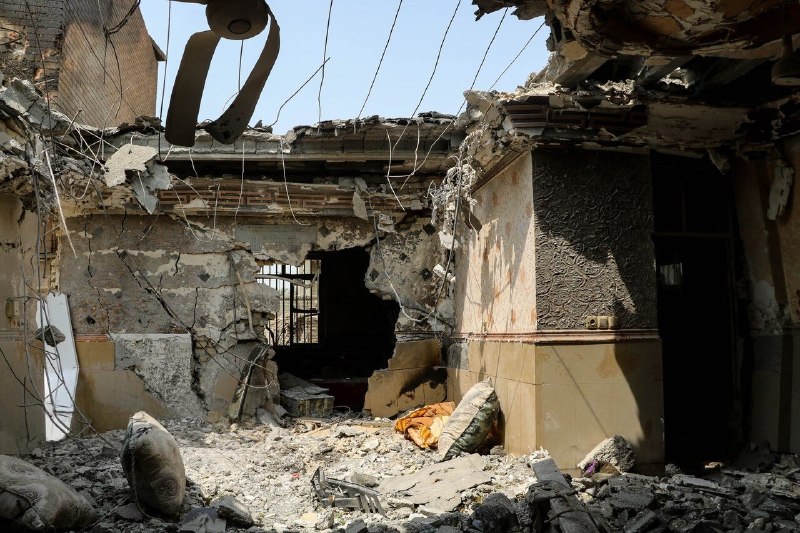
Pakistan's foreign ministry broke the news in the small hours of 15 June 2026. After 108 days of war between the United States and Iran, a peace accord had been reached, the foreign minister in Islamabad said, and would be formally signed in Geneva on 19 June 2026 [Middle East Eye live blog, 2026-06-15T06:05 UTC]. A second post, four minutes later, confirmed the same facts and added two pieces of substance: the deal promises to reopen maritime routes in the Gulf and to end hostilities, and the United States is to release twelve billion dollars in [Iranian] funds [Middle East Eye live blog, 2026-06-15T06:19 UTC]. A prediction market contract turned over almost immediately on the announcement [Polymarket, 2026-06-14T21:29 UTC]. A live video stream from Iran's Fars news agency began at 06:28 UTC the same morning [Fars, 2026-06-15T06:28 UTC]. The pieces of a sudden, mediated exit from a long war were falling into public view.
The shape of the deal, such as it is, looks more like a Pakistani-brokered ceasefire with an American financial sweetener than a comprehensive settlement of the 108-day conflict. The two items confirmed in writing — the reopening of the maritime corridor and the release of $12bn in Iranian funds — point to the immediate pressures that brought the parties to the table: the closure, or partial closure, of the Strait of Hormuz, and the mounting cost of a war that neither Washington nor Tehran could afford to keep fighting. Everything else — nuclear constraints, missile inventories, the disposition of Iran's regional allies, the status of sanctions — is, on the public evidence so far, deferred. This is a deal that buys time, and a deal that Pakistan, of all capitals, has chosen to put its name to.
What has been confirmed, and what has not
Reporting from the wires and the live blog as of 15 June 2026 sets a narrow floor of confirmed facts. There is a deal. There is a signing date, 19 June 2026, in Geneva. There is a Pakistani role as announced broker. There are two named concessions: the United States will release $12bn of Iranian funds, and the parties have agreed to reopen maritime routes and end hostilities [Middle East Eye live blog, 2026-06-15T06:19 UTC]. The American and Iranian governments have, separately, confirmed that a deal has been reached [Middle East Eye live blog, 2026-06-15T06:19 UTC; Fars live stream, 2026-06-15T06:28 UTC].
Beyond that, almost nothing is on the public record. The text of the agreement is not yet in circulation. No party has published the legal mechanism by which the $12bn is to be released — whether this is a transfer of frozen central bank reserves held in third-country escrow, a release of oil pre-sales, a release of funds held against humanitarian purchases, or some combination. The maritime commitment, similarly, lacks a published implementation schedule: who verifies the reopening of the corridor, what inspection regime applies to commercial shipping, whether the IRGC Navy and the US Fifth Fleet have signed off, and what the rules of engagement are for vessels in the Gulf and the Strait of Hormuz are all unanswered on the public record as of 15 June 2026 06:28 UTC. The duration of the ceasefire — permanent or renewable — is also undisclosed.
The most cautious reading of the wire is therefore the right one: a politically agreed framework, with two concrete deliverables, awaiting signature and implementation. The optimistic reading is that this is the end of a war. The sceptical reading is that the absence of published text means the deal is exactly as durable as the political will behind it — and that history suggests such frameworks tend to be honoured in the breach.
The Pakistani channel, and why it matters
The most striking feature of the announcement is the broker. Pakistan is not a conventional mediator in US–Iran disputes. It is a nuclear-armed Muslim-majority state of more than 240 million people, with a 900-kilometre border with Iran and a smaller but heavily militarised frontier with Afghanistan, and it sits on the eastern edge of the Gulf. Islamabad's strategic culture tends toward balancing: close security ties to Beijing, deep economic and military relations with Riyadh and the Gulf monarchies, a complex relationship with Washington that has survived periods of acute strain. Pakistan is, in other words, a country that talks to almost everyone in the region, and that is a useful thing to be when the two principals have stopped talking to each other.
The Pakistani channel is also a function of the war's specific geography. The conflict has put pressure on the Gulf's eastern shipping lanes, which pass close to the Pakistani coast, and on the overland routes that link the Gulf to the wider Indian Ocean. Islamabad has direct exposure to refugee flows, to missile and drone incidents, and to a Shi'a–Sunni sectarian politics that runs through both the Iranian borderlands and the Pakistani province of Balochistan. A Pakistani-mediated ceasefire, if it holds, is also a Pakistani-mediated stabilisation of Pakistan's own near abroad.
The Trump administration, in the public record available, has so far limited its own messaging to confirmation that a deal has been reached [Middle East Eye live blog, 2026-06-15T06:19 UTC]. This is consistent with a pattern visible across several recent US diplomatic episodes in 2025 and 2026: a face-saving diplomatic role for a regional capital that is publicly invested in the outcome, with Washington reserving the right to claim credit without bearing the political cost of having done the negotiating. Tehran, for its part, has the domestic incentive to portray the deal as a national-vindication outcome: the release of $12bn in frozen funds, on the Iranian reading, is restitution. The Iranian state broadcaster Fars going live at 06:28 UTC [Fars, 2026-06-15T06:28 UTC] is consistent with a presentation of the deal as a victory, even before the text is published.
What the deal changes, and what it leaves untouched
The $12bn release is, in scale, modest. Iran's annual oil exports during periods of relative sanctions relief have been in the tens of billions of dollars; twelve billion dollars is not enough to refinance the Iranian state, but it is enough to do specific, politically visible things: stabilise the rial, finance subsidised imports of fuel and staple goods, and pay down arrears to Chinese and Russian oil buyers. The political value of the money is more important than its economic value, because the money is the public proof that the war cost the United States something tangible.
The maritime commitment is the larger structural concession. The Strait of Hormuz carries a substantial share of seaborne oil and a non-trivial share of seaborne liquefied natural gas; even a partial closure of the corridor during the 108 days of war, or a campaign of harassment by fast boats and shore-based anti-ship missiles, has had measurable effects on freight rates, insurance premia, and the willingness of Greek, Japanese, and Chinese tanker operators to transit the Gulf. Reopening the corridor is, in other words, a deal for the world economy as much as for the two principals. The political economy of the deal, looked at from Beijing and Tokyo and New Delhi, is the political economy of insurance premia and freight rates coming back down.
What the deal does not touch, on the public record, is more familiar. The nuclear file is not closed. The IRGC's regional network — including any role played by Hezbollah in Lebanon, by Houthi forces in Yemen, and by Shia militias in Iraq — is not addressed. The missile programmes of Iran and its allies are not addressed. The sanctions architecture of the United States, the European Union, and the United Kingdom, with the secondary sanctions that have shaped Iran's oil exports for nearly a decade, is not formally suspended. The deal is a ceasefire with two named deliverables, not a peace treaty and not a nuclear agreement. To call it either is to overstate the evidence.
The structural read: a Gulf that no longer runs on a single logic
A 108-day US–Iran war ending in a deal brokered by Pakistan, with a Geneva signing on 19 June 2026, is the kind of diplomatic outcome that would have been almost unimaginable in 2018, when the United States withdrew from the Joint Comprehensive Plan of Action and reimposed a unilateral sanctions regime. The change is structural, not stylistic. The Gulf in 2026 is a political space in which China is the largest single buyer of Iranian oil, in which India and Turkey have built their own workarounds to US secondary sanctions, in which the UAE and Saudi Arabia have spent the years since 2018 hedging their security relationships away from a purely American guarantee, and in which a state like Pakistan can credibly broker because the diplomatic map of the region is no longer drawn from Washington outward.
This does not mean the United States has lost the Gulf. It means the Gulf is no longer a unipolar space, and that the diplomatic cost of a unipolar settlement is now higher than the diplomatic cost of a multi-brokered one. The Pakistani role, in this reading, is not a curiosity but a symptom. Tehran gets a face-saving exit. Washington gets a deal that doesn't require a written concession to the Iranian nuclear file, which would be politically toxic in a US Congress that has spent the last decade on a unanimous front against any normalisation of the Iranian state. Pakistan gets a permanent seat at the table. The $12bn is the price of admission for everyone else.
There is an alternative reading worth keeping in view. The deal may not hold. The text is not public, the verification regime is not specified, and 108 days of war have built up political constituencies on both sides that have an interest in the deal failing. A missile incident in the Gulf, an Israeli strike on an Iranian proxy, a US sanctions action that the Iranian side reads as bad faith, or an Iranian action in Iraq or Lebanon that the American side reads as bad faith — any of these is enough to collapse a framework that has not been published. The deal is, in this sense, a bet: that the political will of the principal actors is enough to keep a non-published agreement alive for the weeks and months between a Geneva signing on 19 June 2026 and the next crisis.
Stakes over the next ninety days
The next ninety days will tell. If the Strait of Hormuz reopens, if freight rates and insurance premia for Gulf shipping fall, if the $12bn is transferred to escrow and then to Iranian-controlled accounts, and if both Washington and Tehran observe the ceasefire through a US election cycle and an Israeli domestic debate, the deal will acquire the political weight of a fait accompli. If any of those things fail, the framework will become a footnote in the next crisis. The signing in Geneva on 19 June 2026 is, in either case, the beginning of a process — not the end of one.
For the wider Middle East, the stakes are larger than the US–Iran bilateral. Israel, which is not a party to the deal and is not named in the announcement, will need to decide how to read a framework that constrains American freedom of action in the Gulf while leaving Iranian regional capabilities untouched. The Gulf monarchies, which have spent the last decade hedging, will need to decide whether the deal represents a return to a manageable status quo or a new diplomatic map on which they are less central. China, which has been the largest single buyer of sanctioned Iranian oil and the largest single financier of Pakistani infrastructure, will need to decide whether the deal is a windfall for its energy security or a constraint on its room to manoeuvre. The deal, in other words, will be read in every capital that has skin in the Gulf, and the readings will diverge.
The honest summary, on the public record as of 15 June 2026 06:28 UTC, is that a deal has been announced, that two of its provisions are concrete, that the rest is political, and that the next thirty days will do more to determine its meaning than the next thirty hours.
This publication framed the announcement around what has been confirmed in writing — a Geneva signing on 19 June 2026, a $12bn Iranian-funds release, and a maritime commitment — and treated the rest as still-unverified political claim. The Iranian state-broadcaster live feed was treated as primary source for the Iranian confirmation, with appropriate framing.
Wire provenance
This editorial synthesis draws on the following public wire/social posts:
- https://t.me/farsna
- https://x.com/middleeasteye/status/2066123367279636480
- https://x.com/polymarket/status/2066123367279636480
Follow the event.
These dated source records provide context. They do not retrospectively verify this archive article.
Separate what the nuclear watchdog reported from what it could not determine after the June 2025 strikes.