A Pakistan-mediated handshake: what the US-Iran memorandum actually changes
A surprise memorandum announced via Islamabad pledges an immediate end to military operations and a reopened Hormuz — but the legal mechanics, the verification regime, and the price of the silence remain contested.
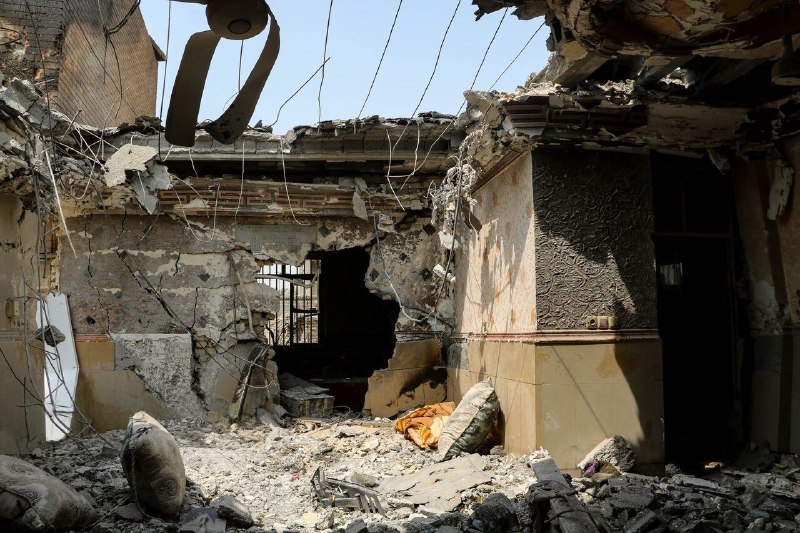
The announcement landed in the oddest possible channel. On the morning of 14 June 2026, it was Islamabad, not Washington or any of the Gulf capitals that have hosted the back-channels of recent decades, that put its name to a memorandum of understanding between the United States and the Islamic Republic of Iran. Pakistan's foreign office described the text as committing both sides to an "immediate and permanent" end to military operations, with the Strait of Hormuz — through which a significant share of seaborne crude transits each day — to be reopened to commercial shipping as soon as the document is signed. By the next trading session in London, the market had already priced the headline. By the next day in Washington, the harder questions were being asked.
This is what we know, what we don't, and what the shape of the deal tells us about the diplomatic geography of 2026.
The text, as it has been described
Reporting from FRANCE 24 on 15 June 2026 characterises the memorandum as a framework rather than a treaty. It includes the mutual halt to military operations, the Hormuz reopening, and a schedule for follow-on negotiations on the issues that have poisoned the relationship for the better part of two decades — Iran's nuclear programme, its missile inventory, the regional armed network, and the sanctions architecture that has built up around the banking, oil, and metals sectors. France 24's account identifies a sequence: implementation first, with the military stand-down binding the moment the document is signed, and a negotiation track opening immediately afterwards to handle the political and economic file.
Two of the mechanism's features deserve attention because they will determine whether it lasts. The first is the verification question. The deal is described in summary, not yet published text, and the only public accounting of its clauses has come through mediator-led readouts and presidential social-media posts. The second is the sequencing: the military track moves first, the economic track follows. That ordering is the opposite of the 2015 Joint Plan of Action architecture, in which sanctions relief was the visible sweetener that kept negotiators at the table while the technical nuclear file was worked through. Inverting the order tells the reader where each side's leverage currently sits. The party that is most afraid of an accidental escalation is the one that has conceded the priority of quiet over money.
Reporting from the BBC on the evening of 14 June 2026 confirms the Hormuz component and adds the detail that US President Donald Trump has publicly described the waterway as opening to all shipping "immediately after deal is signed". That language is itself a negotiating signal. A waterway closed to all is a closure the world economy notices within hours. A waterway that reopens to all is a global public good restored. The two framings differ by exactly the width of the Iranian-flagged tanker fleet.
Why Pakistan, and why now
The choice of Islamabad as the public face of the mediation is the most under-discussed element of the announcement, and probably the most consequential. Pakistan is a nuclear-armed state of more than two hundred million people that shares a long, porous border with Iran and a shorter, far more violent one with Afghanistan. It is a country whose civilian government has spent the last two years navigating an open rupture with the Pakistani Taliban in Khyber Pakhtunkhwa, a balance-of-payments crisis that has only recently eased under an IMF programme, and a relationship with Beijing that runs through the China-Pakistan Economic Corridor and a deepening of defence-industrial ties. It is also a country that has, since 2023, hosted multiple rounds of discreet talks between Saudi Arabia and Iran, between the Taliban government in Kabul and Western envoys, and between Tehran and the Afghan caretaker administration on water-sharing disputes.
In other words, Pakistan is one of the very few national capitals in the wider region that talks regularly to everyone. The decision to put the Pakistani foreign ministry's name on the announcement is therefore a piece of diplomatic stage-management. It tells Tehran that the document has an Islamic-country imprimatur that Gulf Arab mediation would not have provided. It tells Washington that the channel is outside the architecture of the 2015 era, when the talks sat in European hotels under P5+1 management. And it tells the wider audience that the US and Iran have both, in effect, agreed to de-centre the European and Russian intermediaries who have historically brokered their interactions. The question of who the European Union, the United Kingdom, France, Germany, and Russia are in this picture is a question the memorandum, as described, does not answer.
The energy market read
The most concrete evidence of the announcement's impact is in the price tape. BBC reporting of 14 June 2026 records that oil prices fell sharply after Pakistan's announcement, with the move concentrated in the front-month Brent contract. A 24-hour move of that size, in a market of this liquidity, is the cleanest possible signal that a non-trivial number of large commercial participants — refiners, traders, and freight desks — took the announcement at face value and concluded that the probability of a Hormuz disruption has fallen.
It is worth being precise about what the price move does and does not prove. It proves that the market believed the text as described. It does not prove that the text will be honoured in operation. The history of the Hormuz file in the last decade is a history of moments in which the waterway was declared open, declared closed, declared open again, and physically narrowed by harassment of commercial shipping. A memorandum that does not name a verification regime, that has not been published in full, and that relies on a third-party readout is a memorandum whose price effect can be reversed inside a single trading session if the next item of news is an incident at sea. The bull case for the deal, in other words, is also the bear case against it: the architecture is light.
What the wire consensus hides
There is a counter-narrative worth holding in view, and it does not come from Tehran or from Washington's political opposition. It comes from the structure of the announcement itself. The memorandum is described in mediator language and presidential language. It has not been published. It has not been submitted to the United Nations Security Council, which is the customary venue for instruments that bind sovereign conduct at this level. The Iranian foreign minister has not, in the public reporting available at the time of writing, confirmed every clause attributed to the document. The US State Department has not published a fact-sheet. The International Atomic Energy Agency has not been asked to comment on whether the negotiation track includes the monitoring arrangements that have been the central object of dispute for the better part of a generation.
This publication's reading is that the deal, as announced, is real but partial. It is real in the sense that two governments have put their names to language committing them to stop shooting at each other, and that the price of Hormuz oil has moved on the announcement, and that the public postures of the principals are aligned with the mediator's account. It is partial in the sense that the document is not yet in the public domain, that the verification architecture is not yet specified, and that the political file — the file that has killed the previous attempts at a durable settlement — has been deferred to a follow-on track whose own architecture is itself the object of negotiation.
The history of US-Iran rapprochement is, almost without exception, a history of the technical and the political moving on different clocks. The technical track produces papers that are precise, dated, and verifiable. The political track produces understandings that are robust against the next news cycle only if the leaders of both sides can carry their domestic audiences. A deal that opens with the technical track deferred to a later phase is a deal that has, in this publication's reading, agreed to begin at the second-hardest part of the problem rather than the first.
The structural frame, in plain language
The most honest description of what we are watching is a regional order in transition. The old architecture — US primacy over Gulf security, the petrodollar recycling system that ran through it, the Israel-Saudi-Iran triangle as the dominant frame for Middle Eastern security — has been fraying for the better part of a decade. The new architecture is harder to read because it has not yet been written. The countries that are writing it are the ones that can talk to everyone: Pakistan, Oman, Qatar, China, Russia, and to a more limited extent Turkey and Egypt. The countries that wrote the last one — the United States, the United Kingdom, France, and the conservative Arab monarchies of the Gulf — are still on the page, but they are not the only hands on the pen.
That is the context in which a Pakistani-issued memorandum announcing an end to US-Iran military operations makes sense. It is not a return to the 2015 arrangement. It is not a cold-peace settlement in the manner of the late 1990s. It is a holding action, agreed between two governments that have both concluded that an accidental war is the worst of the available outcomes, brokered by a third government that has the relationships to make the holding action stick for long enough to begin the harder conversations. Whether those conversations will produce a durable political settlement is a question for a later article. For now, the price of oil has fallen, the warships have been told to stand down, and the text of the deal is the property of the mediator, not the public. That is a beginning. It is not an ending.
— Monexus desk note: wire reporting on the memorandum has converged on the mediator's framing because the text has not been published; the Iranian and US official readouts of the document's specific clauses are still pending at the time of writing, and the verification architecture is the single most important unknown.
Wire provenance
This editorial synthesis draws on the following public wire/social posts:
- https://x.com/unusual_whales/status/
- https://en.wikipedia.org/wiki/Strait_of_Hormuz