US and Iran announce peace accord, with formal signing set for 19 June in Switzerland
Pakistan's prime minister confirms a US-Iran peace agreement has been reached, with a formal signing ceremony scheduled for 19 June in Switzerland, though the deal's substance remains under negotiation across multiple fronts.
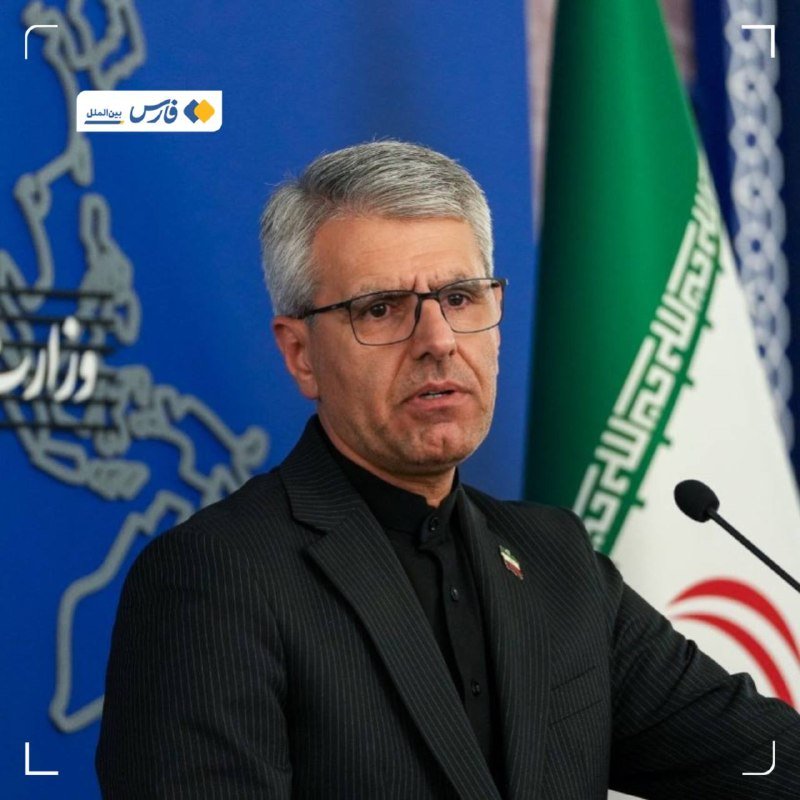
Pakistan's prime minister confirmed on the morning of 15 June 2026 that a peace agreement between the United States and Iran has been reached, with a formal signing ceremony scheduled for 19 June in Switzerland, according to a live blog carried by Middle East Eye at 06:18 UTC. The announcement lands on President Donald Trump's 80th birthday and comes hours after a draft memorandum of understanding was published by Iran's Mehr News Agency, outlining what Iranian negotiators describe as 14 points spanning the war, the nuclear file, and the Strait of Hormuz.
The wire of the day is dense but the spine is simple: a US-Iran understanding has been declared, the substance of that understanding is being contested in real time, and the surrounding powers — Israel, the E3, and the Gulf — are recalibrating their positions before any signatures are committed. The next 96 hours will determine whether this is a settlement or a prelude to a harder phase.
What has been agreed, in public
The most concrete public claim comes from the Iranian analyst Ali Abuali, writing on his English-language Telegram channel at 06:12 UTC on 15 June 2026. He lays out three core issues on which the parties have, in his reading, aligned. First, the Strait of Hormuz — a chokepoint through which a substantial share of seaborne oil passes — "will indeed open/has opened," with the Iranian regime beginning to make the concessions that reopening implies. Second, a comprehensive cessation of hostilities "on all fronts." Third, a sequenced arrangement on the nuclear file in which Iranian commitments are paired with sanctions relief.
The E3 — France, the United Kingdom, Germany — plus Italy signalled willingness to move on sanctions in a joint statement published on X at 05:47 UTC on 15 June 2026 by the Sprinter Press account. The four governments said they were "ready to lift related sanctions in response to clear and verifiable steps by Iran regarding its nuclear program," and welcomed the broader diplomatic process. That formulation is significant: it is the first time since the collapse of the 2015 framework's successor negotiations that the European trio has publicly conditioned relief on verifiable Iranian steps in language this close to Tehran's own.
The 14-point draft
The draft memorandum, circulated by Mehr News and summarised in Russian by the Telegram channel Zvezda News at 05:22 UTC on 15 June 2026, lists 14 points. Among them: a complete and immediate cessation of war on all fronts; a framework on the nuclear program that pairs rollback with sanctions relief; and provisions tied to the Strait of Hormuz. The text is preliminary. Several of the 14 points are described in summary rather than in operative legal language, and the document has not been jointly issued by Washington and Tehran. It is, for now, an Iranian-published draft that other parties are reacting to.
The gap between "a draft has been published" and "a treaty is being signed on 19 June" is the gap the next four days must close.
The Israeli reading
Israel's strategic community is not celebrating. An analysis circulated in Hebrew on the Abuali Express Telegram channel at 05:55 UTC on 15 June 2026 identifies three problems, from an Israeli vantage point, that the emerging arrangement creates. The argument, as summarised in the channel's English mirror, is that the agreement as currently framed narrows Israel's room for manoeuvre on the Iranian nuclear file, on the northern front with Hezbollah, and on the broader regional posture Tehran has built over the past two years. The piece notes that the announcement coincides with President Trump's 80th birthday, and frames the timing as a political window that shaped the deal's contours. Israeli outlets have not, as of the time of writing, been included in the thread's reporting; the analysis above is the on-the-day Israeli-flavored read, not a government statement.
For a country that has spent two decades arguing that the Iranian nuclear file cannot be resolved by arms-control architecture alone, any arrangement that lifts sanctions in exchange for what is, at this distance, a partial rollback will be read in Jerusalem as a ceiling rather than a floor.
E3 alignment and the verification problem
The E3-plus-Italy statement is the diplomatic infrastructure on which any sanctions relief will rest. The European position has historically demanded verifiable, sustained rollback of Iranian enrichment capacity and a credible answer on possible military dimensions. The 15 June statement does not declare those conditions met. It declares the four governments "ready to lift related sanctions in response to clear and verifiable steps" — language that preserves leverage and leaves the question of whether Iranian steps clear the bar to a later, technical judgment. This is consistent with the European posture across multiple administrations: the E3 prefer sequenced, conditional relief to a single sweeping concession.
The verification question is also the place where the deal is most likely to fray. "Verifiable" is a word that has ended more than one Iran negotiation. Whether the parties mean IAEA-continuous monitoring, a new inspection protocol, or a political commitment with limited technical depth will become clear only when the operative annexes are published.
What remains uncertain
Three things remain genuinely contested in the public record. First, the precise scope of the cessation of hostilities — whether it extends to Iranian proxies across the region, and on what timeline. Second, the sequencing of sanctions relief against nuclear rollback — a question on which Washington, Tehran, and the E3 have historically held different preferences. Third, the legal status of the 19 June signing: a political declaration, a binding memorandum, or the prelude to a fuller treaty process.
The sources do not specify a casualty count, a dollar figure, or a precise barrel-per-day figure for any energy-flow implication of the Strait provisions. The draft's text, as summarised by Zvezda News, is described in general terms rather than in enforceable clauses. Monexus will update the article as operative text becomes available.
Stakes
If the agreement holds in the form announced, Tehran secures sanctions relief and a de-escalation it has sought since the latest round of hostilities began. Washington secures a foreign-policy deliverable on a presidential birthday and a near-term reduction in the risk of a wider regional war. The E3 retain their leverage through the verification clause. Israel faces a strategic environment in which its unilateral option set narrows, at least for the duration of the agreement. The Gulf states, not directly named in the thread's reporting, will read the arrangement through the Strait of Hormuz provisions and through the precedent it sets for how a regional power extracts relief from a great power.
The signing ceremony, scheduled for 19 June in Switzerland, will test whether the parties have closed the gaps or merely papered over them. Until then, the wire is loud and the text is thin.
This article was assembled from Telegram-channel and X-account reporting carried in Monexus's morning wire of 15 June 2026. Where Iranian and Israeli analysts diverge on the meaning of the draft, both readings are presented. The sources cited do not include US, Iranian, or Israeli government primary documents in their operative form; Monexus will update when those are released.
Wire provenance
This editorial synthesis draws on the following public wire/social posts:
- https://t.me/englishabuali
- https://t.me/abualiexpress
- https://t.me/zvezdanews
Follow the event.
These dated source records provide context. They do not retrospectively verify this archive article.
Separate what the nuclear watchdog reported from what it could not determine after the June 2025 strikes.