The World Cup's mandated breather: who actually wins from a stoppage nobody asked for
Mandatory mid-half hydration breaks are reshaping how World Cup games are won and lost. The rule looks neutral on paper; the data says otherwise.
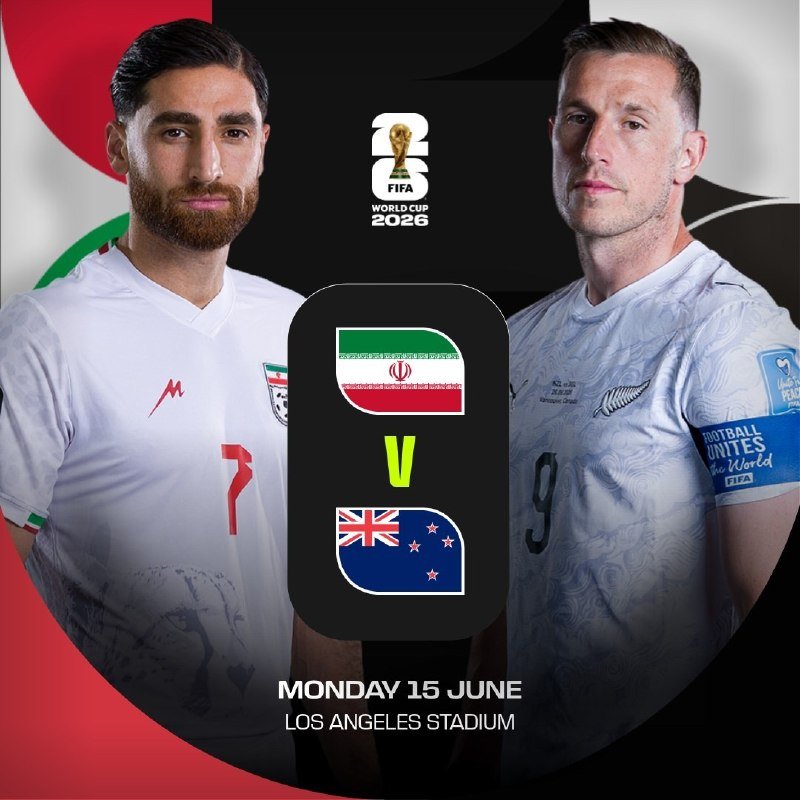
At the 30-minute mark of every World Cup match, the referee's whistle cuts through the noise and 22 outfield players shuffle towards the touchline for a drink. The pause, built into the competition's match protocol since the tournament's expansion to larger host geographies and more punishing kick-off windows, lasts roughly two to three minutes. It is sold as player welfare. In practice, according to BBC Sport's tactical review of the new stoppages published on 15 June 2026 at 09:34 UTC, it has become a quietly decisive tactical lever — and the teams that have learned to weaponise it are pulling ahead of those still treating it as a courtesy.
The argument is not that a glass of water swings matches on its own. It is that a guaranteed, in-game reset gives one side a structured moment to reorganise, change shape, deliver messages, and break momentum — while the other side is forced to stand and watch. The teams treating the break as a coaching clinic are extracting more from it than the teams treating it as a toilet trip.
What the break actually is, and what it costs
FIFA's hydration protocol, rolled into the modern World Cup's match-day operations alongside the broader player-welfare package the governing body has promoted since the 2022 Qatar cycle, suspends play at the 30-minute mark of each half. The referee signals, benches are permitted onto the pitch, and substitutes, analysts and head coaches get a contained window in which to deliver instructions. There is no formal rule that limits what a coach can say, no mandated substitution window, and no fixture-clock adjustment — the lost time is added on at the end of each half.
That asymmetry, the access to the players versus the absence of any tactical cap, is the whole story. As BBC Sport's 15 June 2026 analysis notes, the break has already become a regular enough feature of the tournament that coaches now plan around it. The teams that lose the break, in other words, are not just losing two minutes of football; they are losing the two minutes of preparation the other bench just used.
Who is winning it
The early beneficiaries are the same teams that tend to win World Cups: sides with deep benches, settled tactical identities, and head coaches trusted enough to have a rehearsed script ready. A coaching staff that walks onto the pitch with three specific adjustments — a shape change, a pressing trigger, a man-orientation shift — can convert a tied game in real time. A bench that wanders out with water bottles and shrugs will not.
The losers are the favourites of the script. Teams with a single game-plan, who play the same way for 90 minutes because the system is the system, surrender the only built-in adaptation window of the half to a side that has thought harder about how to use it. Pressing sides that run themselves into the ground in the first 30 minutes find themselves temporarily re-set by the break and have to spend the next ten minutes re-establishing the press they were just told, in the huddle, to abandon. Possession sides that rely on rhythm get their rhythm broken by a coach who has just told the opposition to stop chasing the ball and start sitting on it.
There is also a subtler loss: the team that has been psychologically on top entering the break often exits it on the back foot. A side that has just had two minutes of affirmation — clean sheets ticked, pressing traps sprung, the bench nodding along — walks back out with a different posture than a side that has just been told, in front of 50,000 people, that its shape is wrong.
The structural frame
World Cups have always been won by the team that adapts faster than the other. What the mandated break does is institutionalise the moment at which adaptation happens. It compresses the feedback loop between a coach seeing a problem and a player acting on the solution. For the first time in the tournament's history, both benches are guaranteed a structured pause at the same point in each half, and the side that uses it better has, on paper, a permanent edge.
That this was framed as a welfare measure is not accidental. Player health — heat, hydration, recovery — is a real concern in a tournament staged across multiple climate zones. The tactical consequence is downstream of the medical rationale, and FIFA has had little incentive to surface it publicly, because admitting that hydration breaks are also coaching breaks would invite calls to limit what coaches can say during them. As it stands, the rules permit a full tactical re-set in plain sight.
The counter-read, and the stakes
The plausible counter-argument is that the break is symmetrical: both teams get it, both benches get onto the pitch, both coaches get the same window. If one side is using it better, the answer is to use it better, not to abolish it. There is something to that. The early data, such as it is from a tournament still unfolding, does not suggest that hydration breaks are producing freak results — they are producing the same kind of small edges that good coaching has always produced. The break is, on this reading, less a structural distortion than a stress test of staff depth.
That reading is not obviously wrong. But it understates the extent to which the break rewards a particular type of preparation. Sides with thinner analyst benches, who cannot pre-script a set of adjustments for the 30-minute mark because they do not have three analysts in earpieces, lose by construction. Sides that travel with smaller delegations and leaner support staff — the perennial complaint of smaller footballing nations — are handing their wealthier opponents a free tactical half-time before half-time.
The remaining uncertainty is whether FIFA will eventually codify the break. If, over the next two tournament cycles, the data show that matches are being decided inside the hydration window in disproportionate numbers, the pressure to either scrap the break or restrict what coaches can do during it will become hard to ignore. The governing body has not, on the public record so far, signalled which way it leans.
What is already clear is that the World Cup's quietest rule change is doing the work of a much louder one. The water break is here, it is being weaponised, and the teams that have not yet learned to treat it as a coaching clinic are learning, the hard way, in front of a global audience.
Desk note: Monexus read this against BBC Sport's tactical write-up of the 2026 World Cup's mandatory hydration breaks and the broader tournament coverage across the wire. The frame — that welfare rules can become tactical levers without anyone formally deciding they should — is editorial, not drawn from a single source; treat the analysis as Monexus's, the facts as BBC's.