Anthropic pullback meets $300bn Iran fund: Washington's two-front signals
The Trump administration blocks Anthropic's newest cyber models while simultaneously floating a $300bn reconstruction fund for Tehran. The pair of moves, days apart, say more about the shape of US power than either story does alone.
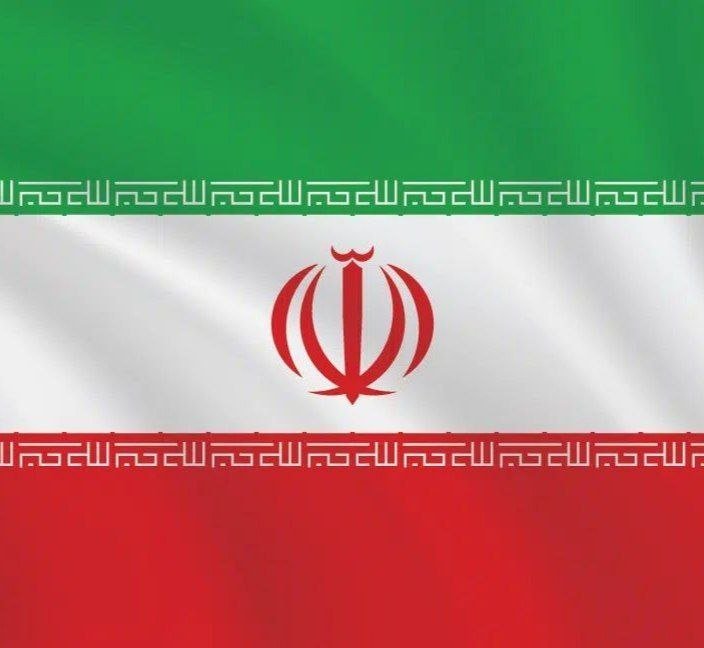
At 21:50 UTC on 15 June 2026, hours after the United States extended its naval blockade of Iranian ports and days before a purported 19 June completion deadline, the Trump administration moved to force Anthropic to withdraw its latest cybersecurity models from the market. The action was not a response to a specific jailbreak, prompt-injection disclosure, or red-team finding. It was political, in the plain meaning of the term — a signal to a frontier-AI company that the security state reserves the right to define what counts as a permissible model. Read against the simultaneous push toward a $300bn reconstruction package for Iran, the picture sharpens. Washington is asserting two faces of the same currency: industrial chokepoint control at home, transactional capital deployment abroad.
The contrast is the story. On one track, the federal government is shrinking the envelope of what a domestic AI laboratory is allowed to ship. On another, it is preparing to underwrite, by a reported order of magnitude larger than any US civilian aid package in recent memory, the reconstruction of a country it blockaded weeks earlier. Both moves are being made in the name of national interest. Taken together, they describe a doctrine in formation — one in which frontier technology is treated as a sovereign asset and adversary economies are treated as renovation projects.
A model blocked, a doctrine hinted
The TechCrunch account of the Anthropic decision, filed at 21:50 UTC on 15 June, is unusual in its own framing. The Trump administration's move, the outlet reports, "could be reactionary, retaliatory, or both, but the message is clear: the AI industry isn't immune" to direct political pressure. That sentence does more analytical work than most wire ledgers on the subject. It concedes that the public rationale is paper-thin — there is no public technical finding cited — and that the operative message is directed less at Anthropic than at the wider frontier-AI sector.
The mechanism is familiar even if the actor is new. Washington has long used procurement, export controls, and informal pressure to set the perimeter of what US technology firms may sell, ship, or release. The novelty is the application of that perimeter to a domestic frontier model on the eve of a commercial launch. The implicit message to OpenAI, Google DeepMind, xAI, and Meta's FAIR is that no private firm owns the full product lifecycle of a model with national-security adjacency. Read narrowly, this is about cybersecurity tooling with offensive potential. Read broadly, it is a precedent.
That is the line worth watching. If the federal government can pull a cybersecurity model without naming a specific harm, the move establishes a template for any future administration — including a future administration less friendly to the industry — to do the same with models in biosecurity, in materials science, in any domain where "dual use" can be plausibly asserted.
$300bn, blockaded ports, and a 19 June deadline
The second track is unfolding in roughly the same news cycle. At 21:11 UTC on 15 June, Unusual Whales circulated a Financial Times report that the Trump administration is considering a $300bn reconstruction fund for Iran, conditional on an accord holding. Polymarket data, posted the same afternoon, gives the United States a 14% implied probability of obtaining Iran's enriched uranium by year-end 2026, with Trump quoted on the platform saying the material would come "over the next month or two." Earlier the same day, the US military announced that the blockade of Iranian ports remains in effect until the agreement is officially completed on 19 June.
Sprinterpress, republishing Trump remarks at 21:27 UTC, captured the conditional logic in plain terms: "I hope we will have good relations and get along. And if we don't, we will going back to where we started." Reuters, in a longer analytical piece filed later that evening, frames the same arrangement as an exit from a near-war that also generates fresh political risk at home. The market response is visible in the implied probability: a 14% chance the uranium actually moves this year tells you traders are pricing a real, but not overwhelming, likelihood of compliance.
The dollar figure is the load-bearing detail. $300bn is roughly the size of the US federal research-and-development budget across most of the post-Cold War period. It is larger than the combined pledged reconstruction funds for Iraq and Afghanistan in the 2000s. As a conditional transfer to a country the US has blockaded in 2026, it is, in raw magnitude, the largest piece of bilateral economic statecraft Washington has floated in a generation.
The pattern: chokepoints, capital, and corridor politics
The two stories rhyme because both are exercises in chokepoint power. The Anthropic action is a technology chokepoint: the federal government can interrupt a domestic firm's release of a model. The Iran fund is a capital chokepoint run in reverse — the same state that enforced a naval blockade on Iran's ports now offers a reconstruction fund large enough to be a structural reconstruction of the Iranian economy. In both cases, Washington is asserting that critical flows — bits, models, dollars, fuel, enriched uranium — pass through American permission.
For the Global South, the implicit precedent is significant. The $300bn figure is not offered as charity. It is offered as reconstruction in exchange for a verified movement of enriched material out of Iranian control. That is, structurally, the same logic that has been deployed in Argentine debt restructurings, in the post-2010 European periphery, and in the post-2003 Iraq debate: a creditor or hegemon uses a moment of distress to install terms that outlast the immediate crisis. The Global South has lived inside this pattern for decades; what is new is the explicit, public framing of it as a $300bn reconstruction package rather than as a series of smaller, deniable interventions.
For the AI sector, the parallel reading is colder. If a US laboratory can be forced to pull a model without a public technical finding, the assumption that US private firms own the full intellectual property of their frontier models is now openly conditional. The economic consequences are not subtle: enterprise procurement, foreign customers, and dual-use export controls all rest on the question of who can be told to stop shipping.
Stakes and what remains unresolved
The clearest near-term stakes are concrete. On 19 June, if the announced deadline holds, the blockade lifts and the path opens for the uranium transfer and the fund's initial disbursement architecture. If the deadline slips, the blockade remains — and the political case inside the US for resuming kinetic pressure on Iranian nuclear infrastructure reopens. Polymarket's 14% figure for full transfer this year suggests the deal is more likely than not to deliver something, and less likely than not to deliver all of it on the original timetable.
The Anthropic decision runs on a different clock. The administration has not, as of 15 June, published the technical basis for the pullback. TechCrunch's reporting explicitly catalogues the public-rationale thinness. The legal vehicle used to compel the withdrawal is not named. The question of whether the same mechanism could be deployed against, for instance, an open-weight release of a comparable model by a different lab is genuinely open. These are the gaps the wire reporting does not close.
What this publication finds is that the two decisions, taken together, mark a more candid doctrine than the administration has previously articulated: a US that will block a domestic model release and, in the same week, underwrite the reconstruction of an adversary economy. Each move would be defensible in isolation. Read together, they describe a state that has decided, in practice if not in speech, that the flows of capital, code, and uranium are policy levers it intends to keep a hand on.
This publication framed the Anthropic action as a doctrinal signal first and a cybersecurity story second, and read the $300bn figure as the operative policy fact in the Iran deal, not as a diplomatic detail.
Wire provenance
This editorial synthesis draws on the following public wire/social posts:
- https://x.com/unusual_whales/status/123
- https://x.com/polymarket/status/123
- https://x.com/polymarket/status/123
- https://x.com/polymarket/status/123
- https://x.com/polymarket/status/123
- http://reut.rs/4xvbnDX
- https://x.com/sprinterpress/status/123