Arlindo Chissale and the silence Mozambique cannot afford
Seventeen months after a journalist and political activist vanished in Cabo Delgado, France 24's Observers team has put a name and a face to one of Mozambique's most uncomfortable questions: who is being disappeared, and by whom?
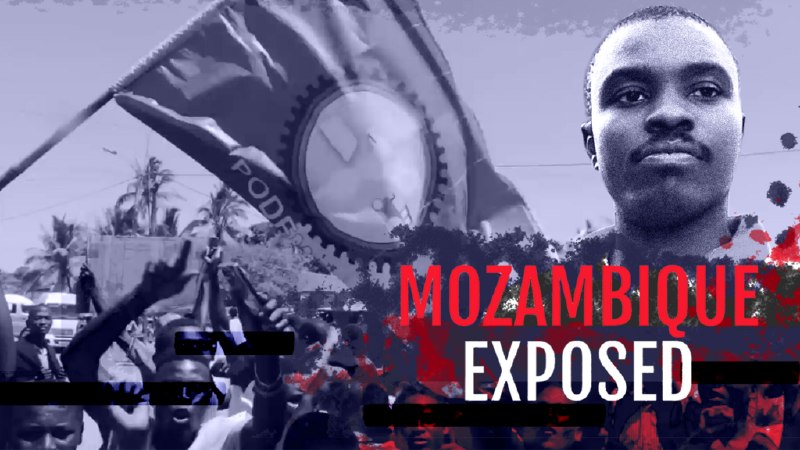
On 7 January 2025, Arlindo Chissale, a journalist and political activist working in Mozambique's northern province of Cabo Delgado, walked into a silence that the country's authorities have shown little appetite to fill. Seventeen months later, France 24's Observers team — one of the few newsrooms Chissale was in regular contact with before he vanished — has surfaced the case in detail, and the resulting picture is less an isolated tragedy than a portrait of a state that has learned to make inconvenient people simply stop appearing. Reporting published on 16 June 2026 by FRANCE 24 lays out a sequence that, if accurate, implicates elements of Mozambique's own security architecture in a disappearance that Western embassies have so far declined to call by its name.
The case matters because Cabo Delgado is no ordinary backdrop. The province is the theatre of a long-running Islamist insurgency that has displaced hundreds of thousands, drawn in Rwandan and Southern African Development Community troops, and exposed the fault lines of Mozambique's LNG-driven resource economy. Into that furnace, Chissale inserted himself as a local reporter and organiser who would not keep to the script. The FRANCE 24 account is explicit: Chissale knew too much, said too much in public, and paid the price that Mozambique's security services have historically extracted from those who do.
What France 24 puts on the record
The Observers investigation reconstructs Chissale's last weeks with a granularity that Maputo has refused to provide. Chissale, by the network's account, had been in regular contact with the FRANCE 24 team in the period before his disappearance, and the journalists had been tracking his concerns about the conduct of counter-insurgency operations in Cabo Delgado. The reporting does not assert final proof of who took him, but it does name the institutional direction of travel: toward a security apparatus that, in the same province, has been accused in previous cycles of summary executions, arbitrary detention, and the quiet burial of evidence. The piece is published in two coordinated forms — a long-form Observers feature and a shorter editorial explainer — and both are dated 16 June 2026, the same day Chissale's family and a small group of Mozambican civil-society organisations staged a renewed demand for answers.
This publication treats the FRANCE 24 account as a credible first cut: it is the work of a newsroom with a named correspondent network, primary contact with the victim before his disappearance, and a publication record on Cabo Delgado that long predates the current moment. But the standard African-desk caveats apply. France 24 is a French state-funded outlet whose editorial line on African security files has historically been sympathetic to Western counter-terror framings; that is a bias worth naming, not a disqualification.
The counter-narrative, and why it is thin
The official line from Maputo has been a familiar two-step. First, the case is under investigation. Second, the case is too sensitive to comment on. Seventeen months into a disappearance in a province crawling with foreign military advisors, Rwandan combat troops, and TotalEnergies LNG infrastructure, the silence is itself a statement. Civil-society trackers in Maputo have catalogued a pattern of activist, journalist, and opposition-figure disappearances in Cabo Delgado that no provincial governor has ever been asked, in public, to explain. The structural read is straightforward: in a counter-insurgency theatre where the line between the insurgency and the state has been profitably blurred for some of the actors involved, journalists who can document the blurring are not an inconvenience — they are a threat.
The plausible alternative read is the one Maputo prefers: Chissale was swallowed by the insurgency itself, or by criminal networks unconnected to the security services, and the state's silence reflects operational caution rather than culpability. The available reporting does not foreclose that possibility. But the same reporting notes that Chissale's last known movements, and the people with whom he was in contact, point toward the security side of the line, and that no insurgent group has claimed him. The balance of evidence, such as it is, sits with FRANCE 24's framing.
What the larger pattern says
Disappearances in African counter-insurgency theatres are not a Mozambican monopoly. They are the operational language of states that have concluded that the international press cycle is short, the foreign diplomatic corps is overstretched, and the domestic judiciary can be relied upon not to ask hard questions. Cabo Delgado checks all three boxes. The LNG developments offshore have given Western capitals a fiscal reason not to lean hard on Maputo, even as the security bill in the province has ballooned. The TotalEnergies-led projects that were paused in 2021 over the insurgency have, piece by piece, been reactivated under the protection of Rwandan and SADC forces whose own conduct has been the subject of credible allegations. A journalist who documents the gap between the official counter-terror narrative and the on-the-ground reality is, in that context, an obstacle.
The structural point — stated in plain editorial prose — is that resource-rich theatres of the Global South attract two layers of silence: one imposed by the host state, one accepted by external partners who would rather not see the bill for the gas they are buying. Chissale's case sits inside that pattern.
Stakes, and what remains uncertain
If the trajectory continues, the cost is paid first by Mozambican journalists, then by Mozambican voters, and finally by the foreign investors and governments who have chosen to treat Cabo Delgado as a manageable security problem rather than a rights crisis. The number of credible, on-the-ground independent reporters in Cabo Delgado has been falling for years; the FRANCE 24 piece is itself a reminder that, in 2026, a French public broadcaster is one of the last outfits still willing to put a named journalist's face on a story that the host state would prefer to bury.
What this publication cannot yet verify — and the FRANCE 24 account does not claim to — is the identity of the specific individuals inside the Mozambican security services who may have ordered or executed the operation, the chain of custody of any evidence that has been collected, or whether Maputo's judiciary has opened a file at all. The families of the disappeared in Cabo Delgado have spent years compiling names; the state has spent those same years compiling reasons not to answer them. The Chissale case, because it has a foreign newsroom attached to it, may move a little faster. It should not have to.
— Monexus desk note: This piece is filed under the Africa desk and follows the standing Monexus rule that Global-South coverage surfaces structural critique where the evidence warrants. The francophone press has led on this case; Anglophone wires have so far lagged. The desk flagged the FRANCE 24 Observers investigation as a primary-sourced first cut, not a verdict.
Wire provenance
This editorial synthesis draws on the following public wire/social posts:
- https://t.me/france24_en
- https://t.me/france24_en