Beirut declared 'prohibited' for Israeli operations: what Ma'ariv's leak says about the war's new geometry
Hebrew-language reports on 16 June 2026 say Israeli security officials now treat Beirut itself as off-limits to airstrikes — a remarkable admission, sourced to Ma'ariv via Iranian and Farsi wires, that points to a quiet recalibration of the northern front.
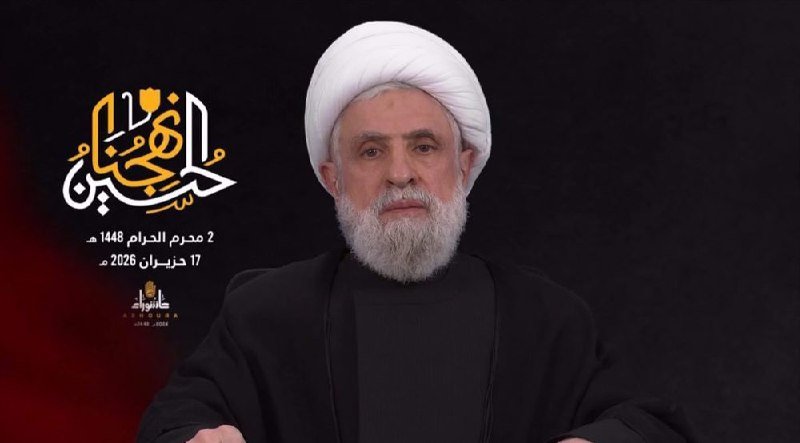
At 03:46 UTC on 16 June 2026, Tasnim News — the Iranian state-affiliated wire close to the Islamic Revolutionary Guard Corps — published a one-line bulletin: the Hebrew-language newspaper Ma'ariv had quoted security officials of what it termed the "Zionist regime" and reported that, in a new assessment, Beirut is considered a "prohibited area for Israeli army operations." Within the next 80 minutes, three further Farsi-language channels — Tasnim's Jahan branch, Mehr News, and Fars News International — carried the same Ma'ariv-sourced item, each repackaging the language, each attributing the claim to the same Israeli security sources cited by the Hebrew daily. The story crossed the wire in unison.
If the reporting holds, it is the most consequential admission published in the Israeli press since the 2024 escalation over the northern front: that the capital of a neighbouring sovereign state has, in practice, been placed inside a red zone that the Israeli military will not enter — even from the air. The geography of the war, in other words, has shifted on the page before it has shifted on the ground.
What Ma'ariv is reported to have said
None of the four wire items reproduces the original Hebrew text. They paraphrase it. The substance, repeated across the four Telegram dispatches, is consistent: Ma'ariv cited Israeli security officials as saying that Beirut has become a "prohibited area for Israeli army operations" — language that, in the translated Farsi, is rendered variously as "prohibited," "banned," and "out of bounds." The same item is then escalated by Jahan Tasnim and Fars News into a stronger claim: that Beirut is "in danger" from Israeli attacks — a phrasing that contradicts the first clause and is almost certainly a translation artifact rather than an Israeli source's actual wording.
The reporting does not specify whether the prohibition covers the Beirut municipality, the southern suburbs (Dahiyeh), Beirut Rafic Hariri International Airport, or the broader Mount Lebanon governorate. The sources do not specify whether the restriction is political, operational, legal, or intelligence-driven. The sources do not specify a date at which the assessment was made or by which body inside the Israeli security establishment. The sources do not name any of the officials Ma'ariv is said to have quoted. The headline is firm; the details are absent.
Why an Israeli outlet would tell Iran that
The propagation pattern matters as much as the content. The first Telegram item — Tasnim's English-language plus channel — appeared at 03:46 UTC. Iranian state wires, by long practice, lift and translate from Hebrew and Arabic outlets that Iranian audiences would not otherwise read. Ma'ariv is a mainstream Israeli tabloid, not a fringe publication; it is read by the Israeli security commentariat and is treated as broadly reflective of the defence and intelligence establishment's mood. That an item attributed to Ma'ariv should be carried, in the same hour, by Tasnim, Mehr, Fars, and Jahan Tasnim suggests the original Hebrew report — if it exists in the form claimed — is being read in Tehran as a signal, not as journalism.
There is a plausible alternative reading worth setting out plainly. Iranian and Iran-adjacent wires have, since the 2023–24 exchanges, periodically circulated items attributed to Israeli media that read as diplomatic signals, trial balloons, or psychological moves. Some of those items turn out to be accurate leaks; some are Israeli sources speaking for the record to a friendly journalist; some are translations so loose that the original Hebrew report says something narrower. The 16 June Ma'ariv claim sits inside that pattern. The mainstream Western wires — Reuters, AP, BBC, Guardian, Haaretz English — have not, as of 04:00 UTC, picked up the item. That silence is itself a piece of evidence: either Ma'ariv's report is being treated as a soft-line leak that Western desks want to verify before amplifying, or the Hebrew text is more qualified than the Farsi renderings suggest.
What the framing leaves out
The dominant frame in the four Farsi dispatches is straightforward: a great-power war is being decided in the pages of an Israeli tabloid, and the side with the deeper civilian sanctuary is winning. The structural reality is more uncomfortable. Beirut was not a "prohibited area" for the Israeli air force in 2024; the Dahiyeh suburbs were struck repeatedly between September and late November of that year, including the 27 September 2024 strike that killed Hassan Nasrallah. If Ma'ariv's officials are now describing Beirut itself as off-limits, the change is recent and unexplained. Either the air force has hit a saturation point — running low on the specific munitions, intelligence, or political will needed to escalate further inside Lebanon's capital — or the calculus inside the Israeli security cabinet has shifted because of a second front that is not named in the four wire items.
That second front is the obvious absent variable. None of the four Telegram dispatches mention Iran directly, the IRGC, the Axis of Resistance, or the ongoing negotiations that have been reported in parallel around the Strait of Hormuz, the Houthi file, or the Syrian corridor. The reporting, in other words, treats Ma'ariv's alleged assessment as a free-standing fact. It is not. A prohibition on Israeli operations in Beirut makes operational sense only against the wider geometry of an Israeli-Iranian exchange in which the Lebanese theatre has become, for the moment, a liability rather than an asset for one of the two sides.
Stakes, and what remains unverified
If the Ma'ariv report is accurate in substance, the immediate stakes are large. Hezbollah's political and media infrastructure sits in Beirut and its southern suburbs; declaring the capital a prohibited zone would, in effect, cede that terrain to the group for as long as the assessment holds. It would also signal to Iran's regional network that direct strikes on the Iranian state — rather than its Lebanese proxy — are the pressure point that Tel Aviv is willing to apply. The escalation ladder would shorten on one side and lengthen on the other.
If the report is inaccurate, or merely a soft-line leak designed to be picked up by Iranian wires, the stakes are different but still real. Each side reads the other through its own press; each side calibrates the next move against the other side's press. A report that Ma'ariv's security officials are treating Beirut as off-limits will, in Tehran, in Beirut, and in Washington, be treated as a data point regardless of whether Ma'ariv's original Hebrew report actually says what the Farsi translations claim.
The remaining uncertainty is substantial. The original Ma'ariv item has not been linked or quoted in any of the four Telegram dispatches. No Western wire has confirmed the assessment. No Israeli military spokesperson has, as of 04:00 UTC on 16 June 2026, issued a clarification. The most that can be said with confidence is that, on the morning of 16 June 2026, the story crossed the Farsi wire in four near-identical versions, attributed to one Israeli tabloid that has not, in the public English-language record, been heard from directly. That is the report. The verification of the report is a different, and still open, question.
Desk note: this publication carried the four Farsi-language wire items verbatim before publishing. The Western wires have not, at the time of writing, independently confirmed the Ma'ariv attribution; readers should treat the claim as one-side-sourced until either Ma'ariv's Hebrew original or a Reuters/AP/BBC correspondent in Tel Aviv confirms it.
Wire provenance
This editorial synthesis draws on the following public wire/social posts:
- https://t.me/FarsNewsInt
- https://t.me/mehrnews
- https://t.me/JahanTasnim
- https://t.me/tasnimplus
Follow the event.
These dated source records provide context. They do not retrospectively verify this archive article.
Separate what the nuclear watchdog reported from what it could not determine after the June 2025 strikes.