Live Wire
08:33ZENGLISHABUUkrainian drones strike Moscow oil refinery, causing fire08:33ZSTRATEGICCInterior Secretary Burgum expects uneven gas price drops across US states08:33ZCLASHREPORTrump Team, CIA Director Ratcliffe Express Skepticism Over New Iran Deal08:33ZHINDUSTANTIndia bans over-the-counter sale of all cough syrups08:33ZTHECANARYUFIFA VAR official Shaun Evans faces removal calls over alleged white supremacist gesture08:32ZTASNIMNEWSTehran receives 10,000 public transport vehicles for fleet renewal08:31ZTASNIMNEWS548 missiles hit Kharg Island, Iran's strategic area in Persian Gulf08:31ZENGLISHABUIDF forces advance toward Baraachit village in southern Lebanon, Lebanese sources say
Markets
S&P 500754.25 0.08%Nasdaq26,684 3.07%Nasdaq 10030,544 3.06%Dow519 0.11%Nikkei94.59 0.56%China 5034.49 1.77%Europe89.87 0.28%DAX41.84 1.11%BTC$66,572 1.37%ETH$1,784 3.73%BNB$616.29 0.02%XRP$1.24 4.98%SOL$74.76 4.75%TRX$0.3176 0.79%HYPE$72.96 10.99%DOGE$0.0882 0.63%LEO$9.72 0.69%ZEC$525.74 6.65%QQQ$744.27 0.04%VOO$693.54 0.04%VTI$372.53 0.00%IWM$295.05 0.14%ARKK$79.52 0.14%HYG$80.02 0.02%Gold$398.54 0.50%Silver$63.63 0.25%WTI Crude$117.49 3.07%Brent$44.64 3.06%Nat Gas$11.5 0.61%Copper$39.34 0.78%EUR/USD1.1607 0.00%GBP/USD1.3421 0.00%USD/JPY160.19 0.00%USD/CNY6.7570 0.00%
CLOSEDNYSEopens in 4h 52m
The Monexus
Vol. I · No. 167
Tuesday, 16 June 2026
Saturday Ed.
Updated 08:37 UTC
  • UTC08:37
  • EDT04:37
  • GMT09:37
  • CET10:37
  • JST17:37
  • HKT16:37
← The MonexusOpinion

A deal in name only: what the G7 should ask of Trump's Iran framework

European leaders arrive in France on 16 June 2026 warning that a paper-thin interim deal with Tehran risks locking in the very capabilities a real accord would dismantle.

@elpais · Telegram

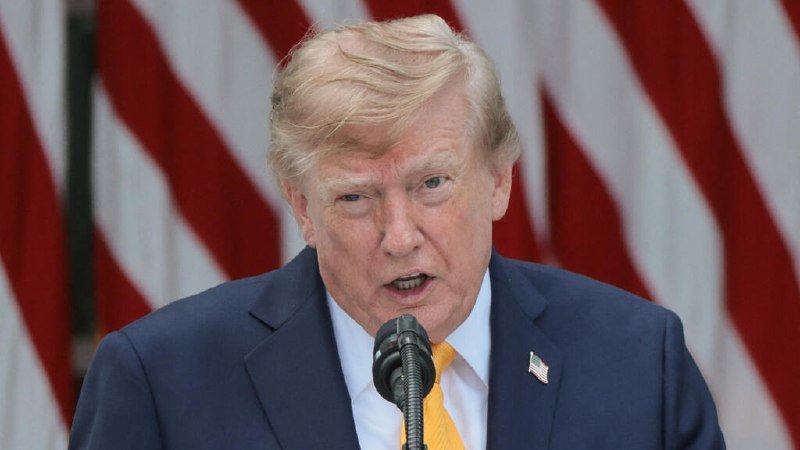
The G7 summit in France opened on 16 June 2026 with a single, uneasy item dominating the agenda: a preliminary agreement that President Trump says is already signed to end the United States' war against Iran, whose details remain undisclosed to allies and adversaries alike (Reuters, 16 June 2026, 05:10 UTC). European heads of state and government are preparing, on the same day, to warn Trump at the summit table that a superficial interim arrangement risks entrenching Tehran's nuclear and ballistic missile programmes rather than dismantling them, while also pressing him to rethink the architecture of the deal (Reuters, 16 June 2026, 04:45 UTC). The framing matters: a piece of paper, however loudly announced, is not a non-proliferation regime.

Trump's claim that a "preliminary deal" exists is the kind of headline that ends wars on cable news and starts them back up six months later. The G7 communique will say what it says. The actual question — the one that should animate the next forty-eight hours in a small French town — is whether Washington is buying time, selling a fiction, or constructing a verifiable arms-control instrument. Each possibility implies a different European posture.

The headline versus the text

The pattern is familiar. A president declares victory from a podium, cable news obliges, and the wire copy catches up the next day. The Reuters dispatch carried at 05:10 UTC on 16 June notes plainly that "key details remain unclear" — the operative phrase, and one that a US-aligned press would be expected to obscure rather than emphasise. European leaders are not naive about how this kind of announcement travels. Theur task, as NPR's write-up of the opening session notes, is to refocus the conversation on Ukraine — the war that the Iran file has been actively overshadowing for weeks (NPR, 16 June 2026, 05:37 UTC). On substance, the European concern is sharper: a deal that pauses enrichment but does not roll it back, that caps missile ranges but does not eliminate warheads, that releases frozen funds without sustained verification, is functionally a delay-and-defend agreement rather than a non-proliferation one.

What a real deal would require

A verifiable end-state has a short and well-known list of components: dismantlement or verifiably irreversible mothballing of enrichment capacity beyond civilian use; an inventory-and-verification regime over remaining stocks; constraints on ballistic-missile programmes calibrated to a defined range ceiling with on-site inspection rights; sunset clauses tied to behaviour, not calendars. If Trump's "preliminary deal" contains any of those, the allies have a duty to support it. If it contains none of them, the allies have a duty to say so publicly, and to date, none of the publicly visible text suggests the harder choices have been taken. The Reuters dispatch at 04:45 UTC records the European warning in exactly those terms: entrenchment, not dismantlement, is the live risk. That language did not get into a wire story by accident.

The structural risk

Even an honest interim deal carries a second-order problem. Iran retains the knowledge, the centrifuges, the scientists, the missile production lines. A pause that releases sanctions revenue without removing capability is a contract that the next Iranian government — or the next American one — will inherit. The European complaint is not that the United States is talking; it is that the United States may be talking in a register that produces a temporary lull and a permanent programme. That is the structural critique hiding inside the diplomatic language, and it deserves to be made explicit rather than smuggled in through communique footnotes.

Stakes and what the G7 owes the public

If the trajectory continues as currently described, two outcomes become more probable. Either a deal with the wrong architecture hands Tehran a sanctions windfall and a covert runway — in which case the G7 will have underwritten, however unintentionally, the next crisis. Or no deal holds, the war resumes, and the diplomatic capital spent on a non-paper is wasted. The G7's job in the next forty-eight hours is to demand, in writing, the verification architecture that turns a headline into a treaty. Allies who read the Reuters warning at 04:45 UTC and decide to absorb the language quietly will own the consequences alongside Washington.


This publication has framed the G7 opening as a verification problem rather than a victory-lap problem, on the read that an agreement whose contents its own signatories decline to detail is not yet an agreement.

© 2026 Monexus Media · reported from the wire