Eight months into the Gaza ceasefire, daily tolls keep adding up
Gaza’s health authorities say 997 people have been killed and more than 3,150 wounded since the October ceasefire took hold, with the daily count refusing to fall below a low-but-persistent baseline.
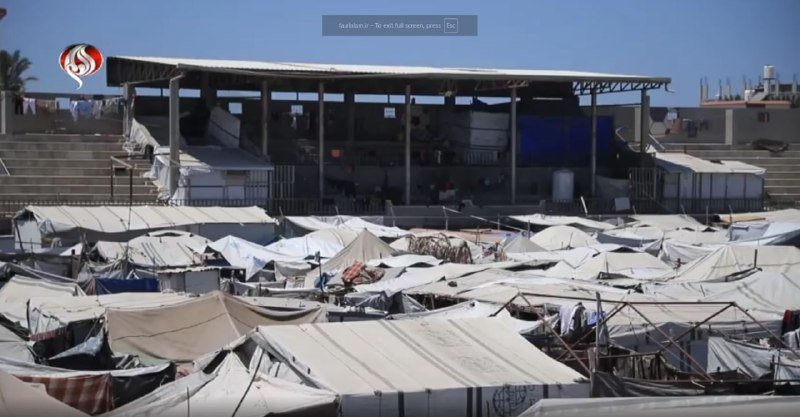
Eight months after the ceasefire that halted major combat operations in Gaza, the killing has not stopped. It has merely changed tempo. According to figures carried on 16 June 2026 by Al-Alam Arabic, the health authorities in Gaza report 997 people killed and 3,152 wounded since the ceasefire took effect on 11 October. Five of those deaths and eight of those injuries arrived at hospitals across the strip in the preceding 24 hours, with the remainder counted in the days and weeks since the truce began.
The pattern is the story. A conflict of this scale rarely ends on a single date; it tapers, then seeps. The headline number — nearly a thousand dead in eight months of a supposed ceasefire — is large enough to be disqualifying, and small enough per day to escape the wire cycle. Each is a real number of people.
What the daily report says
The 24-hour update published on 16 June at 07:45 UTC and 07:47 UTC by Al-Alam Arabic, citing Gaza’s health authorities, lists five killed and eight injured admitted to hospitals in the previous day, with additional bodies recovered from rubble and streets where they could not be reached in time. The Cradle Media carried a parallel dispatch four minutes earlier, with the same headline figures and the same caveat: a number of victims remain trapped, unaccounted for, or recovered late.
The two outlets are aligned on the basic counts but not interchangeable as sources. Al-Alam Arabic is a Beirut-based outlet affiliated with the Iranian state-aligned sphere; The Cradle Media, a Beirut- and Beirut-adjacent outlet, runs a more independent editorial line but covers the same regional beat. Neither is a wire service. The figures originate with Gaza’s health authorities, a body whose casualty reporting during the war was broadly consistent with UN and wire-service tallies for the periods that could be independently verified, and whose daily bulletins remain the most granular real-time record available from inside the strip.
A ceasefire, not a quiet
A "ceasefire" in this context has never meant the absence of violence. The 11 October arrangement was an exchange-and-pause framework: hostages and detainees out, sustained bombardment paused, reconstruction deferred. The Israeli security cabinet, the Hamas political bureau, and the mediators in Doha and Cairo each defined the deal in language that allowed for continued operations against specific targets. The result, on the ground, has been a chronic low-level casualty rate punctuated by periodic spikes when the rules of engagement shift or a local commander’s authority is contested.
The 24-hour figures now circulating — five dead, eight wounded — sit within a band that, sustained over months, produces the kind of cumulative toll the health ministry has now reported. The 997 cumulative death figure, if accurate, implies an average of roughly four deaths per day over 244 days. The total is too high to attribute entirely to post-ceasefire kinetic incidents: at least some portion is the catch-up accounting of bodies recovered from rubble weeks or months after their original wounds were sustained. Gaza’s health authorities have, throughout, distinguished between the freshly admitted and the recovered.
Why the framing matters
The dominant Western-wire framing of the post-ceasefire period has been: hostages returned, humanitarian aid in, reconstruction pending, ceasefire holding. That framing is not wrong, exactly. It is incomplete. The arithmetic the health authorities publish daily makes the gap visible: a ceasefire is not the same thing as a halt to killing, and the 997 figure is the lived record of that gap.
There is a counter-narrative worth naming, and it is not a fringe one. Israeli officials and several Western editors have argued, with varying degrees of explicitness, that the residual casualty count is a function of Hamas’s internal policing, unexploded ordnance left over from the war, and the chronic collapse of civil infrastructure under a blockade that began long before October 2024. The Hamas-run interior ministry, when it comments at all, attributes intra-Gaza violence to "rogue elements" rather than to the movement’s own security apparatus; the Israeli coordinator of government activities in the territories attributes some of the cumulative toll to leftover munitions and criminal disputes. Both readings contain real evidence. Neither is the whole picture.
What the data does not yet permit is a clean attribution of the 997 deaths between (a) ongoing Israeli operations including airstrikes and targeted killings that have continued under the ceasefire architecture, (b) intra-Palestinian violence, and (c) accidents, ordnance, and delayed recovery. The health ministry does not, in its public bulletins, separate these categories; the wire services that consume those bulletins do not always ask it to.
The structural frame
This is what an extended ceasefire looks like when the underlying political dispute is unresolved. The numbers are too small to generate standing coverage and too large to be dismissed as noise. A 24-hour death toll of five in a strip of roughly two million people is, statistically, a background rate for a city under stress — and that is the precise problem. A background rate is what normalisation looks like from the inside.
For Gaza’s medical and civil-defence apparatus, the daily bulletin is a logistics document as much as a moral one. Five dead and eight wounded requires emergency-room staffing, morgue capacity, mortuary supplies, and family-notification protocols. The cost of a permanent five-a-day is not dramatic; it is grinding. The aid architecture that the October deal was meant to enable — fuel, surgical capacity, dialysis, neonatal intensive care — is, by most independent assessments, still operating at a fraction of pre-war levels. The combination produces a slow haemorrhage rather than a bleeding-out.
The October deal itself was not designed to resolve the political question that produced the war. It was designed to halt the kinetic phase and produce the conditions for a longer negotiation. Eight months on, that longer negotiation is the only thing that has measurably slowed — and the casualty record is what the deceleration looks like in the meantime.
What remains uncertain
The figures are official, not independent. No outside body is currently in a position to audit the daily bulletins against a parallel ground count. UN agencies, which tracked the war-period casualties in close coordination with the health ministry and produced broadly aligned figures, have access to a portion of the post-ceasefire period and have not, as of this publication, published a separate running toll that would allow readers to check the 997 figure against an external baseline. The wire services cite the health ministry directly.
There is also a real epistemic problem with the recovered count. Bodies recovered from rubble in May or June 2026 may have been killed in January; the bulletin structure does not always make the date-of-wound clear. The cumulative figure of 997 should be read as a count of people whose deaths were confirmed and registered during the ceasefire period, not necessarily as a count of people who died during the ceasefire period. The distinction is the kind that matters in any honest accounting, and the public bulletins do not always make it.
What is not in dispute: the ceasefire is eight months old, the hospitals are still receiving the wounded, the bulletins are still being filed, and the numbers, in the absence of a political resolution, are still moving in only one direction.
— This article drew on a single source stream: regional outlet reports citing Gaza’s health authorities. Western-wire coverage of the daily ceasefire-period toll is sparse; Monexus chose to cite the regional outlets directly rather than reconstruct framing that the wire services have not, in this case, produced. The structural argument — that a ceasefire without resolution produces a chronic low-level toll — is the publication’s reading of the available data, not a paraphrase of any one source.
Wire provenance
This editorial synthesis draws on the following public wire/social posts:
- https://t.me/alalamarabic
- https://t.me/alalamarabic
- https://t.me/thecradlemedia
- https://t.me/TheCradleMedia
- https://en.wikipedia.org/wiki/Gaza_Health_Ministry
- https://en.wikipedia.org/wiki/October_2025_Gaza_ceasefire